
Published: August 04, 2026
By Mia Torres, Skate Gear Reviewer
Mia has spent 7 years testing skateboards and protective gear, covering everything from beginner setups to advanced street rigs.
I have spent hundreds of sessions testing this gear on street and in the park, and this guide reflects what I actually found: what holds up, what does not, and what is worth the money.
Why You Should Care
According to the American Academy of Pediatrics, skateboarding accounts for approximately 175,000 ER visits per year in the U.S. Head injuries represent roughly 33 percent of all skate-related injuries. Wearing a properly fitted helmet reduces that risk by up to 85 percent.
Why Safety Gear Matters
Skateboarding is inherently risky. Every time you drop in, attempt a new trick, or ride faster than usual, you are exposing yourself to potential impact with concrete, metal, or other skaters. Safety gear is not about being cautious — it is about staying in the game longer by avoiding catastrophic injuries that end your skating career permanently.
Here is the reality most beginners ignore: the difference between a bruised ego and a brain concussion is often a helmet. The difference between a twisted ankle and a broken wrist is a set of wrist guards. The difference between skating this weekend and being in a cast for two months is often just knee pads.
Key Stat
Skateboarders who wear helmets are 60 percent less likely to suffer head injuries. Among children and teens, helmet use reduces severe head injury risk by 89 percent.
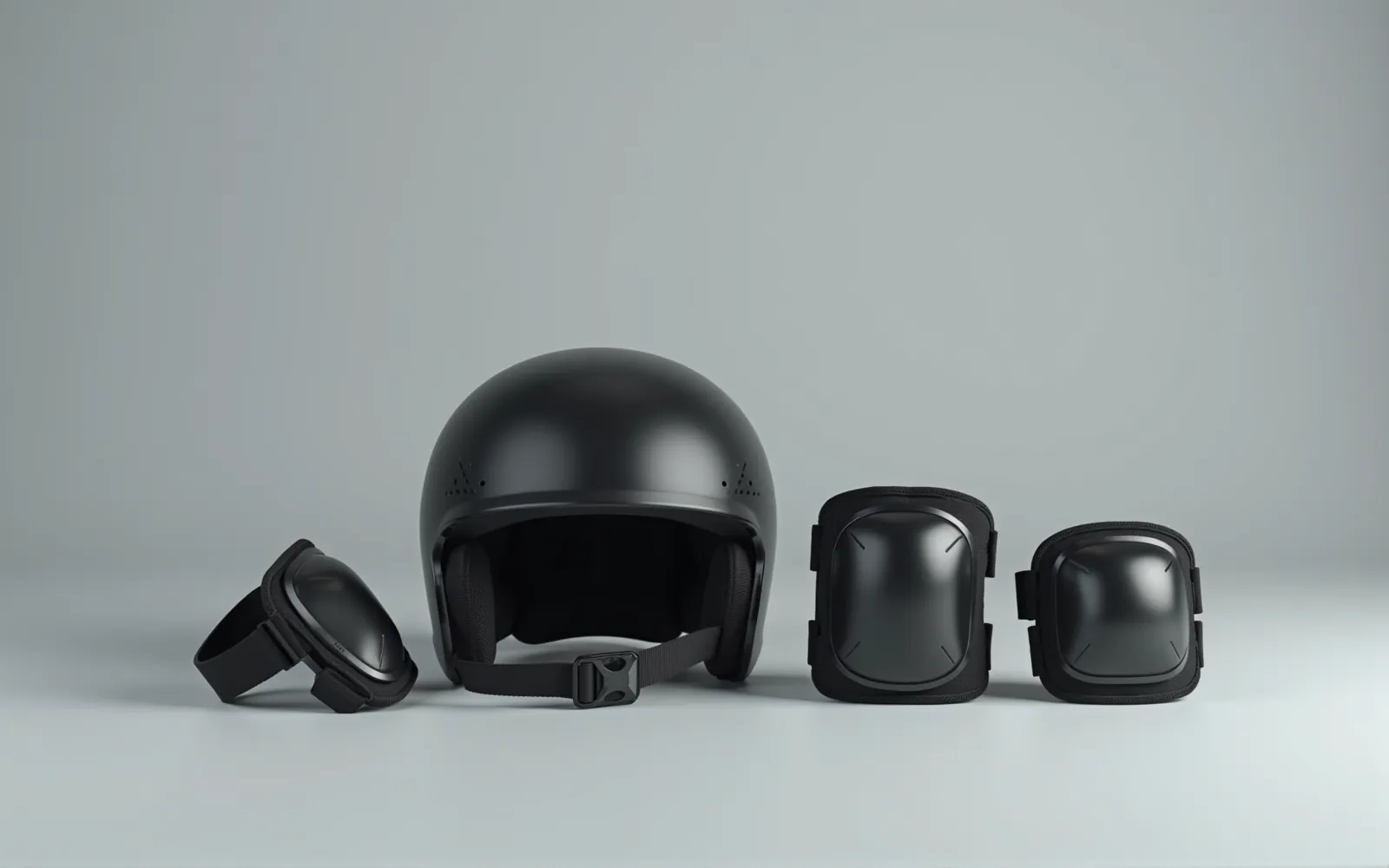
Skateboard Helmets
The helmet is your most critical piece of safety equipment. Not all helmets are created equal for skateboarding. Bicycle helmets, while excellent for cycling, are designed differently and may not provide the protection you need when skating.
Skateboard helmets prioritize:
- Multiple impact protection (reinforced EPS foam)
- Lower profile for vert skating in ramps
- Enhanced rear and side coverage for falls on flat ground
- Durable outer shell to resist abrasion from sliding on concrete
Top Skateboard Helmets in 2026
| Helmet | Best For | Price Range | Certification |
|---|---|---|---|
| Protek Skate | Park skating, street skating | $35–$45 | CPSC, ASTM F1492 |
| POC Orbit NXT | Advanced street and vert | $80–$120 | CPSC, EN 1078 |
| Smith Scout MIPS | Premium multi-sport protection | $100–$150 | CPSC, MIPS technology |
| Triple Eight Stuntman | Budget-friendly full coverage | $30–$40 | CPSC, ASTM F1492 |
| Y-THL Skate | Park and transition skating | $40–$60 | CPSC, ASTM F1492 |
Prices are approximate and reflect 2026 retail averages. Check Amazon and skate shop prices for current deals.
Pro Tip
A helmet must fit snugly — not loose, not tight. It should sit level on your head (not tilted back), covering your forehead about one finger-width above your eyebrows. If it shifts when you shake your head, it is too big.
Wrist Guards
Your wrists are the most commonly injured body part in skateboarding. When you fall, your natural instinct is to catch yourself with your hands — which transfers all the impact into your wrist bones. Wrist guards prevent this by creating a rigid barrier that redirects force along your forearm instead.
Wrist guards are especially important for:
- Beginners who are still developing balance and fall mechanics
- Skatepark skating where speeds and heights increase
- Older skaters recovering from previous wrist injuries
Knee Pads
Knee pads protect against two distinct injury types: abrasion (road rash from sliding on concrete) and impact (direct collisions with ramps, rails, or the ground). Quality knee pads combine a hard outer cap with dense foam underneath.
Types of knee pads:
- Covered knee pads — wrap fully around the knee with velcro straps; best for skatepark and aggressive skating
- Uncovered knee pads — open design with less bulk; preferred by skaters who want more mobility and a lower profile
Smart Buy
Covered knee pads from Protec and 187 are industry standards. They cost $40–$60 and will outlast cheaper alternatives by years. Investing in quality pads pays off immediately in comfort and durability.
Elbow Pads
Elbow injuries in skateboarding are less common than wrist or knee injuries, but they happen — especially when falling backward or sideways off ramps. Elbow pads are a lightweight addition to your protection setup and are worth considering if you skate parks regularly.
Skate Shoes
The right shoes are underrated safety equipment. Skate shoes provide board feel, grip, and lateral support that regular sneakers cannot. Cheap shoes with smooth soles increase the chance of slipping off your board mid-trick — which often leads to harder falls than the trick itself.
Features to look for:
- Rubber cupsole with grippy tread pattern
- Reinforced toe caps for durability
- Cushioned midsoles for impact absorption
- Flat sole design for maximum board contact
Budget Gear Guide — Complete Setup Under $150
You do not need to spend a fortune to be safe. Here is a complete protective setup that will keep you rolling without breaking the bank.
| Item | Budget Pick | Approximate Cost |
|---|---|---|
| Helmet | Protek Classic or Triple Eight Stuntman | $30–$40 |
| Wrist Guards | Trend Basic Wrist Guards | $15–$25 |
| Knee Pads | Protek Cover Up Basic | $30–$40 |
| Elbow Pads | Trend Basic Elbow Pads | $15–$25 |
| Skate Shoes | Adidas Seeley or Etnies Marana | $40–$60 |
Total: $130–$190 for a full protective setup. Prioritize the helmet and wrist guards if you must cut corners.
Warning
Never buy helmets from unknown brands on marketplaces without safety certifications. A cheap helmet that looks fine may use recycled or inferior foam that shatters on first impact instead of absorbing energy. Always verify CPSC or ASTM certification before purchasing.
FAQ
Do I need to wear all protective gear every time I skate?
For beginners: yes. Your brain and bones will thank you. Once you have built confidence and learned how to fall safely, some skaters choose to drop wrist guards and elbow pads for casual street skating. But the helmet should never come off.
Can I use a bicycle helmet for skateboarding?
You can in a pinch, but it is not ideal. Bicycle helmets are designed for a single major impact and then need replacement. Skateboard helmets are built for repeated minor impacts and abrasion from sliding. If you primarily skate, invest in a proper skate helmet.
How long do protective pads last?
High-quality pads (Protek, 187, Triple Eight) typically last 2–3 years of regular use before the foam compresses too much or velcro straps wear out. Helmets should be replaced every 3–5 years or immediately after a significant impact, even if there is no visible damage.
Are wrist guards worth it for experienced skaters?
Experienced skaters who rarely wear wrist guards are often the same ones with chronic wrist pain in their 30s and 40s. If you skate parks, try them — you may be surprised how quickly they become a non-issue you forget you are wearing.
Bottom Line
Safety gear is an investment in your skating longevity. Spending $150 on protection is nothing compared to the cost, time, and frustration of recovering from a preventable injury. Put it on before every session — it takes ten seconds and could save your season.
See Also:
Sources
The guidance in this article is informed by the following authoritative sources:
- Rider — Skate & Longboard Gear — Manufacturer specifications for decks, trucks, and wheels.
- Indy Trucks — Truck manufacturer specs and mounting guidance referenced in this guide.
- Skateboarder Magazine — Industry coverage of skateboarding culture and gear.
External links open in a new tab. Verify current details with the source before relying on them.
#Skateboarding #SkateSafety #SkateGear #SkateHelmets #WristGuards #SkatePads #SkateShoes #SkateProtection #SkateParkSafety #SkateBeginners #SkateCulture #SkateboardingTips #SkateInjuries #ProtekcGear #SKA8
This guide is part of the ska8 daily series. Explore more below.