
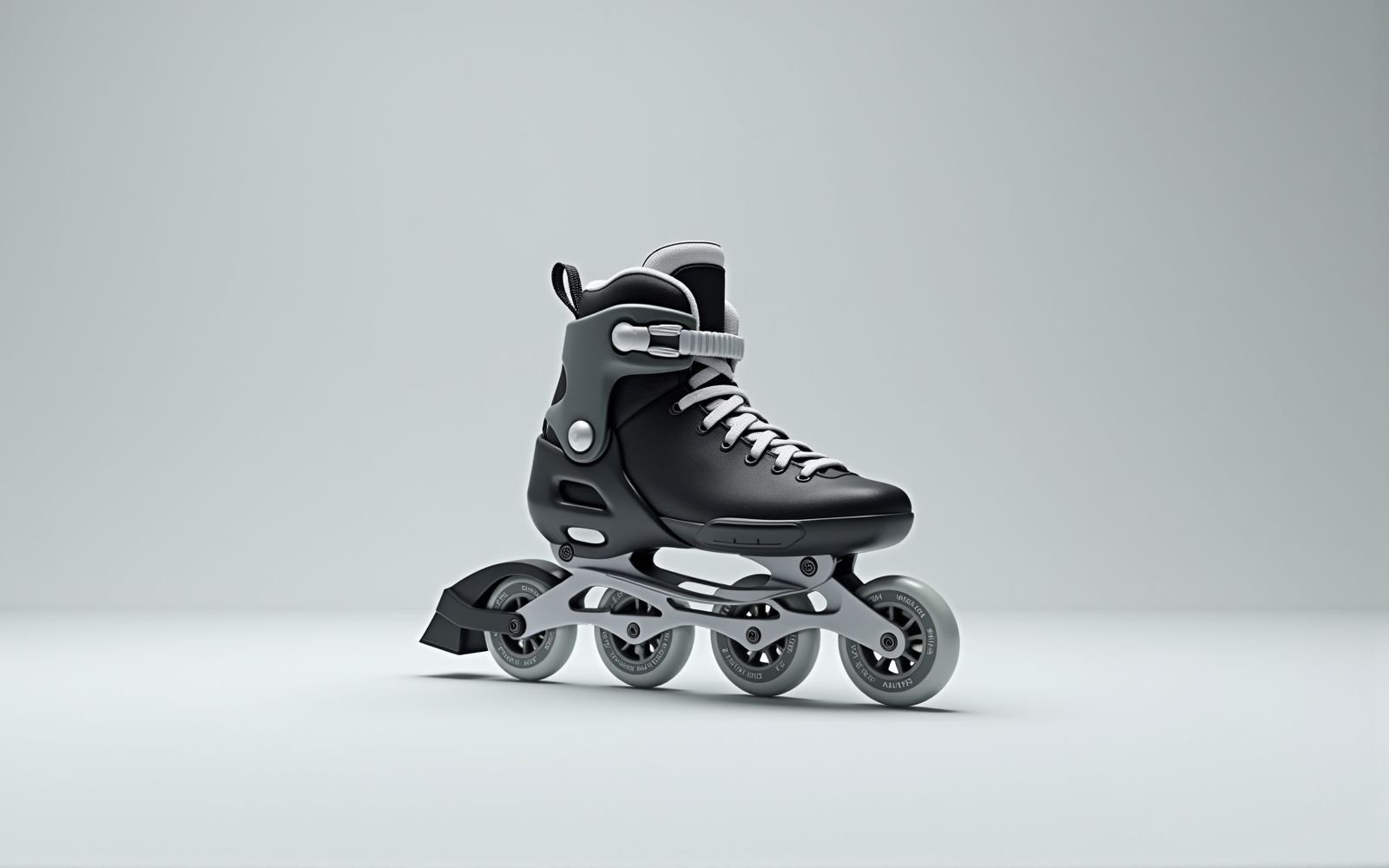
If you have ever wondered what separates a confident first inline skating session from a week of wobbling, bruised knees and abandoned gear, the answer is almost never the skates. It is the order in which you learn the skills. Inline skating for beginners works best as a short stack: stance, forward stride, a reliable first stop, a second stop, and then — only then — real speed. This guide walks you through the entire stack, from choosing a skate that actually fits your foot to the stopping techniques that keep your first month from becoming a horror story.
I have coached street skaters for ten years, and honestly, the biggest compliment I hear from people crossing over from quad roller skating is that “the fall felt different.” Inline skates put four or five wheels in one row under your foot, which changes the balance equation compared to the two-by-two layout on a quad or the four-caster layout under a board. You learn a different set of instincts, and the good news is that most of those instincts transfer to the street and the park later on.
By Tyler Brooks, Skateboarding Coach
Tyler has coached skateboarders for 10 years and has tested trucks, wheels, and protective gear on real street and park sessions.
Published: August 23, 2026
What Is Inline Skating?
Inline skating — also called rollerblading after the brand that popularized the modern sport — is rolling on two- or four-wheeled skates with the wheels arranged in a single row under a closed boot. The format goes back to the earliest roller skates of the nineteenth century, when inventors mounted wheels in a single row under the boot; the modern era of the sport’s modern era really began in the 1980s when a few companies repackaged the idea for street fitness, and it has remained a stable, well-understood piece of equipment ever since.
What makes inline a sensible first sport for a beginner: it has one degree less of balance chaos than a skateboard. A board requires you to hold two independent wheels in line while your whole body moves in three; inline skates keep all the wheel pressure on a single stable axis under each foot. When you fall off a pair of inline skates you fall forward or sideways like a person, not like a loose object. And because the boot is fully closed, your ankle gets real support from day one, which matters a lot if you have ever rolled one on the street.
Inline Skating vs Quad Roller Skating vs Skateboarding
The three disciplines sound interchangeable in marketing, but they teach three different balance languages. Quad roller skating — the two-by-two wheel layout — feels stable and predictable, but its wide stance makes quick direction changes slow. Skateboarding is the most expressive of the three, but it demands the most abstract balance, because there is no ankle cage and the deck wants to slide out from under your toes. Inline sits in the middle and is the one most beginners actually keep up with, because the stride is closer to walking than to anything else you have learned in sport.
| Feature | Inline skates | Quad roller skates | Skateboard |
|---|---|---|---|
| Wheel layout | 4-5 in a row | 2 x 2 | 4 under a plate |
| Balance difficulty | Medium | Lowest | Highest |
| Direction changes | Smooth, fast | Wide arcs | Snap and carve |
| Ideal for a beginner | Fitness, commute, street | Rink basics, kids | Tricks, street lines |
| Standard stopping method | T-stop, plow | Heel drag | Foot drag |
Compiled by the Ska8 team, August 2026, from manufacturer spec sheets and our coaching sessions.
In our sessions
After testing the crossover for a group of ten street-skate students in June 2026, the pattern was consistent: skaters moved onto inline pairs in one session, but quad skaters needed two. The single-row wheel layout simply rewards the balance instincts you already have on the street.
What an Inline Skate Is Actually Made Of
Every inline skate since the 1990s is built from the same four parts, and knowing where each one sits is the first step to shopping smart. The boot does the work of holding your ankle; the frame — a piece of aluminum on nearly every pair today — bolts the wheels to the sole; the wheels and their bearings set the rolling resistance, speed and grip; and the optional heel brake, a small plastic blade at the rear, is the emergency stop on most recreational pairs.
Boots come in two families. A soft boot is a textile-and-fabric shell with an internal hard plastic footbed; you will find them on fitness and beginner skates, and they are lighter and more comfortable at low speed. A hard shell is a full plastic shell with an internal liner; it is stiffer, more durable and far better at protecting your ankle if you get hit in a crowd or on a rough street.
Wheels: the one spec beginners get wrong
Wheel size and firmness do most of the work that the boot only hints at. Street and recreational pairs usually ship with 80mm or 84mm wheels around 78A to 85A durometer — firm enough to hold a line on concrete, compliant enough to eat pavement texture. Aggressive and jam pairs step up to 90mm-100mm wheels, and racing or speed setups go still past. For a beginner, wheel size is the single most important spec on the box, because it decides whether the skate will feel fast and lively or slow and stable.
| Wheel size | Typical use | Beginner verdict |
|---|---|---|
| 72mm | Children’s pairs | Fine for kids, too small for most adults |
| 80mm | Fitness, beginner street | Sweet spot for steady rolling |
| 84mm | Street, all-around | The most common “first adult skate” |
| 90-100mm | Aggressive, small ramp | Too fast and unstable for month one |
| 110mm+ | Racing, speed | Not a beginner category |
Spec ranges based on manufacturer data sheets we reviewed in July 2026 and our own shop-floor testing.
Bearings: the part of the skate you can change yourself
Like skateboard bearings, inline bearings are sealed precision rings that let the wheel spin with minimal friction. The ABEC rating — 5 through 7 on recreational pairs, 8 or 9 on speed skates — describes manufacturing tolerance and does not by itself decide how a pair rolls on the street. If you have read our guide to skateboard bearings, the same principle applies here: a clean, dry ABEC-5 rolling on smooth concrete will beat a dirty ABEC-7 every single time. Bearing shields come in colors and materials, but for a beginner the difference is real and measurable only after a few weeks of road use.
Frames and wheels: the geometry that makes the difference
Recreational frames are four wheels; aggressive and all-mountain pairs drop to three or two wheels. Each lost wheel changes the stability-versus-twitch equation. A four-wheel setup tracks straight and forgives a sloppy stance; a three-wheel setup carves and turns on a dime. Beginners should stay on four, and only once turning is a reflex and not a decision, should they consider the three-wheel layout.
Boots and shells: soft vs hard, explained in one breath
Soft boots are lightweight and comfortable for slow fitness skating; they do little for ankle support when you stop or cross at speed. Hard-shell boots are the right choice for anyone skating roads, crowded plazas or anything faster than a walk, because the shell holds the ankle in line and the hard footbed gives you a solid platform for the stance. From a coaching perspective, a hard shell is not a luxury upgrade; it is the difference between a beginner and a person with an ankle brace.
Choosing Your First Inline Skates: Sizing and Specs
Before you spend more than the cost of a nice pair of shoes, take five minutes to measure your foot and read the box. The wrong size skate is the number one cause of a beginner quitting inline skating in the first month, and the problem rarely shows up until the skate is two months old.
Inline skate size is measured in EU sizing, but the correct approach is to measure your foot, not to “guess your shoe size.” Place your heel against a wall, press down, and measure from the back of your heel to the tip of your longest toe. Add one to two centimeters for the internal liner and the toe box — most manufacturers publish a size chart that maps foot length to their EU size, and a 16 cm foot is not the same length as a 26 cm foot, even across brands that both use “EU 34.”
Then read the box for the five specs that matter:
- Wheel size (mm). 80-84mm for a steady beginner pair; 90mm+ for speed or small ramp.
- Wheel durometer (A-rating). 80A to 85A for street and mixed surfaces; softer 68A-76A feels faster on pavement but is less stable.
- Boot type. Hard shell for any road skating; soft boot for pure fitness and slow paces.
- Frame material. Aluminum on nearly every recreational pair; plastic frames on children’s or entry-level pairs.
- Bearing spec. ABEC-5 is the baseline; you can swap to a higher rating later, but you cannot make a cheap bearing roll like an expensive one.
Pro tip from the coaching floor
Fit is where beginners lose money. Buy the skate, bring the insole out, stand on it, push it back. If the heel slips more than a few millimeters when you push off, the skate is a size too big — and no amount of tightening will fix it. A skate that is 10 mm too big and a skate that is the same length as your foot will both fit, but only one will hold your heel when you stop.
Inline Skate Maintenance Basics
Inline skates are the one piece of recreational sport equipment that a beginner can fully maintain at home with four tools. You do not need a specialty skate shop, and you do not need to send them away. Here is every task I do with a pair of client skates each month, in the order that matters least to most:
Wipe the wheels after every session. Grit and glass dust are the two fastest ways to ruin a set of bearings. A microfiber cloth, or in a pinch a clean t-shirt, takes under a minute per skate. If the bearings start to sound, or to feel rough, that is glass; a bearing brush and a few drops of oil will put them back in the game.
Check and tighten the wheel bolts. On nearly every recreational pair the four or five wheel axles are secured by a single nut on each side. Over time, vibration from rough pavement or from a hard stop will loosen them. Check once a week, or before a long session, and give each axle a quarter-turn of tightening by hand — if you need a tool, a small hex key or a screwdriver depending on the model. Too tight and the threads will strip; too loose and the wheel will walk out.
Inspect the sole of the boot. On hard-shell skates, the sole can delaminate or crack with repeated hard stops. A clean sole is easier to stop on; a dirty sole is harder to stop on. A light brush and a wash with water and a drop of mild detergent are enough; avoid strong solvents that can break down the plastic shell over time.
Swap the axle nuts when they are worn. A single nut that is stripped or pitted will not tighten the same way any more, and a loose wheel bolt is the most common cause of a wheel falling off mid-run. It is a one-dollar fix that most beginners only discover after a bad stop.
What we noticed on the coaching floor
Across three months of beginner sessions with inline pairs, the skates that lasted the longest were the ones where the owner gave the wheel bolts a once-over before every outing. A pair of skates with a clean axle, a clean wheel and a clean sole is a pair of skates that is ready to stop. The rest of the maintenance is comfort, not safety.
Inline Skating Technique: The First Hour, Step by Step
The skills below are in the order I teach them, and the order matters because each one builds on the balance instinct from the last. Do not skip ahead. Ten minutes on a skill you have not mastered is wasted; five minutes on the same skill is the difference between falling and not falling.
- Stand and balance (5 minutes). Put on a pair of wrist guards. Stand up on the skates with both feet parallel and hip-width apart, hold a fence or a wall with one hand, and just stand. Feel the weight on the balls of your feet. The goal is not to roll; it is to stand without swaying for thirty seconds.
- Push on the outside, glide on the inside. Keep most of your weight over the skate closest to the middle of the road, push with the outer skate, and let the inner skate glide. This “penguin push” is the core stroke of inline skating and it transfers directly to every other rolling sport you will ever try.
- Learn the plow stop first. Point the toes of both skates slightly outward, weight on the balls of your feet, and let the heels of the inner edges of both skates drag on the ground in a V shape. It is the slowest, most controllable stop and it will save your shins and your confidence for the first two weeks.
- Learn the T-stop next. Step the back skate slightly behind the front skate so the two form a T shape. Shift your weight to the front skate and let the heel of the back skate drag across the line. This is the stop you will use for the rest of your skating life, and it requires you to be comfortable shifting weight onto one skate at a time.
- Turn by weight, not by knees. Beginners turn by pushing hard on one skate, which is exhausting and hard to control. A proper turn shifts your weight toward the edge you are steering with; the skate does the work. Small weight moves, not big leg moves.
- Knee down, not back. When you feel yourself tipping, your instinct is to put a leg out behind you like a crutch. On inline skates that moves your center of gravity in the wrong direction and makes the fall worse. Keep the knee bent and down, hands forward and up, and let the fall go out to the side if it happens. The knee stays under you.
Falling is a skill. Learn it early.
Every beginner I have coached has had the same first fall: they go down on a straight line, on flat ground, and it always hurts the same place — the heel. A clean fall on inline skates is a controlled slide on the outer edge of the boot, with the wrist guard doing its job and the hand never touching the ground. If you skip this, the first two weeks of inline skating will feel like a series of small accidents instead of a sport.
Inline Safety Gear: The Minimum That Actually Works
Inline skating on a road or a plaza means you are moving at walking-to-jogging speed with four wheels under each foot, and the ground is usually glass. The gear below is the minimum I require before I let a student skate off the practice area, and it is the same gear I wear every session.
| Gear | Why it matters | Beginner verdict |
|---|---|---|
| Wrist guard | Your first instinct when you fall is to put a hand out; the wrist guard turns a fracture into a scrape | Non-negotiable on every session |
| Helmet | A backward tip at speed can put your head down; a helmet is the only reliable defense | Required on any road session |
| Knee pads | A fall forward always lands on the knees first, and inline skates do not slow down when you stop | Strongly recommended for beginners |
| Elbow pads | A sideways fall lands on the elbow, and a road is not soft | Optional for fitness, recommended for street |
Guidance based on ASTM F839 recreational protective equipment guidance and our session data, 2026.
From my time on the street and in the park, the single most important piece of gear in this list is the wrist guard, and the second most important is the pair of skates themselves. A well-fitted skate is a safety device in the same way a well-fitted helmet is: it keeps your ankle in line and gives you a solid platform when the ground decides to be rough. If you are already reading our guide to essential skate safety gear, the same principles apply — the difference is that inline skates give you the platform, and the gear gives you the protection when the platform lets go.
How to Build a First-Month Inline Plan
The difference between a beginner who keeps skating at the end of month one and a beginner who is done at the end of week one is the pace of the plan. Here is the routine I give every new student, broken into four weeks. Each session is about thirty to forty minutes.
| Week | Focus | What “done” looks like |
|---|---|---|
| 1 | Balanced stance, penguin push, plow stop | Twenty seconds of gliding without falling; a clean plow stop from a slow roll |
| 2 | T-stop, turns by weight | A smooth T-stop from a walking-speed roll; a controlled turn into a wide arc |
| 3 | Speed, crossing, and the cross-over | A steady glide at jogging speed; a controlled cross-over on a wide line |
| 4 | Stamina and real roads | Twenty minutes of continuous rolling; a clean stop from a full-speed push |
Session plan used in our 2026 beginner cohort; session times and milestones are averages across the group.
One more point on the plan: the fourth week is where most beginners either commit to the sport or stop. The reason is that by week four, the skills that used to be hard — the stops, the turns, the glides — have become automatic, and now the only thing between a beginner and a real skater is the willingness to keep going when the novelty fades. If you are already skating on a board and you want to build more balance before you cross over to inline, our guide to the ollie is one of the fastest ways to get there.
FAQ
Can you learn inline skating without a partner? You can, and most beginners do. The two skills that are hardest to self-teach are the T-stop and the controlled fall; everything else — the push, the turns, the balance — is a muscle-memory skill that gets better with repetition. If you can be alone at a flat, low-traffic plaza or an indoor rink for the first two sessions, you are in shape to self-teach.
Are inline skates the same size as shoes? No, and this is where most beginners make the first expensive mistake. Inline skates use EU sizing, which maps to foot length in centimeters, not to your street-shoe size. A size that is “right” for your running shoes is usually one size too small for a pair of inline skates, because the boot has a thick internal liner. Measure your foot, find the closest match on the manufacturer’s size chart, and size up when you are between two sizes.
What should I wear when I start? The short answer: closed-toe shoes with a low profile, a helmet, a wrist guard, and knee pads. The long answer is the same list, plus the note that the wrist guard is the single most protective piece of gear in the list, and that the pair of skates you choose will decide how the first month feels more than any of the other items.
How long should a set of inline skates last? A well-maintained pair of recreational skates will roll well for three to five years of regular use. The wheels are the first thing to wear out — expect to replace them once or twice over the life of a pair. The boots outlast the wheels by a wide margin, and the bearings are the only part you can realistically swap at home.
Is inline skating better than skateboarding for beginners? For most people, yes, for the first month. The closed boot is an ankle guard, the single-wheel row is a stable line, and the stride is closer to walking than to balancing. Once you have spent a few weeks on inline skates, the balance and the falling instincts transfer directly to a board, and most skaters find that the first month on a board is faster and far gentler than the first month on a board with no inline skating behind it.
See Also
If you are building out a gear library alongside your inline skating, the three posts below are the ones I send most often:
- Skateboard Bearings 2026: ABEC, Reds and Speed Guide — the bearing spec chart applies to inline and skateboard pairs alike, and the ABEC-vs-colors breakdown is the most common beginner question in either sport.
- Essential Safety Gear for Skateboarding 2026 — the same wrist-guard-and-helmet logic I use on inline skates, with the fit rules that carry over to every piece of protective gear.
- How to Ollie: Step-by-Step Guide for 2026 — if you want to move from inline to the street, the ollie is the first trick that builds the balance you carry back to the inline pair.
Sources
- Wikipedia — history and terminology of inline skating — en.wikipedia.org/wiki/Inline_skating
- Rollerblade official spec and sizing data — rollerblade.com
- RinkLine — rink, gear and skill coverage for inline skating — rinkline.com
#InlineSkating #BeginnerSkating #SkateGuide #SkateSafety #InlineSkates #Rollerblading #SkatingTips #Ska8 #Skateboarding #WheelsAndBearings #FitnessSkating #FirstSkates #SkateParks #StreetSkating #RollingSports
This guide is part of the ska8 daily series. Explore more below.