
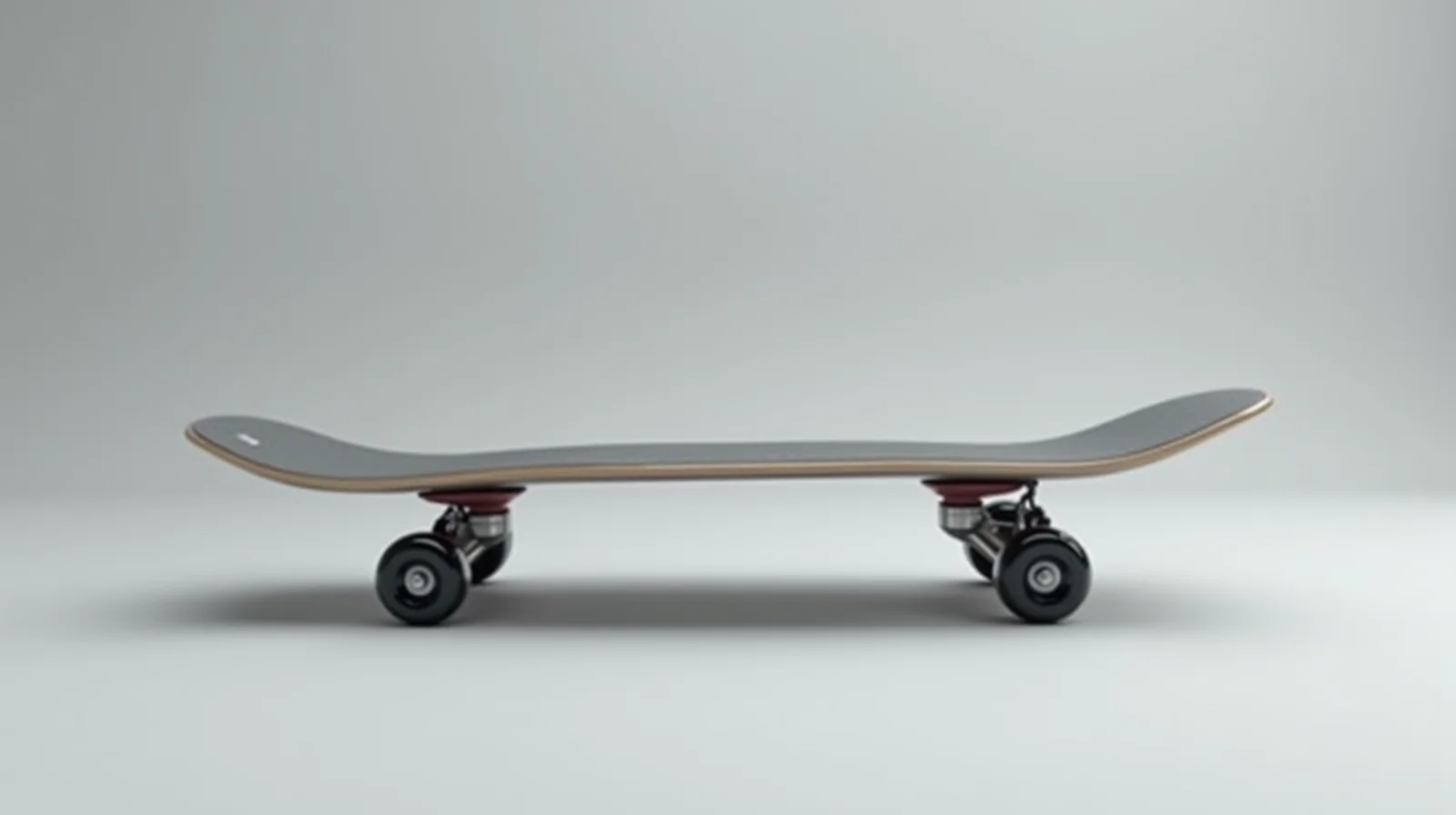
A surfskate is not a regular skateboard with bigger wheels, and it is not a longboard either. It is a hybrid board built around a single idea: give a rider the loose, flowing, pumpable feel of riding a wave without needing a wave. In 2026 the surfskate has moved from a niche surf-cruiser toy into one of the fastest-growing board categories for commuters, fitness riders, and street skaters who want to learn balance and board feel before they commit to a full trick setup. This guide breaks down exactly how a surfskate works, how a flow surfskate differs from a longboard and a standard skateboard, which boards are worth your money, and how to actually get rolling safely.
If you have been searching for flow surfskates, surf cruisers, or wondering what all the surfskate hype is about, you are in the right place. Below I cover the baseplate mechanics that make the board feel alive, a side-by-side comparison of the three board types, a spec-by-spec look at the best beginner surfskates for 2026, and a step-by-step plan for your first ten minutes on one. Everything here comes from time spent coaching riders through their first sessions, so the advice is practical rather than theoretical.
By Tyler Brooks, Skateboarding Coach
Tyler has coached skateboarders for 10 years and has tested trucks, wheels, and protective gear on real street and park sessions.
Published: September 15, 2026
What Is a Surfskate? The Short Version
A surfskate is a board that pairs a flexible baseplate (a movable pivot mechanism between the deck and the rear truck) with a wide, soft-wheeled chassis. The front truck swivels freely, just like on a longboard or a regular skateboard, but the rear truck sits on that spring-loaded baseplate. When you shift your weight forward, back, or side to side, the baseplate flexes and the rear of the board carves and pumps the way the tail of a surfboard would on a wave.
That single mechanical difference is the entire reason the category exists. A normal skateboard or a cruiser longboard is a rigid triangle: deck, two fixed trucks, four wheels. You carve by leaning and turning the whole board as one unit. A surfskate is a two-piece system. The baseplate lets the rear truck articulate independently, so you can generate speed with weight shifts and pump, the same motion you would use to ride a swell, rather than relying purely on pushing with your back foot.
From coaching hundreds of first-time riders, the most common thing I hear is that a surfskate feels “weirdly easy and weirdly hard at the same time.” It is easy because the board does a lot of the carving for you. It is hard because the loose rear end punishes sloppy foot placement and poor balance more than a stiff cruiser does. Master the balance and the board becomes one of the most fun ways to move around a city. Skip that step and it will feel like the tail is trying to escape you.
The one-line definition
A surfskate = a cruiser/longboard deck + a flexible rear baseplate that lets the board carve and pump like a surfboard. That baseplate is the whole game; everything else is supporting it.
How the Baseplate Actually Works
The baseplate is a spring-loaded pivot that replaces a rigid rear truck mount. On a classic design, the rear truck bolts onto a plate that can rotate and tilt around a central pivot. Most modern baseplates use either a spring-loaded mechanism (a coil or rubber spring returns the plate to center after each shift) or a flex-pivot mechanism (a machined or molded arm that bends under load). Either way, the result is the same: the rear of the board moves relative to the front.
Here is what happens mechanically when you ride. Your back foot lands on the tail. When you press down, the baseplate compresses and the rear truck angles. When you shift your weight back, the spring releases and the plate snaps the tail back out, kicking the rear of the board to the opposite side. Repeat that rhythm and you are carving. Now add a pump: drive the baseplate down on each turn and the stored spring energy adds a little forward push, so you can keep speed without a single foot on the pavement. That is the “surf” feel, and it is the part of the ride a rigid longboard simply cannot reproduce.
Two variables control how loose or tight a surfskate feels, and both are worth understanding before you buy:
- Baseplate tension / stiffness. A softer, more compliant baseplate carves and pumps more easily and feels more “surfboard-like,” but it is less stable at speed and needs more active balance. A stiffer baseplate feels more like a longboard: stable, predictable, and easier for a first-time rider to trust, though it rewards less pumping.
- Baseplate pivot angle (range of motion). A baseplate that allows a larger rear-truck angle gives wider, more aggressive carves and better pumping. A baseplate with a smaller angle feels tighter and more like a regular cruiser. Street skaters usually prefer the tighter end; wave-feel riders want the wider end.
From my coaching experience, beginners consistently overestimate how much baseplate travel they want. A board that is too loose on day one feels like the tail is spinning away. A mid-stiffness baseplate with a moderate pivot angle is the sweet spot: enough travel to feel the wave, not so much that you are fighting the board every three seconds. You can always tune a baseplate with a few turns of the tension bolt; you cannot un-buy a board that is wrong for your balance.
Coach note: buy the baseplate, not the deck
Two surfskates with the same deck graphic can ride completely differently because the baseplates are different. When you compare boards in 2026, read the baseplate spec (tension, pivot angle, spring type) before you look at the deck art. The baseplate is 80% of the ride.
Surfskate vs Longboard vs Skateboard: The Real Differences
The three boards get lumped together because they all have four wheels and two trucks, but they are built for different jobs. A standard skateboard is a rigid trick machine: a 7.5 to 8.25-inch deck, poppy urethane wheels, and trucks tuned for ollies, kickflips, and grinding. A longboard is a rigid cruiser or downhill rig: a longer, wider deck, softer bigger wheels, and trucks set for stability at speed. A surfskate sits between them in size but borrows its soul from neither, because the baseplate lets it carve and pump in a way the other two cannot.
Where each board wins is a function of what you are actually trying to do. If you want to commute smoothly over cracked pavement, a longboard with big soft wheels will be the most comfortable. If you want to do tricks on ledges and rails, nothing beats a standard skateboard. If you want the closest thing to riding a wave you can get on pavement, or you want to burn off energy with a loose, flowing ride that builds balance faster than any other board, the surfskate is the one. The table below summarizes how the three line up on the dimensions that matter most when you are choosing.
| Feature | Skateboard | Longboard | Surfskate |
|---|---|---|---|
| Primary job | Tricks, street, ledges and rails | Commuting, cruising, downhill speed | Wave-feel carving, pumping, balance training |
| Deck length | 31 to 32 in (79 to 81 cm) | 38 to 44 in (97 to 112 cm) | 33 to 37 in (84 to 94 cm) |
| Deck width | 7.5 to 8.25 in (19 to 21 cm) | 8.5 to 10 in (21 to 25 cm) | 8 to 9 in (20 to 23 cm) |
| Wheels | Small, hard urethane (50 to 54 mm, 94A to 101A) | Large, soft urethane (60 to 75 mm, 50A to 78A) | Wide, mid-soft (60 to 70 mm, 54A to 80A) |
| Rear baseplate | None, rigid mount | None, rigid mount | Spring-loaded or flex-pivot baseplate |
| Carve feel | Tight, lean-based, no pump | Stable, lean-based, no pump | Loose, pumpable, self-kicking tail |
| Best first choice for | Learning tricks | Smooth commuting | Learning balance and wave-feel |
Specs reflect typical 2026 production ranges across major surfskate and longboard brands; exact numbers vary by model and manufacturer.
Choosing Your First Surfskate in 2026
There are dozens of surfskate models on the market, but for a first board the choice narrows fast. You want three things: a mid-stiffness baseplate that is stable enough to trust on day one, wheels soft and big enough to roll over rough pavement without a death wobble, and a deck wide enough to stand on comfortably. You do not want the most aggressive, widest, pump-happy board your local shop stocks. That is a board for a rider who already has balance and wants to shred, not for someone learning to not fall over.
The good news is that the two brands that define the category in 2026 both make a clear beginner-friendly line, and both are widely available. Landyachtz and YOW are the two names to anchor your search. Landyachtz is known for the “Church” and “Zig” line of surfskates with their own baseplate design, while YOW is the brand that essentially popularized the baseplate concept with its Surfskate System. Both are legitimate, both are worth buying, and the difference between them is more about baseplate character than quality. Below is what to look for in each, with plain-text retailer guidance and typical price ranges.
What I actually recommend for day one
A 34 to 36 in (86 to 91 cm) surfskate with 63 to 66 mm, 54A to 78A wheels and a mid-stiffness baseplate. That combo is stable enough to build trust, soft enough to roll over city pavement, and loose enough to teach you the pump. You can find this exact profile from either major brand in the 180 to 280 USD range, complete, with a local skate shop or online retailer.
Three specs to check before you commit to any specific model, regardless of brand:
- Wheel durometer and diameter. For street and park pavement, aim for 60 to 70 mm wheels in the 54A to 80A range. Softer and smaller wheels are for smooth indoor or very smooth concrete; harder and bigger wheels are for speed and rougher ground. A mid-soft, mid-size wheel is the versatile default.
- Truck width to deck width match. The truck hanger should sit roughly under the deck, not sticking out past it. A mismatch makes the board feel nose-heavy or tail-heavy and can cause wheel bite on tight carves. Most complete surfskates are matched correctly, but if you are swapping parts, keep the truck width within about a quarter inch of the deck width.
- Baseplate adjustability. A baseplate with a tension adjustment bolt is a big quality-of-life win. You can start it stiff and stable, then loosen it as your confidence grows, instead of being locked into one feel forever.
One thing that is not worth spending extra on as a beginner: deck graphics and exotic deck shapes. A clean, standard-ply 7-ply deck with a sensible kicktail does the same job as a limited-edition graphic deck at half the price. Save the money for good wheels and a quality baseplate, which are the parts you feel on every single ride.
Your First 10 Minutes on a Surfskate: Step-by-Step
A surfskate is a balance board before it is a speed machine. The riders who fall in love with it on day one all follow the same order of operations: get comfortable standing, learn to shift, then learn to pump. Skipping straight to pumping is the number-one reason beginners get frustrated, because pumping assumes a balance base that has not been built yet. Here is the exact sequence I use with first-time riders, and what you should be feeling at each stage.
- Roll slow, both feet on. In a flat, empty, smooth area (an empty parking lot or a closed-off section of a smooth path is ideal), push off gently and glide with both feet on the deck. Keep your knees bent, your eyes up, and your weight centered. The goal is just to feel the board rolling without falling off. Do this for a full minute.
- Shift your weight fore and aft. While gliding, slowly move your weight toward the nose, then toward the tail, then back to center. You should feel the baseplate respond, the tail kicking out slightly as you load it. This is the single most important exercise on the whole board. If you can shift cleanly without losing your balance, you have done 70% of the work.
- Carve side to side. Now shift your weight side to side, letting the board lean and carve in a gentle S-curve. Keep the carves shallow at first. You are learning how much the board will turn before it starts to feel like it is going to spin away. If the tail feels like it is running away, stand up straighter, bend your knees, and make the carves smaller.
- Start the pump. This is where it gets fun. As you carve from side to side, drive your weight down into the board on each turn, the way you would pump a surfboard. You should feel the baseplate compress and release, adding a little speed with each stroke. You should be able to keep rolling without pushing with your back foot at all. If you are not gaining speed, your strokes are too small or too fast; make them bigger and smoother.
- Add a little speed, then practice stopping. Only once pumping feels comfortable should you build up speed, and only then should you practice slowing down and stopping. The standard stop is a foot brake: extend your back foot out to the side and drag the heel against the ground while keeping your weight forward. Because the rear end is loose, the board will want to kick out, so keep your back foot flat and your weight forward. Practice this at slow speed before you need it at speed.
The biggest mistake first-time riders make
Staring at the board. Your eyes should be on where you are going, not at your feet. The loose rear end will make you want to look down, but looking down is what actually throws your balance off. Pick a point ahead of you, look at it, and trust that your feet know where they are. It feels wrong the first five minutes and feels obvious by the fifteenth.
Wear a helmet and some pads for your first session, no exceptions. A surfskate is a lot of fun, but that loose rear end can dump your tail under you faster than you can react, and a hard fall on a loose board is a hard fall. The safety gear you skip in the first hour is the one you will thank yourself for later. If you need a refresher on what to wear, our guide to essential safety gear for skateboarding walks through the exact setup for a first session.
Can You Do Tricks on a Surfskate? Street Crossover
Short answer: a few, and it changes what the board is good for. A surfskate is not a trick board, but it is not completely trick-free either. The loose baseplate and the wide, soft wheels make a standard ollie nearly impossible, because the rear truck keeps moving under you while you are in the air. But a surfskate is genuinely good at a handful of balance and flow tricks that a rigid skateboard is actually harder to learn on.
The tricks that transfer well are the ones built on balance and board feel rather than pop. A maneuver (riding with one foot on the tail while the nose points out) is one of the best exercises you can do on a surfskate, because the loose rear end makes it feel natural and teaches you to balance on the tail. A manual is actually easier on a surfskate than on a regular skateboard in many cases, because the baseplate absorbs the little tail-drops that would otherwise throw you off. A nollie ollie is possible if you keep it small, but do not expect clean pop. A carve or pump sequence is not a trick in the traditional sense, but it is the skill that makes a surfskate fun, and it is the one skill that does not exist on any other board.
From coaching riders who came to me wanting to do street tricks on a surfskate, the pattern is consistent: people who love the flow of the board stay on it and get great at carving, pumping, and balance tricks, while people who want ollies and kickflips bounce back to a standard skateboard within a month. Neither choice is wrong. They are different boards for different goals. If you already ride a skateboard and want to learn flow, add a surfskate. If you want to learn tricks, keep the skateboard as your main board and treat the surfskate as a balance and fitness tool. If you are new to both, start with whichever goal excites you more. If you want to build your street trick foundation, our step-by-step manual guide is a good place to start, because the manual is the one trick that works on both board types.
Advanced Surfskate Techniques Once You Have the Basics
Once the basic carve-and-pump feels comfortable, there is a whole second layer of skill that makes a surfskate genuinely addictive. The goal here is to ride long lines without pushing, using only body movement to control speed and direction.
- Pump pumping. The core advanced skill. You drive the baseplate down on every carve so the board accelerates on each stroke. Mastering this lets you ride a flat line indefinitely without a single foot on the ground. The secret is to keep your strokes big, smooth, and in rhythm, rather than fast and choppy.
- Switch pumping. Pumping in switch stance (riding with your non-dominant foot forward) is the fastest way to improve your overall board feel, because it forces you to rely on balance rather than muscle memory. It will feel awful for the first ten minutes and will make you a noticeably better rider by the end of the session.
- Carve width control. Learning to make your carves tighter or wider on command, without changing speed. This is what lets you ride technical lines and navigate around obstacles. It comes from fine-tuning how much you load the baseplate on each stroke.
- Speed carving. At higher speed, the loose rear end wants to kick out wide, so you learn to keep your carves tighter and your body more centered. This is where the safety gear and your foot-brake practice from the first session start to matter, because a speed carve that goes wrong is a fast fall.
The skill that separates casual riders from regulars
Pump pumping without pushing. The moment you can ride a flat line for a full minute using only body movement to keep your speed, you have crossed from “trying a surfskate” to “actually riding a surfskate.” That skill does not come from watching videos. It comes from a few focused sessions where you do nothing but pump in a flat, empty space. Block out thirty minutes, put the phone in your pocket, and just pump. It is the best value-for-time skill on the whole board.
Common Surfskate Problems and How to Fix Them
Most complaints about surfskates are not broken boards. They are riders who bought the wrong baseplate tension, the wrong wheels, or skipped the balance step. Here are the five problems I see most often and the actual fix for each one.
- “The tail kicks out and I cannot control it.” (Too loose.) Your baseplate is set too soft for your current balance. Tighten the baseplate tension bolt one or two quarter-turns at a time and ride until it feels stable, then loosen back a little. If it still feels like the tail is running away, your wheels may be too hard; softer wheels absorb more of the kick.
- “It feels dead and I cannot pump at all.” (Too stiff or too small a deck.) A very stiff baseplate or a too-small deck will not let you generate enough travel to pump. Loosen the tension, and if you are on a short board, know that pumping is harder on shorter decks because you have less travel to work with.
- “It wobbles at speed.” (Death wobble.) This is a stability issue, usually from a combination of a too-loose baseplate, too-soft wheels, and standing in the center. Tighten the baseplate, make sure your wheels are not so soft they flex into a wobble, and keep your weight slightly forward. If it persists, your trucks may be too loose; a quarter-turn of tightening on the truck kingpin usually resolves it.
- “I keep falling off the back.” (Weight too far back.) The loose rear end will dump if your weight is on it. Keep your center of gravity forward, over the front truck, and only load the tail intentionally when you are carving or pumping. This is a balance habit, not a board problem.
- “It does not roll as far as my longboard.” (Wheel mismatch.) If you are comparing it to a longboard with big, soft, fast wheels, a surfskate with smaller or harder wheels will roll less. This is normal and expected. For a surfskate, rolling distance is secondary to carving feel; if you want more roll, go up in wheel size and softness, within the 60 to 70 mm range.
When the wobble is actually the board, not you
If you have tightened the baseplate and the truck kingpin, and the wobble still happens at a speed you are comfortable with, check your wheel mounting. A surfskate with a baseplate is more sensitive to a loose wheel than a rigid board, because the extra pivot point amplifies any play. If a wheel spins with visible wobble on its axle, the bearing is worn or the wheel is cracked, and that is a part to replace, not a setting to tune.
Where to Ride a Surfskate Safely
A surfskate is a loose, pumpable board, and that means it rewards smooth ground and punishes rough ground. The best surfaces are wide, flat, and smooth: an empty parking lot, a closed-off section of a smooth skatepark, a flat and empty paved path, or a smooth empty lot at a local park. Avoid cracked, gravelly, or heavily textured pavement for your first sessions, because the loose rear end will catch on every edge and throw your balance.
When you are ready to ride outside a controlled space, the same rules as any other board apply: ride where riders are welcome, yield to pedestrians, and treat the loose rear end as a reason to ride slower than you think you need to. If you are new to street riding in general, our guide to skateboard street safety and traffic rules covers the legal and practical side of sharing the road. And if you are looking for a home base, our skate park guide for beginners walks through how to find a safe, legal spot near you.
On maintenance, a surfskate needs the same basic care as any board plus one extra step. Check that your baseplate tension is where you want it every few sessions, because the mechanism can settle and shift. Tighten your trucks and wheel nuts to the same spec you would on a regular board, and replace worn wheels and bearings on a normal schedule. A surfskate with a clean, tight baseplate and good wheels will ride for years; one with a sloppy baseplate will feel bad no matter how new the deck is.
Frequently Asked Questions About Surfskates
What is the difference between a surfskate and a longboard?
A longboard is a rigid board: deck, two fixed trucks, four wheels, and you carve by leaning the whole thing. A surfskate adds a flexible baseplate under the rear truck, so the rear of the board carves and pumps independently. That baseplate is what gives a surfskate its wave-like feel and lets you generate speed with body movement instead of pushing. In short, a longboard is stable and predictable, while a surfskate is loose and pumpable.
Is a surfskate good for beginners?
Yes, with one caveat. A surfskate is a great balance trainer and is genuinely fun, but the loose rear end is unforgiving of sloppy foot placement. For a true first board, choose a mid-stiffness baseplate and wear a helmet and pads. If you are already comfortable on a skateboard, a surfskate is a low-risk way to add flow and balance skills. If you are brand new to any board, start with a stable mid-stiffness model and build from there.
Can you pump a surfskate to go fast?
Yes, and pumping is the whole point of the board. Once you have basic balance, you can drive the baseplate down on each carve and keep accelerating without pushing with your foot. Most riders can build up to a comfortable cruising speed using pump alone on a flat surface. Speed is where the safety gear matters most, so practice your foot brake before you go fast.
What size surfskate should a beginner buy?
For most adults, a 34 to 36 inch (86 to 91 cm) deck with 63 to 66 mm wheels is the versatile default. Shorter decks are more maneuverable but harder to pump; longer decks are more stable but less agile. If you are shorter, a 33 inch (84 cm) board is fine. If you are taller or want more stability, go up to 37 inches (94 cm). Match the truck width to the deck width so the board does not feel nose-heavy or tail-heavy.
How often do I need to maintain a surfskate?
A surfskate needs the same maintenance as any board plus a baseplate check. Tighten your trucks and wheel nuts every few sessions, replace worn wheels and bearings on a normal schedule, and check your baseplate tension every few rides because the mechanism can settle. A surfskate with a clean, tight baseplate and good wheels will ride for years.
See Also
Ready to build the rest of your board knowledge? These guides cover the fundamentals that pair directly with a surfskate:
- How to Choose Your First Skateboard: 2026 Buyer’s Guide for the deck, truck, and wheel fundamentals that apply to any board.
- Essential Safety Gear for Skateboarding for the helmet and pad setup to wear on your first surfskate session.
- Best Skateboard Trucks in 2026 for how truck width and stiffness shape the feel of any board, including a surfskate.
Sources
- Landyachtz official surfskate and baseplate specifications: landyachtz.com
- YOW Surfskate System baseplate technology and product line: yow.com
- Wikipedia, “Surfskate”: en.wikipedia.org/wiki/Surfskate
#Surfskate #FlowSurfskate #SurfCruiser #Skateboarding2026 #SurfskateGuide #SkateboardTips #PumpSkating #BalanceBoard #LongboardVsSurfskate #SkateboardingForBeginners #StreetSkateboarding #SkateFitness #RiderTips #SkateboardCulture #Ska8
This guide is part of the ska8 daily series. Explore more below.