
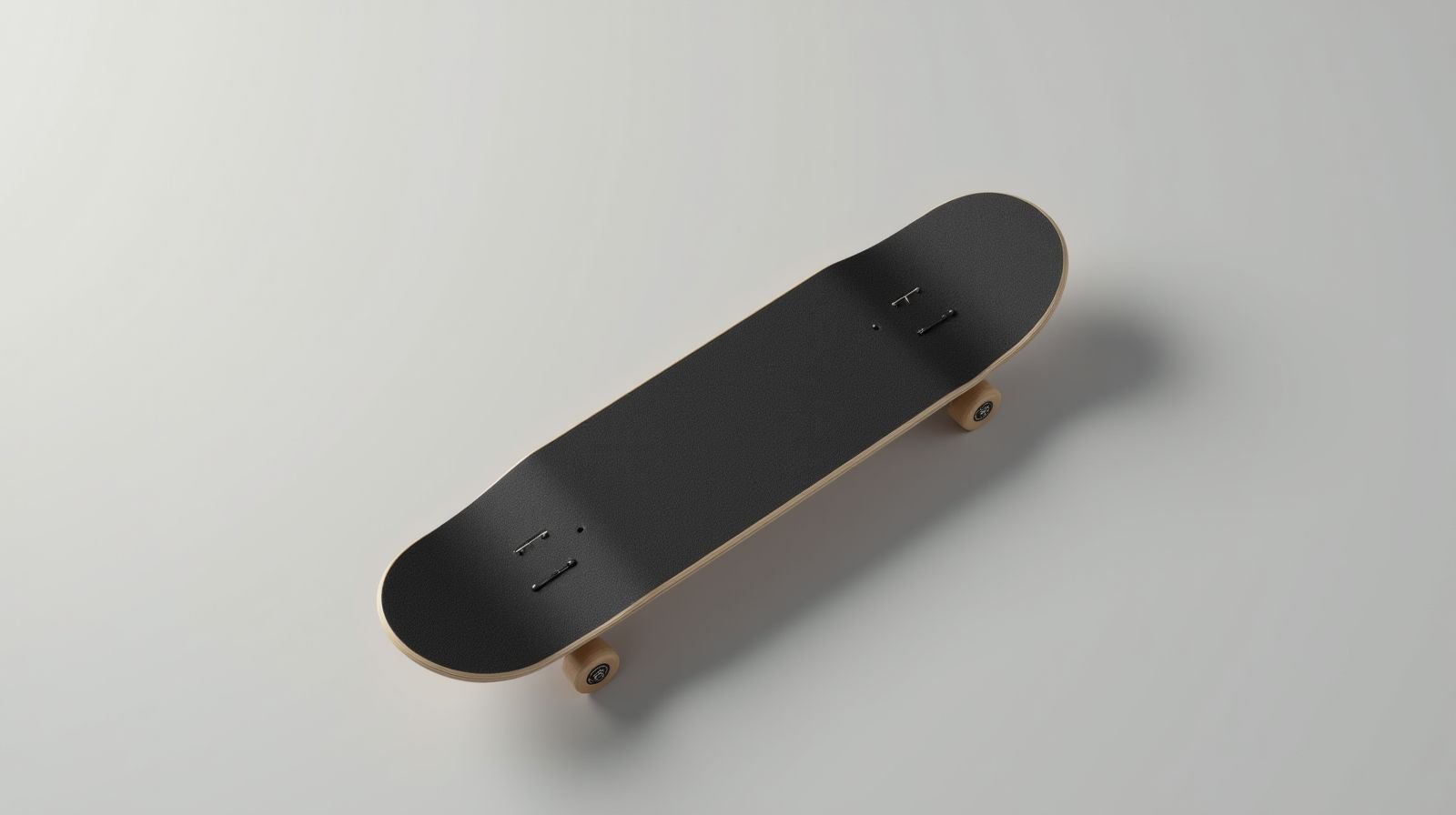
The first question every beginner asks is not about tricks, decks, or trucks. It is about stance: are you regular or goofy? Which foot goes in front, and which one sits on the tail? The answer sounds trivial, but getting it wrong is the single most common way a new skater wastes their first month on the board.
A rider locked into the wrong stance fights their own balance on every push, every carve, and every trick. The board feels unstable no matter how hard they try, and progress stalls for reasons they cannot name. In ten years of coaching, I have watched this mistake more often than any other — and it almost always happens because the skater guessed from one quick test, or took a friend’s word for it, and never stopped to confirm.
Done properly, finding your stance takes about ten minutes with three simple tests, plus one short rolling session to confirm. This guide walks through all three tests, explains how to read each one, what to do when they disagree, and how to lock in the right stance so every trick you learn afterward builds on a stable foundation.
Published: October 30, 2026
By Tyler Brooks, Skateboarding Coach
Tyler has coached skateboarders for 10 years and has tested trucks, wheels, and protective gear on real street and park sessions. He leads skill development and safety coverage on Ska8.
Why Your Skateboard Stance Matters More Than You Think
Your stance is the position your feet occupy on a moving board. The foot that sits on the tail — the back foot, the one that does the pushing and the popping — is what defines whether you are regular or goofy. If your left foot is on the tail, you ride regular. If your right foot is on the tail, you ride goofy. Everything else about your setup, your balance, and your trick style flows from that single decision.
It matters more than beginners expect for a simple reason: your stance is the foundation your nervous system builds every other skill on. When the stance is natural, balance is nearly free — you can push, carve, and stop without thinking about it. When it is wrong, your body is constantly correcting, your back foot has to work twice as hard to pop, and every trick feels like it is being done against the grain. The difference is not a small comfort issue. It is the difference between a skater who improves in weeks and one who stalls for months.
Coach’s note
The most expensive mistake I see in a first month is a beginner who is “pretty sure” of their stance and never tests it. Ten minutes of testing saves weeks of fighting your own body. Stance is the one setup decision you do not get to make on a whim.
Regular vs Goofy: What the Terms Actually Mean
The two terms are easy to confuse, so let us pin them down precisely. “Regular” means your left foot is at the back, on the tail, and your right foot is forward near the bolts. “Goofy” is the mirror image: your right foot is on the tail and your left foot is forward. The front foot is your steering foot — it points the board and absorbs landings — while the back foot is your power foot, responsible for pushing and for the pop that launches every ollie and flip.
A common shortcut is to assume your stance matches your dominant hand: right-handed skaters are usually regular, left-handed skaters are usually goofy. That heuristic is right most of the time, but it is a guess, not a test. Plenty of right-handed skaters are goofy, and plenty of left-handed skaters are regular. Hand dominance and skate stance are related, but they are not the same thing, which is exactly why you should confirm with a real test instead of assuming.
| Stance | Back foot (on tail) | Front foot | Approx. share of skaters | Typical handedness |
|---|---|---|---|---|
| Regular | Left | Right | ~70% | Mostly right-handed |
| Goofy | Right | Left | ~30% | Mostly left-handed |
Share figures are an industry-wide approximation drawn from skate shop and lesson data; individual ratios vary.
The Push Test: The Fastest Stance Check
The push test is the quickest of the three, and it is the one most people reach for first. It works by removing balance from your conscious control and watching which foot your body reaches for on its own. You need a flat, smooth surface, a skateboard, and ideally a friend willing to give you a gentle shove. If you are alone, you can roll down a very low, smooth slope or step off a low curb and observe your reaction.
- Stand on the board in a loose, neutral position, feet roughly shoulder-width apart, with neither foot clearly in front. Keep your knees soft and your eyes on the horizon, not on the deck.
- Ask a friend to give you a light, unexpected push from the side — not a hard shove, just enough to disturb your balance. On your own, roll slowly down a smooth, low slope or step off a low curb.
- Do not think. The moment your balance breaks, your body will lunge one foot forward to catch you. Let that happen naturally without forcing either foot.
- Note which foot moved forward. That is your natural front foot. Repeat the test three or four times and check whether the same foot comes forward each time.
Read the result like this: the foot that steps forward is your front foot, so the other one is your back, or tail, foot. If your left foot lunges forward, your left is your front foot and your right is on the tail — you are goofy. If your right foot lunges forward, your right is your front foot and your left is on the tail — you are regular.
The push test is fast and usually right, but it is a static balance response, not a skating response. It does not account for the way you actually ride, which is why it should be confirmed with one of the two tests below before you commit to a stance.
The Foot Test: Checking Against Your Dominant Foot
The foot test uses a simple truth about your body: the foot you would naturally place on the tail when forced to choose is usually your power foot, and that foot defines your stance. It is more deliberate than the push test and works well when you do not have a partner to push you.
- Stand on a flat, hard surface with the board flat on the ground in front of you.
- Without overthinking, place one foot on the tail of the board as if you were about to push off. Choose the foot that simply feels natural.
- Notice which foot you put down first and which felt like the “push foot.” The foot that naturally lands on the tail is your back foot.
- Now reverse it. Put the other foot on the tail and push with the first foot. Pay attention to which setup feels more stable and more like you.
- The setup that feels natural, stable, and easy to push in is your stance. The foot on the tail tells you: left foot back is regular, right foot back is goofy.
This test is more reliable than guessing from handedness because it uses your actual balance sense rather than an assumption about your dominant hand. That said, it is still a static test — you are not moving, so it does not capture the dynamic balance of real skating. Treat it as a strong second opinion and confirm with the slide test.
The Slide Test: The Most Reliable Stance Check
The slide test is the most reliable of the three, and it is the one I send every new student to when the first two come out close. It works because it puts you in motion and lets your body answer under real conditions — the same conditions you will actually skate in.
- Find a smooth, gently sloping surface — a low ramp, a smooth driveway, or a very shallow hill. It should be slow, not steep.
- Stand on the board in a neutral position and let it start rolling. Keep your knees bent and stay loose.
- As you begin to roll and your balance starts to shift, let your feet settle. Watch which foot naturally moves to the tail and which stays forward to steer.
- Stop, get back on, and repeat three or four times. If the same foot consistently ends up on the tail, that is your back foot — left foot back is regular, right foot back is goofy.
This test is the most reliable because it removes guessing entirely. You are not being pushed by someone else, and you are not standing still — you are actually rolling, which is the condition your stance is designed for. The foot your body sends to the tail under real motion is the foot it will want there every time you ride. From coaching, when the push test and the foot test disagree, the slide test almost always breaks the tie correctly.
Coach’s note
If all three tests agree, you can stop there — you have your stance. If two agree and one does not, trust the two and weight the slide test most heavily. Only when all three point in genuinely different directions should you move on to the next section.
What If the Tests Disagree?
It is not unusual for the three tests to come out mixed — the push test points one way and the slide test another. When that happens, do not panic; it usually means your stance is genuinely close, or one test was noisy. The fix is to weight the evidence and then let real riding settle it.
Give the slide test the most weight, because it is the only one that runs under actual motion. If the slide test and one other test agree, trust those two. If you are still unsure, ride both stances for a few minutes each and simply notice which one feels “less wrong.” After a short session the answer becomes obvious, because your body settles into the stance that matches it and resists the one that does not.
When in doubt, ride both for a week
Your body is an honest client. After a handful of sessions the correct stance feels effortless and the wrong one feels like you are fighting the board on every push. Trust that feeling over any single test result.
Can You Change From Regular to Goofy (or Vice Versa)?
The short answer is yes — you can train either stance — but your natural stance will always be the one you learn fastest. Your natural stance is the path of least resistance for your nervous system: balance, pop, and footwork all line up with how your body already moves. The opposite stance is trainable, and plenty of skaters do work it deliberately, but it will feel harder and take longer to build the same fluency.
If you are a beginner, the practical move is to pick your natural stance first, get solid on it, and then add the other one later as a deliberate skill. That is exactly what switch skating is: riding in your opposite stance on purpose. You do not have to abandon one stance to learn the other — you just sequence them. From coaching, the students who tried to flip their stance mid-learning almost always stalled longer than the ones who locked in their natural stance and built from there.
Common Stance Mistakes Beginners Make
Most of the confusion around regular and goofy comes from a handful of repeated mistakes. None of them are fatal, but each one costs time, and all of them are easy to avoid once you know what to look for.
| Mistake | Why it hurts | The fix |
|---|---|---|
| Guessing from handedness alone | Locks you into the wrong stance before any test | Run all three tests before deciding |
| Committing too early | Weeks of fighting your own balance | Confirm with the slide test plus a short ride |
| Confusing front and back foot | Inverts your entire setup | Stance is defined by the back, tail foot |
| Treating stance as permanent | Misses the switch-skating opportunity | Add the opposite stance later as a skill |
How to Practice Once You Have Found Your Stance
Once your stance is confirmed, the goal of the next few sessions is to make it feel automatic so you can stop thinking about your feet and start thinking about tricks. Work through this short progression in order; each step should feel easy before you move to the next.
- Push and roll in your new stance for ten to fifteen minutes. The only goal is comfort — let the board feel normal under your feet.
- Add carving and turning, keeping your weight loaded over your back foot so you learn to steer from the power foot.
- Practice stopping — a controlled foot stop or a gentle manual — until you can halt smoothly without wobbling.
- Move to the ollie, the first trick you should learn on a confirmed stance, since it builds the pop your stance is designed to deliver.
- Wear properly fitted helmet and pads during every practice session while your balance is still developing.
This progression mirrors the first phase of the broader beginner roadmap, where stance confirmation is step one and everything else builds on top of it. Nail the foundation now and every trick after it gets easier.
Frequently Asked Questions
How do I know if I am regular or goofy?
Run the three tests in this guide — the push test, the foot test, and the slide test — and see which result shows up most often. The slide test, which puts you in motion, is the most reliable, so weight it highest when the others are close. Most skaters land on their stance within a single ten-minute session.
Are most skaters regular or goofy?
Most skaters ride regular — roughly 70 percent, with goofy making up about 30 percent. The split tracks hand dominance, since most people are right-handed. But the ratio is an approximation, and you cannot tell which side you fall on without testing; plenty of right-handed skaters ride goofy.
Does being right-handed mean I must ride regular?
No. Right-handed skaters are more likely to be regular, but it is a tendency, not a rule. Stance is decided by which foot your body sends to the tail, not by which hand you write with. If the tests say you are right-handed but goofy, trust the tests — your board does not care which hand is dominant.
Can I skate both regular and goofy?
Yes. Riding in your opposite stance is called switch skating, and it is a skill worth building once your natural stance feels automatic. You do not have to pick one forever — most skaters learn on their natural stance first, then add the other one for gaps, ledges, and lines that demand it.
What if I still cannot decide after testing?
Ride both for a week. Your body will make the call: the correct stance feels effortless, and the wrong one feels like you are fighting the board on every push. If the slide test already gave you an answer, start there and let the riding confirm it — most people settle within three or four short sessions.
See Also
These guides pair well with the stance work above:
How to Ollie: Step-by-Step Guide for 2026 — the board control every trick on a confirmed stance stands on.
How to Learn Skateboarding: 2026 Beginner Roadmap — the full first-month progression, with stance confirmation as step one.
Skateboard Switch Stance 2026: Step-by-Step Guide — the opposite-stance skill to add once your natural stance is locked in.
Sources
Safety standards and technique references referenced in this guide:
The Berrics — structured skateboarding lessons covering stance, balance, and the fundamentals of learning to ride.
ASTM International — F963 standard for skateboards and similar products (construction and safety).
Indy Trucks — hanger and axle-length engineering notes referenced for setup and turn feel.
#Skateboarding #RegularOrGoofy #SkateboardStance #LearnSkateboarding #SkateboardingBeginner #SkateTricks #SkateboardTips #StreetSkating #SkateLife #SkateboardSkills #Ollie #SkateboardingCoach #SkateboardingFundamentals #SkateCulture #FindYourStance
This guide is part of the ska8 daily series. Explore more below.