
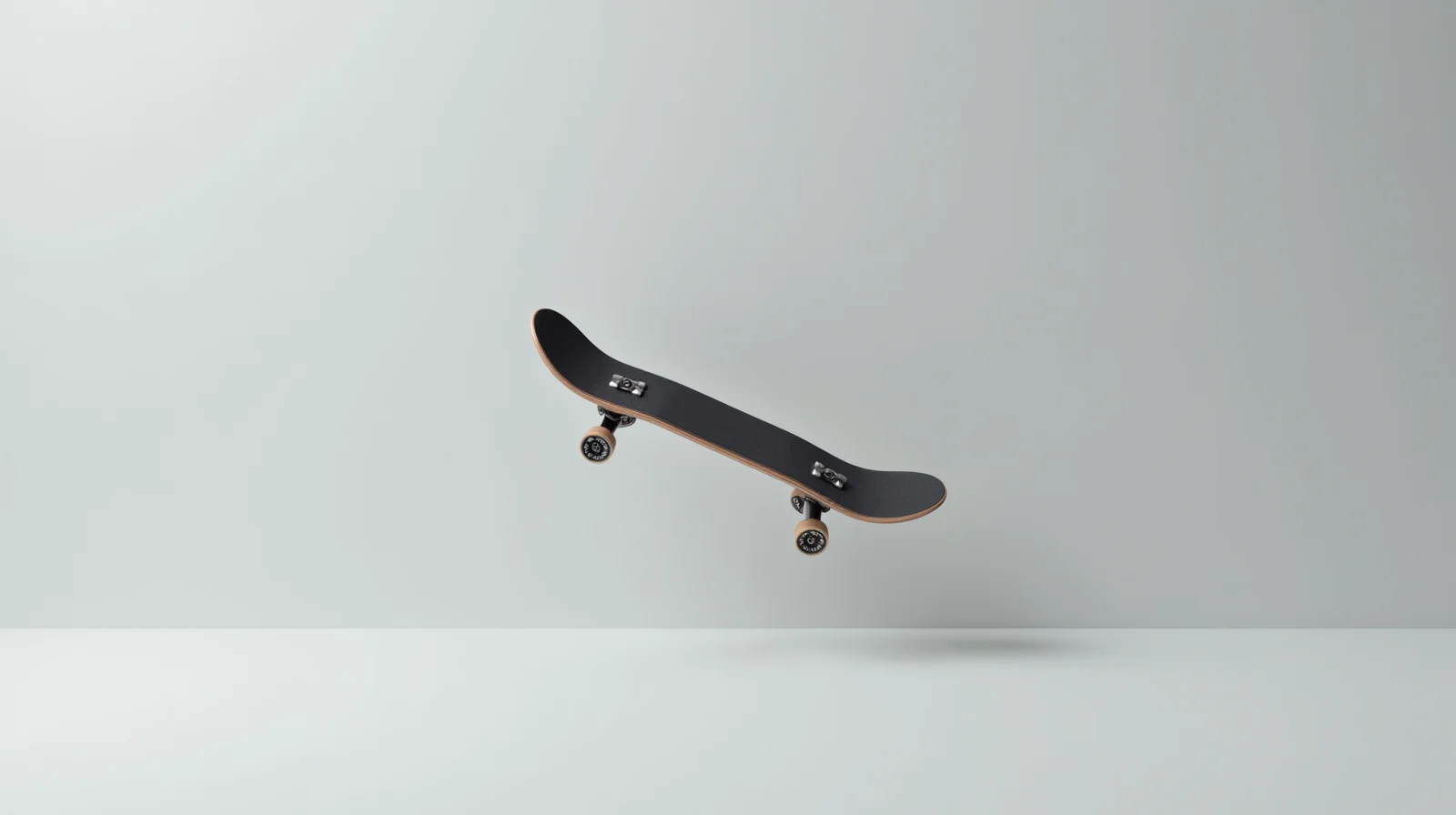
The impossible is one of the most visually striking flip tricks in skateboarding, and one of the most common ones riders get stuck on. It looks deceptively simple from the side — the board just seems to roll over — but nailing the timing, the pop, and the footwork takes real practice. In this 2026 guide, we break down exactly how the impossible works, walk through a step-by-step progression from the ollie, and cover the foot placement, the mistakes that keep riders stuck, and the variations to learn once the basic trick is yours.
Published: November 9, 2026
By Tyler Brooks, Skateboarding Coach
Tyler has coached skateboarders for 10 years and has tested trucks, wheels, and protective gear on real street and park sessions. He leads skill development and safety coverage, and has taught the impossible to riders of every level.
The one-line version
The impossible is a 360-degree rotation of the board around its long nose-to-tail axis — the board does a full barrel roll, flipping over on its side and back. You pop it like an ollie and use your front foot to spin the board sideways, then catch it with both feet.
What Is the Impossible (and Why It Looks So Hard)
The impossible is a flip trick in which the skateboard completes a full 360-degree rotation around its long axis — the line that runs from the nose to the tail. During the trick the board does what skaters call a barrel roll: it tilts onto one edge, rotates all the way around, and returns to the position you popped it from. Your feet stay on top of the board for the whole rotation, which is what makes it look so different from a kickflip or heelflip, where the board flips forward or backward under your feet.
From a distance, the impossible reads as almost effortless — the board just appears to roll over and land. That illusion is exactly what makes it frustrating to learn. There are three things working against you at once: you have to pop the board cleanly off the ground (an ollie), you have to initiate a rotation around an axis that is not the one your feet are used to flipping on, and you have to re-catch the board after a full 360 degrees while it is moving sideways. Miss any one of those and the board lands twisted, and that is where most of the stuck-on-impossible sessions come from.
In terms of progression, the impossible sits right above the basic flip tricks and is often the trick that separates a rider who can kickflip from a rider who can actually control the board in the air. It has been a street staple since the late 1990s and early 2000s, when it became a go-to trick for riders looking to add a flashier rotation to their combos without learning a full body spin. Because the board does a full 360 but your feet stay on top, it reads as a “free” trick in a line — it looks like a lot more work than it actually is, which is why coaches love it as a confidence builder.
The Mechanics: How the Board Actually Rotates
To learn the impossible fast, it helps to understand the axis it rotates on, because it is the opposite of the axis you use for a kickflip. Think of the board as having two main axes: the long axis running from nose to tail, and the short axis running from one truck to the other (side to side).
A kickflip and a heelflip both rotate the board around the short, side-to-side axis. That is why the board flips forward (kickflip) or backward (heelflip) in the vertical plane, like a coin spinning toward or away from you. The impossible, by contrast, rotates the board around the long nose-to-tail axis. The board rolls over on its edge, like a log rolling sideways, and completes the 360 in the plane that runs across the board. Your front foot is what initiates that sideways spin: as you pop the ollie, your front foot sweeps across the deck to start the barrel roll, and your back foot keeps the tail loaded so the board stays under you.
Coaching note
The single biggest mental block is trying to do the impossible the way you do a kickflip. If you flick your front foot the way you would for a kickflip, the board will flip forward, not sideways. The impossible wants a sweeping, rolling motion across the deck — think of rolling a bottle across the ground, not flipping a coin.
Impossible vs Kickflip vs Heelflip vs Hardflip
Because the impossible shares so much with the other flip tricks, the table below lines up the four so you can see exactly how the rotation differs. This is the reference I use with riders who keep mixing up the footwork.
| Trick | Axis of rotation | Board movement | Initiating foot | Difficulty |
|---|---|---|---|---|
| Kickflip | Short (side-to-side) axis | Flips forward, 360 | Front foot flicks out | Moderate |
| Heelflip | Short (side-to-side) axis | Flips backward, 360 | Back foot hooks in | Moderate |
| Impossible | Long (nose-to-tail) axis | Barrel roll, 360 sideways | Front foot sweeps across | Advanced |
| Hardflip | Diagonal axis | Diagonal 360 (kickflip + 180) | Front foot, angled | Advanced |
Rotation axes described from the rider’s perspective. The impossible’s long-axis (barrel-roll) rotation is the key difference from the kickflip and heelflip.
How to Do an Impossible: Step-by-Step
Here is the full progression I run with riders. Do not skip steps — the impossible rewards patience far more than it rewards speed.
- Lock in your ollie. The impossible is an ollie with a board rotation added. If your ollie is not consistent — clean pop, both feet landing level — fix that first. A shaky ollie is the number one reason the impossible will not stick.
- Set your feet for the rotation. Put your back foot on the tail as normal for an ollie. Place your front foot slightly more toward the center and a touch lower on the deck, angled so your ankle can sweep across the grip tape rather than flicking it outward.
- Pop the ollie. Snap the tail down exactly as you would for a plain ollie. Get the board to the same height you are comfortable with — do not chase height yet, focus on a clean, level pop.
- Sweep your front foot to start the barrel roll. As the board leaves the ground, roll your front ankle and sweep your foot across the deck in the direction you want the board to rotate. This sweeping motion is what spins the board around its long axis. Keep the motion smooth, not a sharp flick.
- Watch the board, not your feet. During the rotation your eyes should track the board so you can see when it is about a quarter turn past the top. This is where most riders lose the board — they look down and catch it late.
- Bring your feet down to catch the board. As the board completes the 360 and the grip tape is coming back up, bring both feet down level, meeting the board at the same time. Catch it slightly early if you have to — a high catch is easier to save than a late one.
- Land soft and level. Bend your knees, absorb the landing, and keep both feet over the bolts. If the board lands even a little twisted, your feet will follow and you will fall — a level catch is what keeps you upright.
- Repeat at low speed. Do the full sequence at a slow roll before you add speed. Speed makes every timing error bigger, so build the trick clean and slow first, then ride it at your normal pace.
Common trap
Do not try to “kickflip” the board into an impossible. If your front foot flicks outward the way it does for a kickflip, the board rotates on the wrong axis and you will land a crooked kickflip instead. The impossible needs a rolling, sweeping motion across the deck, not a flick.
Foot Placement and Pop: Nailing the Setup
Foot placement is where the impossible is won or lost, and it is more different from your kickflip setup than most riders expect. Your back foot stays in the standard ollie position on the tail — that is your pop and it should not change. The change is all in the front foot.
For the impossible, your front foot sits a little closer to the center of the board and is angled so the ball of your foot and your ankle can sweep across the grip tape. You want your ankle to be able to roll through the rotation, not lock. If your front foot is too far toward the nose, you will not have enough leverage to start the spin; if it is too far back, you will stomp the board and kill the rotation. The sweet spot is just ahead of the front truck bolt, angled slightly inward. From there, a relaxed sweeping motion across the deck is enough to spin the board a full 360 around its long axis.
Body position matters just as much as foot placement. Keep your shoulders square to the board and your weight centered over the bolts, not shifted onto the balls of your feet the way you would for a kickflip. A slight forward lean helps the board rotate, but if you lean too far you will dive into the rotation and catch the board late. Keep your knees soft and your core engaged so that your body stays stacked over the board while it spins underneath you. The more stable your body, the more room your front foot has to sweep through the rotation cleanly.
Pro tip
Practice the front-foot sweep on the ground before you ride. Stand over your board and just move your front foot through the sweeping motion a few times so your ankle learns the path. When you then add the pop, your foot already knows where to go — that separation of “learn the motion” and “add the pop” speeds up the trick a lot.
Common Mistakes and How to Fix Them
After coaching the impossible for years, the same five mistakes show up again and again. If you are stuck, one of these is almost certainly your bottleneck.
| Mistake | What it looks like | How to fix it |
|---|---|---|
| Flipping it like a kickflip | Board rotates forward, lands crooked | Sweep across the deck, do not flick out; think roll, not flip |
| Not enough pop | Board barely leaves the ground, rotation stalls | Load the tail harder and snap it down; build ollie height first |
| Catching the board late | Board lands under you twisted, feet split | Watch the board through the rotation; bring feet down slightly early |
| Front foot in the wrong spot | No rotation, or the board stumbles sideways | Move the front foot just ahead of the front truck, angled inward |
| Looking down at your feet | Lose track of the board, late or missed catch | Keep your eyes on the board through the full 360, not on your feet |
Practice Progression: From Ollie to Impossible
The impossible does not appear out of nowhere — it is built on a short chain of skills. Work through this progression and stop at any rung where you are not consistent before moving on.
- Consistent ollie. Ten clean, level ollies in a row, both feet landing over the bolts. This is the foundation and it is non-negotiable.
- Ollie with a front-foot sweep (no full rotation). Pop the ollie and just practice the sweeping front-foot motion, letting the board rotate a quarter to a half turn. You are learning the motion, not the trick.
- Half-impossible. Let the board complete about a 180-degree roll and catch it. This teaches you the timing of the catch at the top of the rotation.
- Full impossible at low speed. Add the full 360 and ride it at a slow roll. Focus on a clean, level catch, not speed.
- Impossible at riding speed. Once the slow version is consistent, bring it up to your normal pace and start doing it in sequence with your other tricks.
Realistic timeline
For a rider who already ollies and kickflips cleanly, the impossible typically clicks after a few focused sessions — often within a couple of weeks of regular practice. It is not a talent trick; it is a timing trick, and timing is exactly the thing that practice is good at building.
Why the Impossible Is Worth Learning
The impossible is one of the best tricks you can learn for the time it takes, because it pays off in three ways at once. First, it sharpens your board control: learning to spin the board around its long axis teaches you to read and catch the board mid-rotation, a skill that transfers directly to every other flip trick. Second, it adds real flash to your combos for very little extra effort — because your feet stay on the board, you can link it into a line the way you would link an ollie, which makes it one of the highest-value tricks in street skating. Third, it sets up the entire technical trick family: the nollie impossible, the 360 flip, and the varial all build on the same long-axis rotation, so the time you spend learning the basic impossible keeps paying dividends for years.
Impossible Variations to Learn Next
Once the basic impossible is consistent, there is a whole family of related tricks to explore. These are the natural next steps, in the order I recommend them.
- Nollie impossible. The same barrel-roll rotation initiated from the nose with a nollie pop. It mirrors the regular impossible and is the most logical next trick.
- 360 flip. Adds a full 360-degree body spin on top of the board rotation. A bigger, flashier combination once the basic impossible is solid.
- Varial. A 180-degree body spin combined with the 360 board rotation — the board and your body turn in opposite directions. A classic technical trick that the impossible sets up perfectly.
- Impossible onto a grind or slide. Landing the rotation directly into a 50-50 or boardslide on a ledge or rail. This is where the impossible starts to pay off in real lines.
Frequently Asked Questions About the Impossible
What is the difference between an impossible and a kickflip?
The axis of rotation. A kickflip rotates the board around its short, side-to-side axis so it flips forward. An impossible rotates the board around its long nose-to-tail axis so it does a sideways barrel roll. Same pop, different axis, different foot motion.
How hard is the impossible to learn?
For a rider who already ollies and kickflips cleanly, it is an advanced-but-very-achievable trick. It is mostly a timing and footwork trick rather than a power trick, so it typically clicks within a few focused sessions once your ollie is consistent. Patience and a clean ollie matter far more than raw ability.
Which foot starts the impossible rotation?
Your front foot. As you pop the ollie, your front foot sweeps across the deck to spin the board around its long axis. Your back foot stays on the tail and handles the pop, just like a normal ollie. The front-foot sweep is the motion that creates the barrel roll.
Do I need a lot of pop height for the impossible?
No. You need enough height for the board to complete the 360 before it comes back down, but you do not need to be popping massive ollies. A clean, level pop at a comfortable height is all you need. Chasing height usually makes the timing worse, so build the trick clean and level first.
What should I learn before the impossible?
A consistent ollie is the only true prerequisite, and a clean kickflip helps a lot because it trains your front foot to control board rotation. If your ollie is shaky or you have never kickflipped, lock those in first — the impossible is much easier to learn on top of a solid flip foundation.
Sources
- The Berrics, skateboarding trick reference and coaching library — theberrics.com
- Wikipedia, “Ollie” — the base trick the impossible is built on — en.wikipedia.org/wiki/Ollie
- Rider Skateboards, gear and session resources — rider.com
- Skateboarding.com, skateboarding news and culture — skateboarding.com
See Also
Keep reading on Ska8
→ Kickflip 2026: Step-by-Step Guide, Foot Placement & Timing
#Impossible #SkateboardingTricks #FlipTrick #Skateboarding2026 #HowToSkate #BarrelRoll #SkateTrickGuide #LearnSkateboarding #Kickflip #Heelflip #Hardflip #NollieImpossible #SkateCoach #StreetSkating #RideMore
This guide is part of the ska8 daily series. Explore more below.