
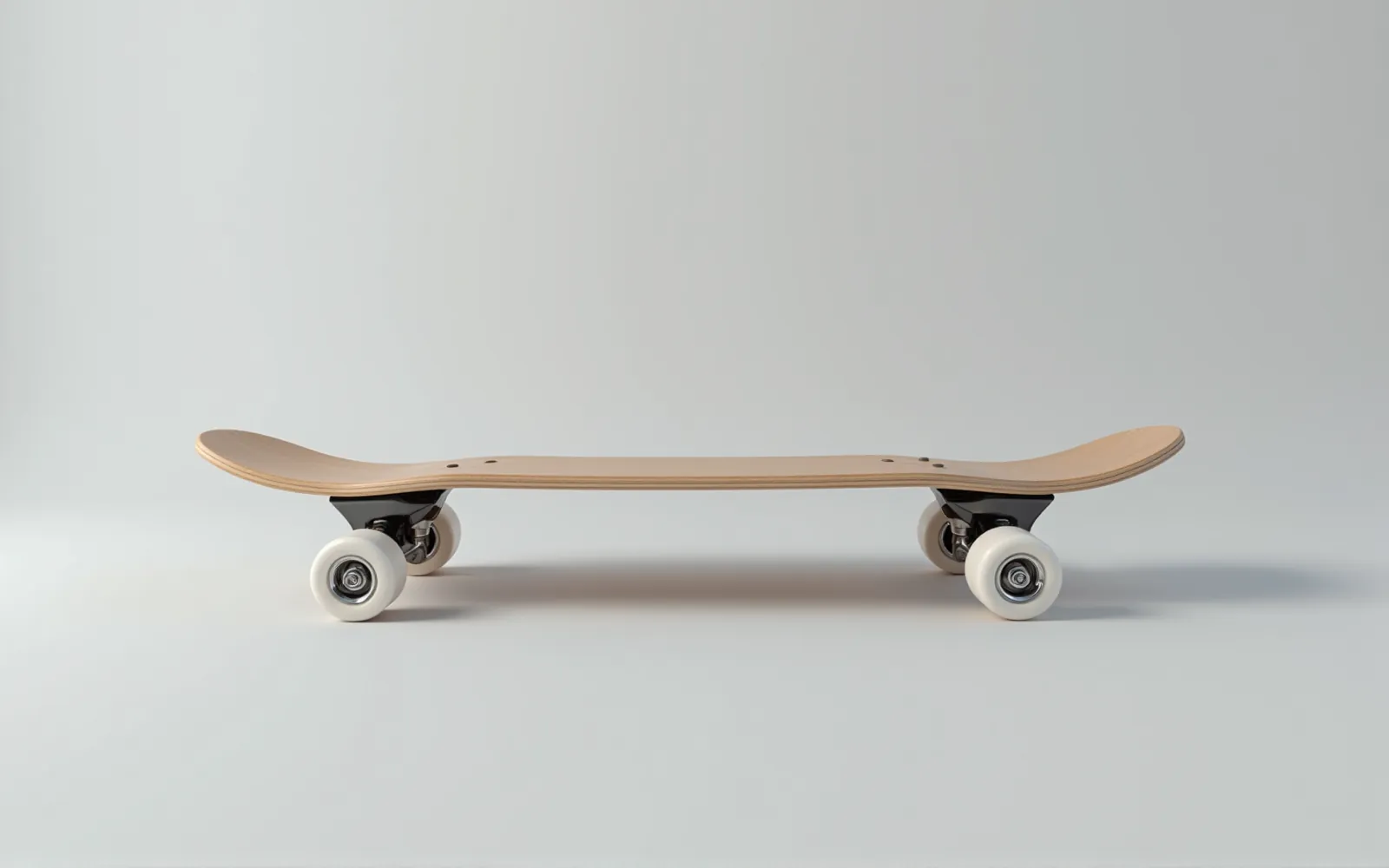
Skateboard bearings are the least talked-about part of your setup and the most underrated. They are the only moving component inside a wheel: two precision-machined races, a steel cage loaded between them, and a spacer separating them all. Every ounce of spin, roll, and drag you feel on your board passes through that assembly, and a board spinning on tired bearings simply does not feel like a board spinning on fresh ones. After years of testing setups session after session, I can tell you the difference is obvious the second you drop in.
This 2026 guide covers what actually makes one bearing set run better than another: what ABEC ratings do and do not mean, how sealed and open bearings compare, what spacers and shields are for, how to install bearings without destroying them, and how to keep them spinning fast for months. If you have ever wondered why your board feels heavy out of the shop, this is why.
Published: August 18, 2026 | Updated for the 2026 season
By Mia Torres, Skate Gear Reviewer
Mia has spent 7 years testing skateboards and protective gear, covering everything from beginner setups to advanced street rigs.
What this guide covers
- How skateboard bearings actually work
- What ABEC ratings mean (and what they do not)
- Reds vs Blacks vs Whites and the bearing brands worth knowing
- Sizes, spacers, and the difference between open and sealed
- Choosing bearings for street, park, or cruiser riding
- How to install bearings in eight clean steps
- Cleaning, lubrication, and how long bearings last
- Common problems and the fixes that actually work
How Skateboard Bearings Work
A skateboard bearing is a ball bearing built to the industrial 608 size: a 17 mm inner bore, a 35 mm outer diameter, and a 7 mm width. That small inner ring sits on your trucks axle, the outer ring sits inside the wheel, and the steel balls in between carry the entire load between them. When you roll, your weight presses the outer race down onto the balls and the inner race up against them, and the balls spin instead of sliding. That is the entire trick: converting sliding friction into rolling friction.
Around the balls you will find one of two retention systems. A shielded bearing carries a metal or rubber cover (a Z plate or a 2RS rubber seal) that keeps grease in and grit out, which is why sealed bearings shrug off rain and dirty street. An open bearing has no cover at all: the balls, the cage, and the grease are exposed, which lets it spin faster out of the box but means you are responsible for keeping it clean and greased. Between the two rows of balls sits the spacer, a small steel ring that keeps the rows from tilting against each other and the wheel from grinding directly into the truck. Remove a spacer and you may gain a few tenths of a second of spin, but you preload the balls, crush the raceways over time, and wreck the bearing. Spacers are not optional trim.
Bearings fail the same way in the real world: grit gets in, grease washes out, and the balls start micro-scoring the races. That is why the care section of this guide matters as much as the shopping section. A cheap bearing maintained well will outlast an expensive one abused on a dirty street.
Field note
From testing setups back to back: two identical wheels, one on new ABEC 5 sealed bearings and one on bearings that had lived six months without a spacer swap, took measurably different distances to stop from the same push. The wheel is the loud part of the setup, but the bearing is the engine.
What ABEC Ratings Actually Mean in 2026
ABEC stands for Annular Bearing Engineering Committee, and its rating is a manufacturing tolerance class, not a speed rating. A higher ABEC number means the balls and races were ground more precisely, which in turn means less play, less vibration, and smoother rotation at high speed. It does not mean the bearing is faster, more durable, or better grease. An ABEC 7 bearing will not make your board go quicker than an ABEC 5; it will simply spin more smoothly when pushed to speed.
Most skate bearings on the market are ABEC 5. That is by design: at street speeds, the difference between ABEC 5 and ABEC 7 tolerance is essentially unmeasurable in your ride, while the price gap is very real. ABEC 7 and 9 exist because the rating was born in industrial machinery, where vibration at high RPM is a genuine engineering problem. For skating, the honest ranking is: ABEC 5 is the sweet spot, ABEC 7 is a mild upgrade for spin purists, and ABEC 9 is a marketing number you pay for more than you feel.
| ABEC rating | Max radial internal runout | What it means for skating |
|---|---|---|
| ABEC 1 | 50 microns | Bargain-bin and toy-board territory. Wobbly, quick to stick. |
| ABEC 3 | 25 microns | Decent entry quality. Fine for a first cruiser. |
| ABEC 5 | 15 microns | The skate standard. Smooth, consistent, best value in skating. |
| ABEC 7 | 8 microns | Smoother at speed. A real but subtle step up from ABEC 5. |
| ABEC 9 | 5 microns | Premium tolerance. Rarely worth the premium for street skating. |
Tolerance values are the published radial-internal-runout maximums for each class, per the ABEC rating system the industry standardizes on.
Reds, Blacks, and Whites: What the Colors Actually Indicate
The colored rings on a bearing are not decoration. They are the grease or coating that comes pre-loaded from the factory, and each color points to a different grease chemistry tuned for a different riding condition. This is the single most useful piece of bearing vocabulary skaters learn, because the color tells you what the bearing is built to do before you ever spin it up.
Red grease is the classic street grease. It is sticky, stays put on hard landings and in rain, and resists being flung out of the bearing on big hits. The trade-off is that it is heavier, so the bearing gives you less raw spin than a light formula. If you ride ledges, stairs, and outdoor concrete, red is the safe default.
Black grease sits in the middle. It is a bit lighter than red and a bit stickier than clear, and it is the all-round option for mixed street and park. Many of the well-known speed-and-street hybrids use a black or dark formula for exactly this reason.
White or clear grease is the lightest formula and spins the fastest out of the box. It is what you want on a clean indoor ramp or a smooth bowl line where spin carries you. But it is the lightest, so it is the first to be washed out by a wet session or thrown out on a rough patch. If you ride mostly outdoor street and switch to a white-grease bearing, plan on keeping it clean so the light grease stays put.
Common mix-up
People read the color as a pure quality signal. It is not. A red bearing can be slow-street or it can be a durable all-rounder; a white bearing can be fast or it can be just a light-grease budget part. Grease chemistry and ball quality are separate axes. Match the grease to where you ride, then judge the bearing on its own merit.
The Bearing Brands Worth Knowing in 2026
There are a handful of names that dominate skate bearings, and a long tail of budget brands. In my testing the spread is real: the top tier spins faster, holds up longer, and is easier to maintain, while the budget tier gets the job done for a first board but asks you to replace it more often. Here is how the mainstream options line up.
Bones is the name most skaters know. Their red-grease Reds are the classic durable street choice, and they also run a clear Speed series for spin. If you want one set that handles a hard street session and still rolls well, the reds are the safe pick.
Bona sits in the same durable-street space as the reds. The name is close enough that people mix them up, but they are distinct brands with distinct greases. Both are solid mid-range street options, and both are widely available.
The speed tier runs through brands that market on spin. These are lighter-grease bearings optimized for distance and for keeping momentum on smooth concrete. If your priority is speed and carrying flow through a line, this is the tier to buy. The trade-off is durability under rough street abuse.
Budget brands fill the entry tier. At low prices they are fine for a first board or a board you do not plan to stress hard. They typically come as ABEC 5 sealed units, which is the correct entry spec. Do not pay more than the budget tier for anything you will not maintain.
| Bearing (common model) | Grease color | Best for | Approx. price (pack of 8) |
|---|---|---|---|
| Bones Reds | Red | Durable street, mixed riding, all-weather | $28 to $38 |
| Bones Speeds | Clear / white | Spin, bowls, smooth concrete | $30 to $42 |
| Bona Reds | Red | Durable street, budget-friendly all-rounder | $20 to $30 |
| Speed-tier clear | White / clear | Max spin, smooth ramps and bowls | $25 to $40 |
| Budget sealed | Varies | First board, light use | $10 to $18 |
Prices are approximate retail for a standard 8-piece package and vary by retailer and region. Check your local skate shop or an online retailer for current numbers.
Sizes, Spacers, and Open vs Sealed
Every skate bearing is the same physical size, the 608, so the choice is not about fit. It is about retention, maintenance, and how you keep it clean. The 608 spec means a 17 mm inner bore (your trucks axle), a 35 mm outer diameter (the wheel bore), and 7 mm width. Any bearing sold for skateboarding will be a 608, so you will never have a wheel-and-bearing size mismatch to worry about.
The spacer is the small steel ring that sits between the two bearing rows. Its job is to keep the rows separated and the balls from tilting under load. A bearing run without its spacer preloads the balls, which feels snappier for a moment and then chews the raceways down over weeks. If you are stripping a bearing to clean it, the spacer is the part to watch. Keep it, keep it with the right bearing, and put it back on the axle side before you push the bearing into the wheel.
Sealed versus open is the real decision. A sealed bearing (Z plate or 2RS rubber) is protected from water, dust, and grit, so it needs almost no upkeep and is the right call for outdoor, wet, or rough street. An open bearing has no cover, so the grease is exposed. It spins the fastest when new, but it needs cleaning and regreasing on a real schedule, and it is the first to fail in rain or on a sandy, dirty spot. Most skaters live with sealed bearings and only run open (or shielded) when they want maximum spin on a clean, dry setup and they are comfortable maintaining it.
Pro tip
If you ride in a wet or sandy climate, stay with sealed bearings and do not chase open-bearing spin. A sealed bearing that keeps rolling beats an open bearing that stops rolling after two rainy sessions. Spin you actually keep is worth more than peak spin you lose to a washout.
Choosing Bearings for Your Riding Style
The same bearing that is perfect for a bowl line is the wrong bearing for a set of eight steps, and vice versa. Here is how I break down the three common disciplines.
Street and technical skating. You are landing hard, riding rough concrete, and hitting obstacles that throw grit. You want durable, sealed, red or black grease bearings that stay greased under punishment. ABEC 5 is all you need. Do not chase ABEC 9 here; the tolerance class does not help with grit and impact.
Park and bowls. You are in a smoother environment chasing flow and speed. Spin matters more here than anywhere else. A clear or white grease bearing will keep you carrying more speed through a line, which is a genuine mechanical advantage in a bowl. Sealed still works fine, but if you are keeping it clean, a lighter grease is the better match.
Cruisers and longboards. This is the discipline where bearings are the single most upgradeable part. A cruiser on stock low-rated bearings feels heavy and slow, and swapping to a quality ABEC 5 sealed set is the difference between a ride that works and a ride you love. Longboarders who chase speed will run the lightest greases and sometimes open bearings with a strict maintenance schedule.
The honest takeaway
For the majority of skaters, the right answer is a sealed ABEC 5 bearing in red or black grease. It is durable, it maintains well, and it matches how most people actually ride. Everything else is a refinement for a specific goal, not an upgrade you need on day one.
How to Install Skateboard Bearings in Eight Steps
Installing bearings is one of the easiest parts of skateboarding and one of the most commonly botched. Most of the damage that kills a good bearing happens during installation, not during riding. Here is the clean way to do it, and it takes under two minutes per wheel once you have done it a few times.
- Remove the wheel. Crank off the axle nut with a skate tool or a socket and lift the wheel straight off the axle. Hold the two trucks tight together so the axle does not spin in reverse direction while you work.
- Check the axle. Wipe the axle end clean. A film of old grease or a flake of grit on the axle is the same as putting grit inside the bearing.
- Seat the spacer. Slide the steel spacer onto the axle first, flush against the inside face. It should sit flat and not wobble. This is the step most people skip or mess up.
- Press the bearing on. Line up the bearing hole with the axle and push it straight on. The bearing should spin freely once seated, with no side-to-side play. If it does not, back it off and try again rather than forcing it.
- Re-seat the wheel. Fit the wheel over the bearing and axle, making sure the bearing is centered and seated fully against the wheel bore.
- Tighten the axle nut. Thread the nut on and tighten it snug plus a little. You want the wheel to spin without any wobble, not to be locked in place.
- Test the spin. Push the wheel and watch it come to a stop. It should spin smoothly and decelerate evenly. Any ticking, catching, or sudden stop means something is mis-seated.
- Repeat on the other side and do the second wheel the same way, one at a time, so the axle alignment stays consistent.
The mistake that kills bearings
Forcing a misaligned bearing onto the axle with the axle cross-loading the balls. It feels fine the instant it sits and the board rolls, but you have introduced a preload that the grease will feel within a few sessions. If a bearing is not seating cleanly, remove it, re-center, and push again. Never wrestle it in.
Cleaning, Lubricating, and How Long Bearings Last
A bearing lasts as long as you keep grit out of it and grease in it. For a clean, indoor-leaning setup you may get a season or more out of a sealed set. For a rough, outdoor street setup, the same set can wear down in a few weeks. The difference is almost entirely in care, not in the bearing itself. Here is the maintenance that actually works.
Dry is a cleaning step. After a wet or rough session, dry the board and the bearing shields. If water has gotten under the seal, it is mixed with the grease now and will cut it. Letting the board dry out and spinning the wheels to work the water to the surface helps significantly.
Use a dedicated bearing cleaner or a light degreaser rather than a heavy oil, and work the bearing while you rinse. A quick soak, a rinse, a spin-dry, and then a drop of skate-specific bearing grease is the routine that keeps sealed bearings feeling fresh. Do not over-grease a sealed bearing; the seal is designed to hold a set volume, and pumping extra in just forces more out under pressure.
Open bearings get the same routine but you can see what you are doing, which is part of why experienced skaters like them: you can watch the grease, spot when it is drying out, and swap cleaner and grease by feel. The cost is that you have to do it on a real schedule, because there is no seal protecting you.
| Caring for bearings | What to do | When |
|---|---|---|
| Dry after wet sessions | Spin wheels, let water surface | After every wet session |
| Clean and regrease | Soak, rinse, spin-dry, one drop of grease | Monthly, or when spin drops |
| Inspect spacers | Check they are seated and present | Every wheel swap |
| Replace the set | Swap all four at once for consistency | When clean cannot fix the drag |
Common Bearing Problems and the Fixes That Work
The board feels dead out of the shop. New-board bearings are often the weakest link on a starter setup. Stock budget bearings frequently run below ABEC 5 tolerance and come with light, dry grease. Upgrading to a quality ABEC 5 sealed set is usually the single cheapest improvement you can make to a new board, and the spin difference is immediate.
Spin is uneven between the left and right side. That is almost always an axle or seating issue, not a bearing issue. Check that both spacers are seated, that both bearings are pressed straight on, and that neither nut is over-tightened. An over-tightened axle nut preloads the bearing and kills spin on that side while the other side keeps rolling.
Ticking or a rough, grainy feel. That is grit in the raceways. Clean the bearing properly, rinse, dry, and re-grease. If the tick survives a full clean, the balls are scored and the bearing is done for. Replace the set rather than mixing a new bearing into a worn board.
Wheel wobble or a thump on every rotation. That is the bearing not seated flat against the wheel, or a spacer sitting off. Remove both, clean, and reseat in the correct order: spacer first, then bearing. A wobbly bearing is a bearing under uneven load, and fixing the seating fixes the wobble.
Bottom Line for Your Setup
Bearings are where the engineering of your board quietly decides how it feels. Match the grease to your riding surface, keep the spacers in, seat the bearing straight, and maintain it on a real schedule. Do that and even a mid-range ABEC 5 set will outspin a neglected premium one. Skaters who treat their bearings like the moving heart of the board are the ones who notice the difference first, and the ones whose boards keep rolling session after session.
Quick reference
Every skate bearing is the 608 size (17 mm bore, 35 mm outer, 7 mm wide). ABEC 5 is the skate standard; ABEC 7 is a mild step up; ABEC 9 is a premium tolerance you rarely need. Red grease is durable street, white or clear is max spin, black is the all-round middle. Sealed is low-maintenance and water-capable; open is max spin and needs real upkeep. The spacer is never optional.
Frequently Asked Questions About Skateboard Bearings
What is the best ABEC rating for skateboarding?
Should I use sealed or open bearings?
How often do I need to change my bearings?
What do the red, black, and white grease colors mean?
Can I just use any 608 bearing from a skateboard?
See Also
- Skateboard Wheels 2026: Size, Durometer and Profile Guide
- Best Skateboard Trucks in 2026: Complete Buyer Guide
- How to Choose Your First Skateboard: Complete Buyer Guide
Sources
Manufacturer and industry references used in this guide:
- Bones Bearings official product and spec pages
- Skateboarder magazine: setup and gear coverage
- Industry supplier reference for bearing and hardware specs
#Skateboard #Bearings #Skateboarding #SkateGear #SkateboardSetup #SkateboardParts #StreetSkating #SkateTrucks #SkateWheels #SkateCulture #SkateLife #RollingSmooth #SkateboardMaintenance #Skateboarders #TrickBoard
Last updated: August 18, 2026. Content reflects current 2026 skating gear standards.
This guide is part of the ska8 daily series. Explore more below.