
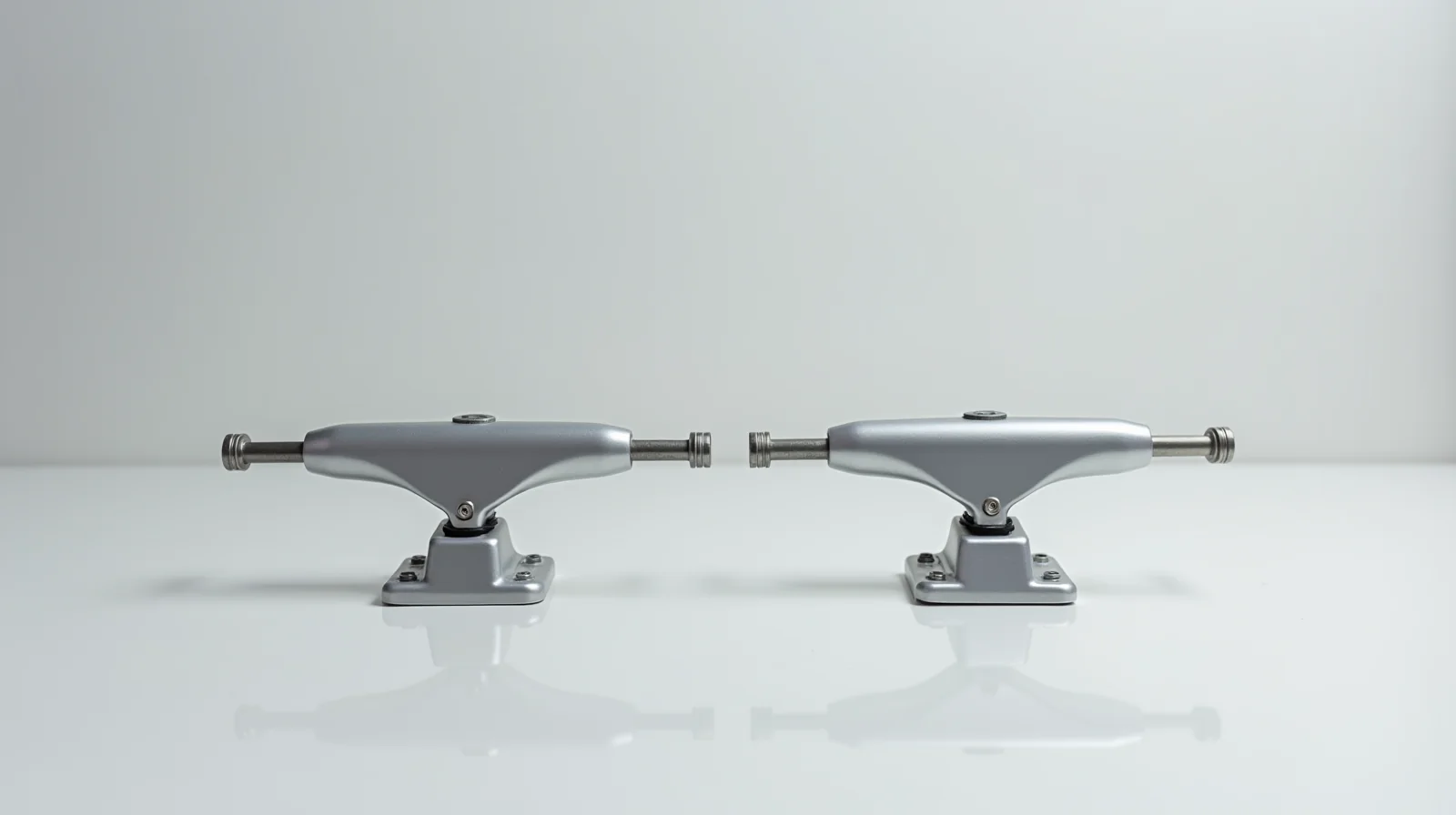
Adjusting your skateboard trucks is the single most overlooked setup task in skateboarding, and it is the one that most directly controls how your board feels under your feet. Most skaters ride with trucks that are either too loose, which makes the board wobble and unpredictable at speed, or too tight, which kills your turning and makes every trick harder to pop, land, and push through. Getting the tension right changes everything: your stability, your turning radius, how the board responds on a push, and how quickly you build confidence on new obstacles. In this guide, we break down exactly how to adjust skateboard trucks the right way, what the kingpin actually does, and how to dial in the perfect tension for street, park, cruising, and vert riding. Whether your board wobbles on a downhill or refuses to turn in a tight spot, this is the fix.
Published: November 6, 2026
By Mia Torres, Skate Gear Reviewer
Mia has spent 7 years testing skateboards and protective gear, covering everything from beginner setups to advanced street rigs.
Why Truck Tension Matters More Than Any Other Setup Detail
Your trucks are the steering mechanism of your board. They connect the deck to the wheels and act as the pivot point that lets the board turn, carve, and hold a line. Unlike grip tape, wheels, or even bushings, which you tend to set once and forget, truck tension is a live, tunable variable. It is the one adjustment you can make in under two minutes with a single wrench that will immediately change how the board behaves.
From testing setups across street, park, and vert sessions, the single biggest performance jump a beginner feels comes from tension, not from swapping out parts. A board that is two full turns too loose will wash out the moment you land a kickflip or pick up speed on a down hill. A board that is too tight will fight you on every push, make manuals feel dead, and leave you tired long before the session ends. Here is the thing most new skaters miss: when the board feels wrong, the instinct is to buy new bushings or new trucks. But the problem is almost always the tension on the trucks you already have. Get it wrong and you spend money chasing a feeling that was a quarter-turn away. Get it right and the exact same board feels completely different.
How Skateboard Trucks Work: The Kingpin, Baseplate & Hanger
Before you adjust anything, it helps to know exactly what you are turning. A standard kingpin truck has four working parts, and understanding each one tells you why tension is such a powerful adjustment.
The baseplate is the flat piece that bolts directly to the deck with four 1.5-inch bolts and nuts. Its width has to match the width of your deck so it sits flush. You do not touch the baseplate bolts when adjusting tension.
The hanger is the arm the wheels mount to, and it is the part that swings. The axle width of the hanger (commonly 5.0 inches, 5.25 inches, or 5.4 inches) determines how much wheelbase and stability your board has. Wider axles and wider decks track straighter; narrower setups turn faster and feel more responsive.
The kingpin is the large threaded bolt running through the center of the truck. The big hex nut on top of it, the kingpin nut, is the only nut you will turn for a tension adjustment. When you tighten it, it pushes the entire bushing stack, the two cone bushings, a washer, and the pivot cup, down against the baseplate. That pressure is what resists the hanger from swinging.
The bushings are the soft urethane cones in the middle of the stack. Their durometer, typically around 90A to 100A for street, sets how much force it takes to turn the truck at a given tension. Softer bushings let the truck turn more for the same nut position; harder bushings hold tighter. Turn the kingpin nut clockwise and the truck tightens; turn it counter-clockwise and it loosens. That one motion is the entire answer to how to adjust skateboard trucks.
How to Adjust Skateboard Trucks: Step-by-Step
This is the core of the guide. You only need one tool, and you do not have to take the trucks off the board. Work one truck at a time and keep both sides matched.
- Flip the board over and locate the kingpin nut on the top of each truck. It is the large hex nut sitting on the threaded kingpin, right next to the pivot and the pivot cup. Do not confuse it with the smaller baseplate nuts on the four corners.
- Grab the right wrench. Most modern kingpin trucks use a 15mm nut, and many also take a 7/16-inch socket. A few older or specialty trucks use 14mm. If the wrench spins without catching, try the next size up.
- Turn a quarter-turn at a time. Clockwise tightens the truck; counter-clockwise loosens it. Make small, measured moves rather than cranking it down, so you can find the exact spot.
- Test the play by hand. With your thumb, push the hanger toward and away from the deck. You want real resistance: the hanger should move roughly an eighth to a quarter inch of play, then stop. If it swings freely with no push-back, it is too loose. If it barely moves at all, it is too tight.
- Match both trucks. Set the front and back to the same feel. Mismatched tension makes the board pull and track to one side, which is one of the most common causes of a board that feels “off.”
- Do a test push. Set the board down and push at a moderate speed. A well-set truck is stable, holds a line, and still turns smoothly when you lean. Adjust in small steps until the wobble is gone but the board still carves.
- Re-check after your first session. New bushings and freshly torqued hardware settle in over the first few rides, so the tension you set today can shift slightly. A quick thumb-test after your first session saves you a bad one the next.
Pro tip: use your thumb, not your guess
The fastest way to set tension is the thumb-test from step 4, not counting turns. Turn the nut a quarter-turn, push the hanger, feel the resistance, and repeat. After a few boards you will develop a feel for it and can set a new truck in under a minute.
Loose vs Tight Trucks: Which Tension Is Right for Your Style
Tension is a trade-off between turning ability and stability. There is no single “correct” setting, but there is a correct range for the way you ride. Too loose and the board becomes unpredictable at speed; too tight and it loses the flow and turning that make skating feel good. The table below maps the three main tension zones to the riding they suit best.
| Tension | Turning | Stability | Best For |
|---|---|---|---|
| Loose | Wide, fast, floaty | Low, wobbles at speed | Cruising, carving, relaxed riding |
| Medium | Balanced, controlled | Good, all-round | Street, park, everyday riding |
| Tight | Small radius, stiff | Very high, locked in | Manuals, vert, speed, tricks |
Most street and park skaters end up somewhere between medium and medium-tight. That sweet spot gives you enough turn to line up a gap or a ledge while still holding a solid line when you push. If you are primarily cruising or riding a longer board, you can run looser for a smoother carve. If you are chasing manuals, grinds, and vertical, run tighter so the board stays planted under you.
Setting the Perfect Truck Tension by Riding Style
Once you understand the loose-to-tight spectrum, the next step is matching it to how you actually skate. The same nut position feels very different on a 8.0-inch street board versus a 10-inch cruiser. Use the table below as your starting point, then fine-tune by hand until the board feels right for your weight and riding.
| Riding Style | Recommended Tension | Why |
|---|---|---|
| Street | Medium to tight | Stability on ledges, grinds, and kickflip landings |
| Park / transition | Medium | Flow and control over cop and transitions |
| Cruiser / longboard | Loose to medium | Comfortable carving and easy turns |
| Vert | Tight | Maximum stability at high ramp speeds |
| Downhill (longboard) | Loose but controlled | Wide carve while avoiding speed wobble |
Weight changes the feel
Heavier riders compress the bushings more, so a tension that feels right for a lighter skater can feel loose for you. Start one quarter-turn tighter than the table suggests if you are over about 180 pounds, then dial it back until the board responds the way you want.
How to Tell If Your Trucks Are Too Loose or Too Tight
Most tension problems announce themselves with a specific set of symptoms. Learning to read these signs is what turns you from someone who guesses at their setup into someone who can diagnose it. Here is what each end of the spectrum actually looks like when you are riding.
Signs your trucks are too loose: the board wobbles or washes out at speed, especially on a down hill; kickflips and ollies land crooked or the board twists under you; the nose or tail dives when you lean into a turn; pushing straight feels like fighting the board; and the whole setup feels floaty and uncontrolled.
Signs your trucks are too tight: the board will not turn in tight spots; manuals feel stiff and die quickly; pushing is hard and you tire faster; you cannot carve or lean into a line; and the board feels dead and unresponsive under your feet.
Safety: speed wobble is a crash waiting to happen
If your board starts to shake or wobble at speed, that is speed wobble, and it usually means the trucks are too loose. Ease off, slow down, and tighten the kingpin nut before you ride again. Speed wobble can escalate into a hard fall, so treat it as an immediate adjustment, not something to push through.
Common Truck Adjustment Mistakes to Avoid
Even once you know the steps, a few mistakes show up in nearly every session and quietly ruin the setup. Avoiding them will save you a lot of time at the curb.
Adjusting only one truck. This is the number one error. If you tighten the front and leave the back loose, the board will pull to one side and never track straight. Always set both trucks to the same feel.
Over-tightening. Cranking the kingpin nut down far past what you need cracks the bushings, wears the threads, and makes the board feel dead. A little play is a feature, not a flaw.
Guessing instead of testing. Counting turns across different boards and bushings is unreliable. Always confirm with the thumb-test and a short push before you call it done.
Confusing the kingpin nut with the baseplate nuts. A tension change only involves the single kingpin nut on top. Removing the baseplate bolts is how you take the truck off, not how you adjust it.
Chasing a worn bushing with tension. If the bushings are compressed, cracked, or mushy, no amount of nut adjustment will fix the feel. That is a replacement, not a tension job.
When to Replace Trucks vs Just Adjust the Tension
Tension adjustment solves the everyday problems: wobble, tightness, and a board that feels off. But there is a clear line where the fix is a new set of trucks, and crossing that line is what separates a quick tweak from a real upgrade. Adjust the tension when the issue is how the board steers or holds a line. Replace the trucks when the hardware itself is damaged or when your riding has outgrown what you have.
Replace your trucks if the kingpin threads are stripped and the nut spins without holding, the baseplate or hanger is cracked or bent, the bushings are permanently compressed or cracked, the metal is rusted and corroded, or you have moved into a riding style the current size is not built for. For example, a rider moving from a small cruiser into serious street skating will want a proper 8.0-inch setup with matched axle and baseplate widths rather than a tightened-up old board. When you are ready to make that jump, our guide to the best skateboard trucks in 2026 walks through the right axle and baseplate widths for every style.
Truck Tension and Your Other Setup Choices
Tension does not exist in a vacuum. It interacts with every other part of your setup, which is why the “perfect” setting shifts when you change anything else on the board. Keep these interactions in mind when you make any modification.
Bushing durometer sets the baseline: softer bushings turn more for the same nut position, so you will typically run them a touch tighter, while harder bushings hold the line and can run slightly looser. Riser pads add clearance and change the stack geometry slightly, which can make the same tension feel a bit different; if you add risers and the board suddenly feels loose, a quarter-turn tighter solves it. Wheel size matters more than most people expect: bigger wheels add leverage and wobble, so they generally want a tighter setting to stay stable. And deck width is the foundation, because a wider deck is more stable at the same tension while a narrower deck turns faster and feels livelier. If you are building or refreshing your setup, the how to assemble a skateboard guide covers how these parts fit together, and the skateboard riser pads guide covers how clearance changes the ride.
Frequently Asked Questions About Adjusting Skateboard Trucks
How do you know if skateboard trucks are too loose?
If the board wobbles or washes out at speed, tricks land crooked, or pushing straight feels like fighting the board, the trucks are too loose. The quick check is the thumb-test: push the hanger in and out. If it swings with no real resistance, tighten the kingpin nut a quarter-turn at a time until the play is controlled.
What size wrench do I need to adjust skateboard trucks?
Most modern kingpin trucks use a 15mm kingpin nut, and many also take a 7/16-inch socket. A few older or specialty trucks use 14mm. If your wrench spins without catching the nut, try the next size up. You only need the wrench for the kingpin nut, never for the four baseplate bolts.
How tight should skateboard trucks be for beginners?
Start in the medium to medium-tight range. That gives a beginner a stable, predictable board that still turns, which is the best foundation for learning. If it wobbles, tighten; if it will not turn, loosen. Re-check after the first session, because hardware and bushings settle in.
Does tightening trucks make you go faster?
Not directly, and it can actually slow you down if you overdo it. Tighter trucks hold a straighter line and feel more stable at speed, but they also make pushing and turning harder, which tires you out faster. The goal is the tightest setting that still turns smoothly for your style, not the tightest setting possible.
How often should I check my truck tension?
Check it after your first session on any new or re-torqued setup, and do a quick thumb-test whenever the board suddenly feels different. Bushings compress and hardware settles over time, so a tension that was perfect last month can drift. If you ride hard, a monthly check while you clean the bearings keeps the board consistent.
See Also
How to Assemble a Skateboard 2026: Complete Setup Guide
How to Maintain a Skateboard 2026: Full Care Guide
Best Skateboard Trucks in 2026: Complete Buyer Guide
Sources
- Independent Trucks — technical truck dimensions, axle and baseplate widths: independenttrucks.com
- Indy Trucks — kingpin truck manufacturer specifications: indytrucks.com
- The Berrics — skateboarding technique and setup education: theberrics.com
#Skateboarding #SkateboardTrucks #TruckTension #SkateboardSetup #Kingpin #SkateboardMaintenance #StreetSkating #SkatePark #SkateboardGuide #TruckAdjustment #LearnSkateboarding #SkateboardGear #SkateboardTips #SkaterLife #Skateboarding2026
This guide is part of the ska8 daily series. Explore more below.