
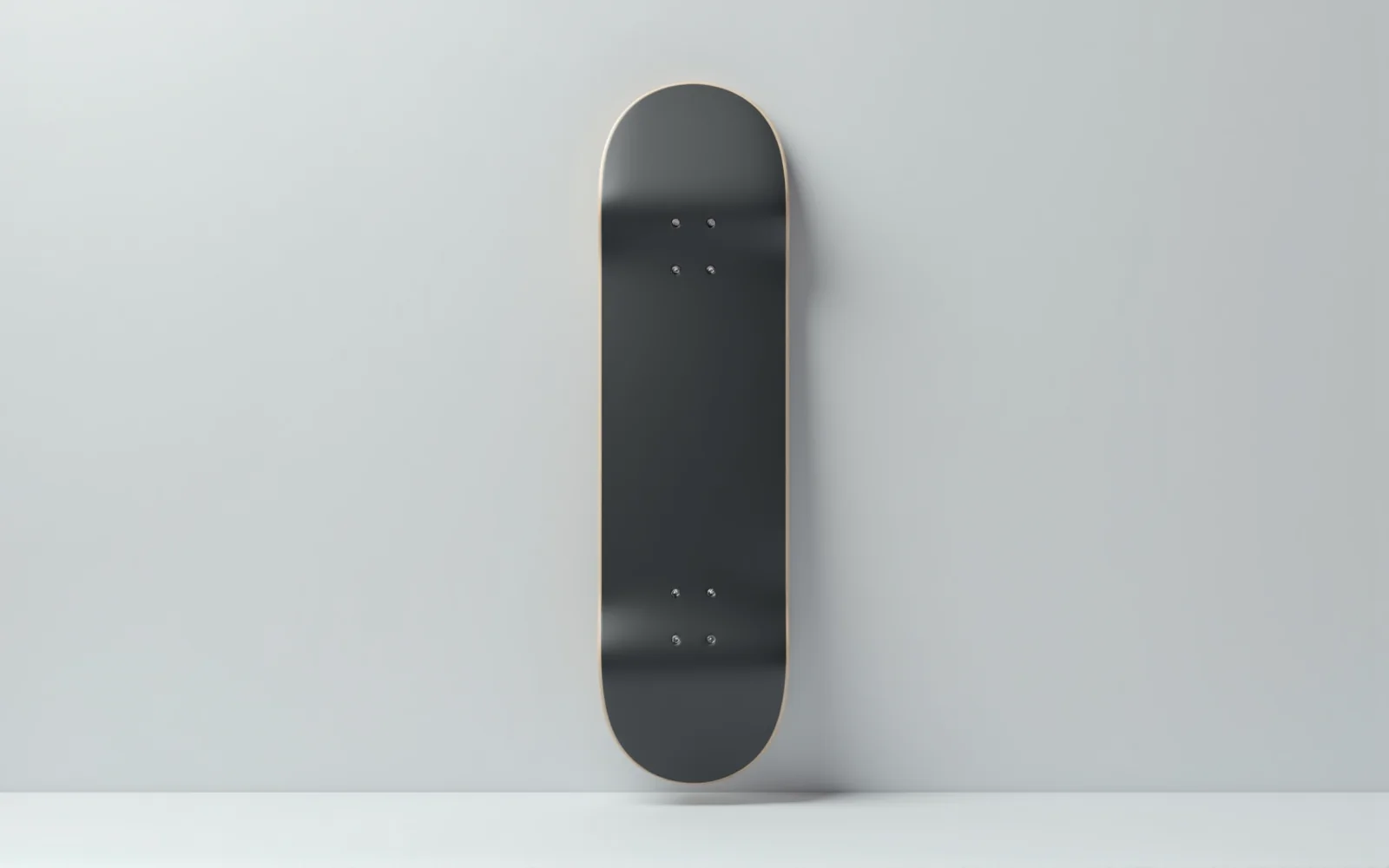
Pick the wrong deck size and you will feel unstable on flat ground, struggle to flip the board, or both. Skateboard deck size — measured in width — is the single most important fit decision when you are buying a board, and it is the question every first-time skater asks. In this 2026 guide I break down exactly how to match your deck width to your shoe size, your riding style, and the tricks you actually want to learn. After seven years of testing complete setups and fitting decks on riders from size 4 to size 14, I can tell you the sizing rules below are the ones that hold up on real street and park sessions.
By Mia Torres, Skate Gear Reviewer
Mia has spent 7 years testing skateboards and protective gear, covering everything from beginner setups to advanced street rigs.
Published: October 1, 2026
Skateboard Deck Size: What Actually Matters
When people ask about skateboard deck size, they almost always mean the width of the deck — the measurement across the board at its widest point, in inches. Standard street decks run from about 7.5″ to 8.75″, and that half-inch span is the difference between a board that feels like it is fighting you and one that feels like an extension of your feet.
Two things drive the “right” width for you: shoe size and riding style. Bigger feet need a wider platform so both soles sit fully on the deck, and a wider deck is also more stable for cruising, carving, and learning. Smaller feet and street skaters who flip the board constantly lean toward narrower decks, because a narrow deck is lighter and easier to throw flips and technical tricks on.
From fitting riders over the years, the pattern I see most is people defaulting to a board that is “popular” rather than one that fits their feet. A size 12 foot on a 7.75″ deck has the front of the shoe overhanging the nose and tail, which makes balance feel sketchy and makes ollies unpredictable. A size 6 foot on an 8.5″ cruiser deck can flip it all day but will feel wobbly at speed and on ledges. Getting the width to your shoe size is the single highest-leverage fix in this whole article.
The 10-Second Rule
Your deck should be wide enough that both of your shoe soles sit fully on the deck when you stand in your normal riding stance — no toes or heels hanging over the edges. If your feet hang off, go up one size. If your feet feel cramped with room to spare, you can usually drop down one size for more flip control.
Deck Width by Shoe Size: The Reference Table
This is the table I hand to new riders. It maps US men’s shoe size to the deck width that fits most comfortably, with a note on who each width suits best. Women’s sizing is the same measurement — use the shoe size on your actual shoes, not the “men’s”/”women’s” label, since deck width is purely a physical measurement.
| US Shoe Size | Recommended Deck Width | Best For |
|---|---|---|
| 3–5 | 7.5″–7.75″ | Small-foot street/technical skaters |
| 6–7 | 7.625″–7.75″ | Street, flips, technical lines |
| 8–9 | 7.75″–8.0″ | All-round street (the “sweet spot”) |
| 10–11 | 8.0″–8.25″ | Street + park, larger feet |
| 12–14 | 8.25″–8.5″ | Park, transition, cruising, stability |
Based on fitting riders from size 4 to 14 across street and park sessions. Always confirm both soles sit fully on the deck in your stance.
The Four Deck Size Ranges, Explained
Street decks cluster into four practical bands. Knowing where each band lands helps you read any complete or blank deck spec you see at a shop.
7.5″–7.75″: Narrow / Technical
The narrowest common street widths. These boards are light and pivot quickly, which makes them the choice for skaters focused on flips (kickflips, heelflips, varial flips) and technical street. The trade-off: less platform means less stability at speed and on bigger drop-offs, and larger feet will hang over the edges. If you have big shoes and love flips, this range is a compromise — most size 11+ skaters do better one or two sizes wider.
7.75″–8.0″: The All-Round Sweet Spot
This is the width the most street skaters buy, and for good reason. It is wide enough to feel stable for learning and for cruising, but still narrow enough to flip comfortably. If you are unsure what size to get, 7.75″–8.0″ is the safest default for a street-oriented rider with shoe size 8–10. It will serve you from your first ollie through your first grinds and flips.
8.0″–8.25″: Wider Street / Park
Step into this range when you are moving more into a park, riding bigger transition, or you simply have larger feet. The extra platform gives you confidence on ramps and on drop-ins, and makes the board feel planted under your feet at higher speeds. It is still flip-able, just with slightly more effort than a 7.75″.
8.25″–8.5″+: Wide / Park & Cruiser
The widest band. This is the territory of park skaters, big-footed riders, and anyone who prioritizes stability over flip speed. Cruiser and longboard decks run even wider (9″–10″ and up), but for a standard street setup, 8.5″ is the practical ceiling. Beyond that you are in longboard/cruiser territory, which is a different board entirely.
How Riding Style Changes Your Deck Size
Your shoe size sets the floor for how wide a deck can be; your style decides where in the range you land. Here is how I think about it when fitting a board to a rider.
Street skating
Street is about precision — hitting rails, gaps, and ledges. Most street skaters sit in the 7.75″–8.0″ range because it balances stability with the lightness you need to throw tricks repeatedly. If your street style is flip-heavy, lean toward the narrower end; if you do a lot of grinds and slides on boxes and ledges, a touch more width (8.0″) adds stability when you are committing to a slide.
Park and transition
Park skaters ride bigger bowls and ramps at higher speeds and want the board to feel stable at the top of the ramp and in the transition. That pushes most park riders to 8.0″–8.5″. The extra width damps out wobble at speed and gives more surface to grip when you are riding the vertical walls.
Cruising and commuting
If your main goal is commuting or just riding around town, you want maximum stability and comfort, not flip-ability. A wider deck (8.25″–8.5″ on a street-style board, or a cruiser/longboard at 9″+) with larger wheels is the right call. You are not flipping the board, so you do not need the narrow, light profile.
Learning to skate
New riders benefit from a slightly wider deck because it is more forgiving. A 7.75″–8.0″ width with a standard wheelbase lets you balance and build muscle memory without the board feeling twitchy under you. Once you have a solid ollie and you start chasing flips, you can always drop a size — but it is much easier to start a touch wide and narrow down than the reverse.
Deck Size vs. Stance: What Actually Feels Right
Deck width and your stance work together, and this is the part most sizing articles skip. Your stance width — the distance between your feet — should sit comfortably on the deck with both soles fully supported. A few things to check when you are standing in your stance on a deck:
- Both soles fully on the deck. No part of your shoe should hang off the nose or tail. If your front foot hangs off, the board will feel like it is pitching forward on every push.
- Room to adjust. You want to be able to shift your feet a couple of inches forward and back to load an ollie or set up a trick. A deck that is too narrow for your stance locks you into one fixed position.
- Balance front-to-back. Your feet should be roughly centered, not bunched at the nose. If you find yourself always standing on the edges, the deck is too narrow for your stance width.
Pro Tip: Test the Deck Before You Buy
If you can, stand on the deck in your riding stance before you buy. Put your feet where they naturally go and check that both soles are fully supported. If you are buying online, measure your shoe and compare it to the deck width — a shoe that is roughly the same length as the deck width will fit cleanly.
Deck Size for Different Rider Profiles (Quick Reference)
Here is the fast version for the most common riders I fit. If your situation matches one of these rows, that is your starting width.
| Rider Profile | Suggested Width | Why |
|---|---|---|
| First board, size 9, wants to learn | 7.75″–8.0″ | Stable enough to learn, still flip-able |
| Flip-focused street skater, size 8 | 7.625″–7.75″ | Lighter and easier to throw flips |
| Park/transition skater, size 10 | 8.0″–8.25″ | Stable at speed and in the transition |
| Big-footed commuter, size 13 | 8.25″–8.5″ (or cruiser) | Full sole coverage and comfort |
Youth and Kids Skateboard Deck Sizes
Kids’ decks are a separate sizing problem because a child’s feet, weight, and stance are all smaller than an adult’s. Most youth decks run 7.0″–7.75″ wide with a shorter wheelbase, which makes them lighter and easier to control at lower body weight. Here is how I size a deck for a young rider:
- Age 3–5: 7.0″–7.25″ deck. This is a small, light board that a small child can actually push and balance on. The priority is fun and stability, not trick performance.
- Age 6–9: 7.5″–7.75″ deck. Most kids in this range fit a standard small street deck. Check that both soles sit on the deck in their stance; if their feet hang off, go a touch wider.
- Age 10 and up: switch to standard adult sizing based on shoe size. A size 7–9 kid is usually on a 7.75″ deck, and the usual street-sizing rules from the table above apply.
One caution: avoid a deck that is much shorter and narrower than the rider’s feet just because it is “for kids.” An undersized board will feel unstable and can make a kid lose confidence. Match the width to the child’s actual shoe size, then confirm both soles sit fully on the deck.
How Deck Size Works with Wheelbase
Deck width is only half the geometry story; the other half is wheelbase — the distance between the center of the front truck and the center of the back truck. The two work together to define how the board feels, and a lot of “this board feels weird” complaints are really a wheelbase mismatch.
- Shorter wheelbase (about 9.5″–10″): Pivots faster and feels more responsive. This is the feel you want for flip tricks and technical street, because the board turns quickly under your feet. Most 7.75″ street decks sit in this range.
- Longer wheelbase (about 10.5″–11.5″): Feels more planted and stable at speed. This is the feel you want for cruising, park, and commuting, because the extra distance between trucks damps out wobble.
The rule of thumb: if you are buying a narrower deck for flipping, expect a slightly shorter wheelbase and a more responsive feel; if you are buying a wider deck for stability, expect a longer wheelbase and a calmer ride. When you are reading a deck’s specs, the width tells you the platform and the wheelbase tells you the feel — check both before you buy, because two decks with the same width can feel quite different if their wheelbases differ.
How to Choose Your Deck Size: A Step-by-Step Checklist
Follow these five steps and you will land on the right width with confidence. It takes about two minutes once you have your shoes on.
- Check your shoe size. Look at the insole of your shoes. Use the physical measurement — US men’s or women’s number — because deck width is a physical fit, not a “style” size.
- Find your base width from the table above. Map your shoe size to the recommended range. That is your starting point.
- Adjust for your riding style. Street and flips lean narrower; park, cruising, and learning lean wider. Shift one step within your range based on how you plan to ride.
- Verify both soles sit fully on the deck. Stand in your stance. If any part of your shoe hangs off, move up one size. If you have tons of room, you can go down one size.
- Confirm your stance has room to move. Make sure you can shift your feet a couple of inches to load tricks. If you are locked in, the deck is too narrow for your stance.
Common Deck Size Mistakes to Avoid
After fitting hundreds of riders, these are the errors I see over and over. Avoiding them will save you from returning a board or struggling for weeks.
- Buying a “popular” width instead of one that fits. An 8.0″ deck is not “better” than a 7.75″ — the right width is the one that fits your feet and style.
- Ignoring that shoe size matters. A size 12 foot on a 7.75″ deck will never feel balanced. Match width to foot size first, style second.
- Going too narrow to look “pro.” Narrow boards look technical in videos, but if your feet hang off, you are trading stability for aesthetics and will progress slower.
- Confusing deck width with wheel size. Deck width is the board; wheel size and durometer are separate choices that affect speed and grip, not fit. (See our wheels guide for that side of the setup.)
- Buying a cruiser width for street tricks. A 9″ cruiser deck is great for commuting but heavy and awkward for flipping. Match the board to what you will actually ride it for.
Frequently Asked Questions About Skateboard Deck Size
What is the most popular skateboard deck size?
For street skating, the 7.75″–8.0″ range is the most common, because it balances stability with flip-ability and fits the majority of shoe sizes. Park and cruiser setups trend wider, at 8.0″ and up.
How does shoe size affect skateboard deck size?
Shoe size sets the minimum width you need so both soles sit fully on the deck. Bigger feet need a wider board — a size 12 foot needs at least an 8.25″ deck to feel stable, while a size 6 foot can comfortably ride a 7.625″–7.75″ deck.
Is a bigger or smaller skateboard deck better for beginners?
A slightly wider deck (7.75″–8.0″) is more forgiving for beginners because it is more stable and easier to balance on. Once you have a solid ollie and start chasing flips, you can drop a size for more control.
Does deck size affect how easy tricks are to learn?
Yes. Narrower decks are lighter and pivot faster, which makes flips and technical tricks a bit easier to throw. Wider decks are more stable for learning fundamentals and for riding at speed. Pick the width that matches the tricks you actually want to learn.
Can I use a smaller deck if I have big feet?
It is possible, but it is a compromise. If your shoes hang off a narrow deck, the board will feel unstable and your ollies will be unpredictable. If you strongly prefer a narrow board for flipping, the best option is to go the narrowest width where your feet still sit reasonably on the deck, rather than forcing a width that is far too small.
See Also
If you are putting a full setup together, these guides cover the rest of the board alongside your deck size choice:
- How to Choose Your First Skateboard — Complete Buyer’s Guide (2026) — the full setup walkthrough that pairs with this deck sizing guide.
- Skateboard Wheels 2026: Durometer, Size & Setup Guide — how wheel size and hardness change your speed and grip.
- Best Skateboard Trucks in 2026 — Complete Buyer Guide for Every Style — matching your truck width to your deck.
Sources
- Wikipedia — Skateboard — deck construction and standard dimensions.
- Santa Cruz Skateboards — Complete Sets — example street deck widths and complete builds.
- Baker Skateboards — street deck lineup and width options.
- Rider — skate gear and protective equipment for street and park.
#Skateboard #DeckSize #SkateboardSizing #SkateboardWidth #StreetSkating #SkateboardGuide #FirstSkateboard #SkateboardSetup #SkateTricks #Ollie #Skateboarding #SkateGear #Skateboard2026 #SkateLife #HowToSkate
This guide is part of the ska8 daily series. Explore more below.