
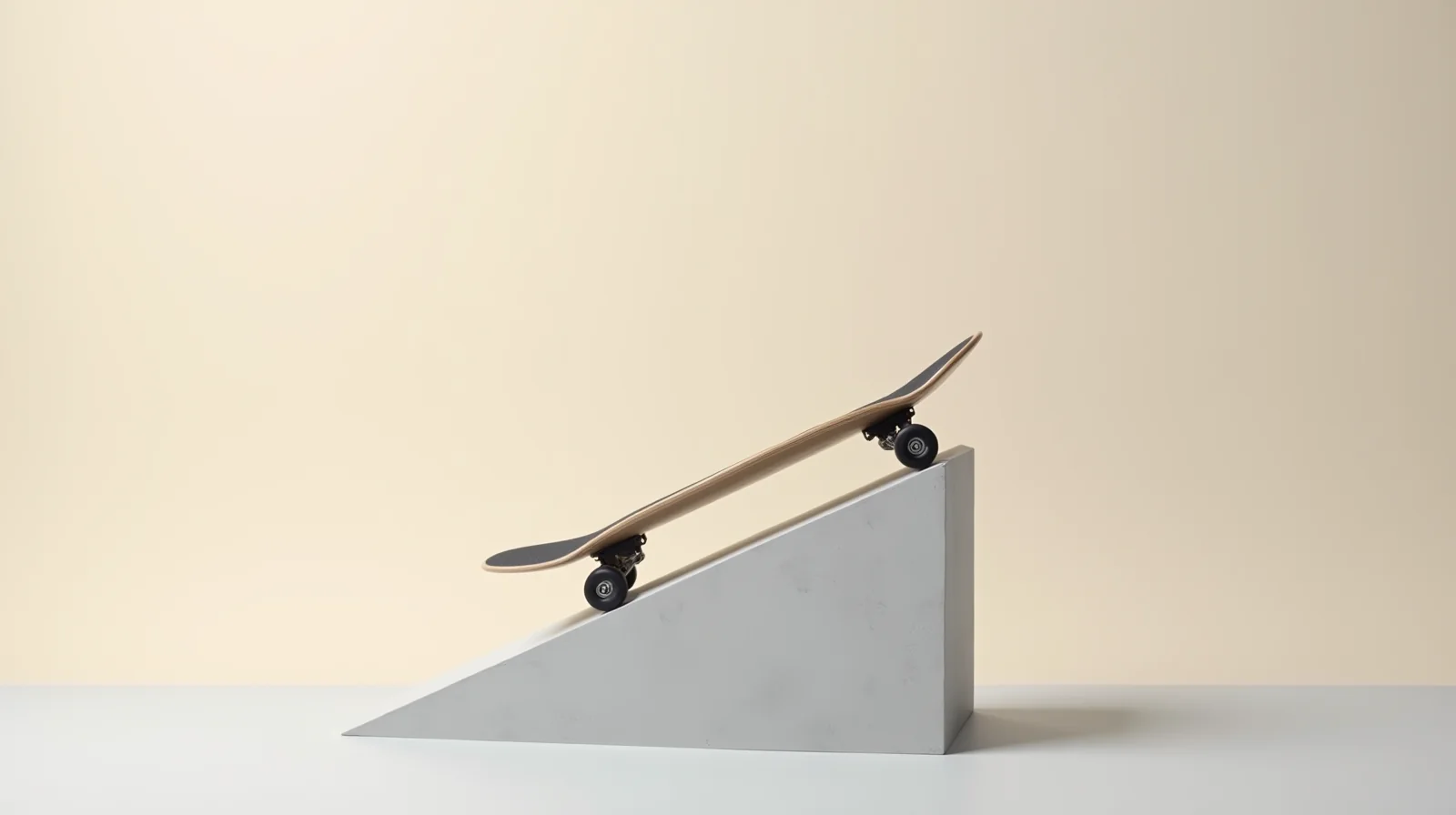
The feeble grind is one of the most satisfying tricks in the slide-and-grind family, and one of the most misunderstood. If you can land a boardslide or a 50-50, you already own the two ingredients a feeble needs: a clean ollie onto a ledge and the confidence to commit your board to the tail. What separates a feeble from those tricks is a single, small detail. You land on the tail at the very end of the board, backside, with the nose kicked up and the grip tape angled toward you. Get that detail right and the board rides the edge clean and the pop out feels effortless. Get it wrong and you catch a truck on the lip and the whole thing collapses into a bail.
In the last two seasons of coaching I have watched hundreds of skaters stall on exactly this trick, and almost every one of them for the same reason: they treated it like a boardslide and landed too far toward the middle of the board. This guide breaks down the feeble grind the way I teach it on the street. You will get a clear definition of what the board is actually doing, a direct comparison against the tricks it is most confused with, the setup that makes it possible, a full step-by-step sequence, the most common mistakes, and a realistic progression so you are not bailing into traffic on day one.
Published: September 28, 2026
By Tyler Brooks, Skateboarding Coach
Tyler has coached skateboarders for 10 years and has tested trucks, wheels, and protective gear on real street and park sessions.
What Is a Feeble Grind?
A feeble grind is a backside grind in which your board travels along an edge on its tail, with the nose lifted off the surface. You approach the ledge or rail backside, ollie up so the tail lands on the edge, and the board stays in that vertical-ish position as the tail grinds forward. The nose points up and slightly toward you; the tail is the only part of the board touching the obstacle. When you are ready to finish, you pop the tail up off the edge and ride out, usually into a backside 180 or a straight roll-through.
The one-line definition
A feeble is a backside tail grind: the tail rides the edge, the nose stays up, and the board never goes flat on the surface. That single fact is the whole trick. Everything else is timing and balance.
The name comes from old-school skateboarding slang. Long before the modern street era, a “feeble” referred to a backside turn of the board, and the trick carried that label forward. In practice the word today means the tail grind described above, not a spin. If someone on the street calls for a feeble, they mean the tail-on-the-edge grind, backside, nose up. Keep that image in your head and the rest of this guide becomes a set of instructions for reproducing it on purpose.
The reason the feeble trips people up is that it looks almost identical to three other tricks from a distance, and the body position is similar enough that it is easy to muscle into the wrong one. From my sessions, the fastest way to make the feeble click is to see it next to its cousins. Here is how the board actually contacts the edge in each case.
| Trick | Board Contact | Board Angle | Direction |
|---|---|---|---|
| Feeble | Tail only, nose up | Vertical / nose lifted | Backside |
| 50-50 | Both trucks | Flat on the edge | Front or backside |
| Boardslide | Deck center (mid-tail) | Flat, side-on | Front or backside |
| Tailslide | Tail, board flatter | Semi-vertical, nose lower | Front or backside |
Compiled from coaching observation and standard street-trick nomenclature; see the Sources section at the bottom of this guide.
Two things jump out of that table. First, the feeble is the only one defined by a nose-up, tail-only contact. Second, it is the only one that is essentially a backside trick by nature. A boardslide and a tailslide can be done frontside or backside, but the feeble lives on the backside. If you find yourself landing frontside with the nose up, you are not doing a feeble yet. For the boardslide and the 50-50 that this trick builds on, see our boardslide guide and the broader skateboard grinds guide, which cover the flat-board mechanics this vertical trick branches from.
Board Setup That Makes a Feeble Possible
Before you attempt the trick, check your setup. The feeble is unforgiving of sloppy hardware because the tail is doing all the work on a tiny contact point. In my testing of street setups, the three things that matter most for this trick are deck width, bushings, and the condition of your tail. Here is the reference I use when I fit a skater for ledge tricks.
| Component | What to look for | Why it matters for the feeble |
|---|---|---|
| Deck width | 8.0 to 8.25 inches for street | Narrower pops cleaner and the tail is easier to keep up |
| Concave | Medium to high, continuous | Keeps your back foot locked so the tail stays up |
| Bushings | Medium-hard, matched front and back | Too soft and the board folds under the tail load |
| Tail condition | Fresh, flat, no rounded lip | A worn, rounded tail slides off the edge instead of riding it |
| Grip | Fresh, not peeling at the tail | Your back foot must hold the nose up without slipping |
The tail condition point is the one most people skip. A deck that has taken a lot of flat grinds develops a rounded, polished lip on the tail. That rounded edge cannot catch the corner of a ledge the way a flat tail can. If your tail has been broken down, the feeble will feel like the board is escaping your foot even when your timing is perfect. For deck sizing and concave in more depth, our skateboard decks guide walks through width, concave, and ply, and the bushings guide covers the stiffness you want for ledge tricks.
How to Do a Feeble Grind: Step-by-Step
Here is the full sequence the way I break it down on the street, from the approach to the roll-through. Do these in order and do not skip the low versions. Each step assumes the previous one is solid. The whole trick is about landing the tail on the edge and keeping the nose up, so the first half of the list is really about the ollie and the second half is about the grind and the finish.
- Set your approach. Line up so your path meets the ledge at a slight angle, not square-on. You want to roll in backside, with your front foot pointing toward the edge and your body facing the direction you will roll out. A square, dead-on approach makes it hard to keep the nose up after landing.
- Commit to a full ollie, not a half. Pop a complete ollie over the edge. The classic feeble mistake is a lazy, half-height ollie where the tail barely clears the lip. A full, crisp ollie gives you the height to land the tail on the edge with a clean drop.
- Drop the tail, keep the nose up. As the board comes down, let your back foot fall onto the tail while your front foot stays forward and slightly down. This is the moment that makes or breaks the trick: the tail hits the edge and the nose stays lifted. Think tail-first, nose-last.
- Balance on the tail, weight centered. Once the tail is on the edge, settle your weight over the back foot with a soft, slightly bent knee. Do not lean back hard. The board wants to fall flat; your front foot and your upper body counterbalance the nose so it stays up. Eyes forward, not at the board.
- Grind forward, smooth and short. Let the board roll forward on the tail for a controlled distance. The feeble is not a long grind. A short, clean ride of a few board lengths reads way cleaner than a wobbly long one. Keep the motion quiet and let the tail roll, do not drag it.
- Pop off and roll through. When you are ready to finish, press down and slightly back to pop the tail up off the edge, then ride out. A backside 180 off the feeble is the most common exit, but a straight roll-through is a perfectly clean finish while you are still building control.
The single most important cue
If you remember one thing from this section, make it this: tail first, nose last. Most failed feebles are not a bad grind. They are a bad landing where the board goes flat on the edge instead of the tail. Fix the landing and the rest follows.
Common Feeble Grind Mistakes and How to Fix Them
After coaching a lot of first attempts at this trick, the same five failures come up again and again. If you are stuck on the feeble, you are almost certainly hitting one of these. Match your bail to the fix and you will move forward fast.
| What you see | Likely cause | The fix |
|---|---|---|
| Board lands flat on the edge | Landing like a 50-50, both feet even | Drop the tail first and keep the front foot down to hold the nose up |
| Tail catches the lip and you flip out | Ollie too short, tail hits the corner hard | Pop a taller, cleaner ollie so the tail drops onto the edge smoothly |
| Nose drops and the board goes flat mid-grind | Weight leaned back, front foot lifted | Keep your front foot pressing down and your weight centered over the tail |
| You land frontside instead of backside | Approach angle too square, body turned wrong way | Angle your approach and roll in backside so the body is set before the ollie |
| Trick feels uncontrollable and wobbly | Trying too long a grind or looking at the board | Shorten the grind to a few board lengths and keep your eyes forward |
The flat-landing mistake is the big one and it ties directly back to the definition. Because the feeble is defined by a nose-up, tail-only contact, any time the board goes flat you have drifted into a 50-50 or a boardslide instead. Drilling the low, slow version where you focus only on keeping the nose up for one second is the fastest way to burn the correct body position in. For the flat-board cousins you are building from, the noseslide guide and the crooked grind guide are good cross-references, since both teach the same clean-landing discipline the feeble demands.
Best Obstacles for Learning the Feeble
Where you practice the feeble matters as much as how you do it. Not every ledge is kind to a beginner on this trick. When I take a skater through the progression, I pick the obstacle first and only then the trick. A good learning ledge has a low height, a clean sharp edge, and enough flat runout so a wobble does not turn into a hard stop. A bad learning ledge is tall, rounded, or sits in front of something you do not want to hit.
- Low flat ledges (4 to 6 inches). The ideal first obstacle. Low enough that a wobble is a small deal, with a clean edge the tail can ride. Most street ledges and the low boxes in a park fit here.
- Short handrails and small gaps between rails. Good for the short, controlled grind the feeble calls for. The short length forces a clean finish rather than a long ride.
- Park ledge features. Designed for exactly this kind of trick. Look for the low, wide ledges with a flat runout. They are the safest place to repeat the trick dozens of times.
- Avoid tall, rounded, or broken ledges first. A rounded lip will not let the tail catch, and a tall ledge turns every wobble into a bigger fall. Save those for when the trick is solid.
Match the spot to your level
The feeble is a trick that punishes the wrong obstacle. A perfect feeble on a tall, busy ledge is riskier than a sloppy one on a low flat box. Pick the spot that lets you repeat the trick safely, because repetition is how the nose-up position becomes automatic. If you are still building your street spots, our skate parks guide covers how to read a park and find the right beginner features.
A Realistic Progression to Land Your First Feeble
Jumping straight to a full feeble on a tall ledge is how most people get stuck for weeks. The trick is earned through a short ladder of low-stakes reps. Work through these in order, and do not move to the next rung until the previous one feels easy. Most of my skaters get from “never done one” to a clean first feeble in a single session when they run the low versions first, because the nose-up body position is already automatic by the time they hit the real ledge.
- Practice the landing, not the trick. On a low box or flat ground, ollie and drop the tail while keeping the nose up for a full second. Do this on the ground and on a low ledge until the tail-first, nose-last position is automatic. This is the single highest-value drill for the feeble.
- Boardslides and 50-50s on the same ledge. Get comfortable landing on that specific ledge with a flat board first. You are learning the height of the ollie and the distance to the edge. If your flat tricks are clean on that spot, your ollie height is already right.
- Short feebles on the lowest ledge available. Aim for just a couple of board lengths on the tail. Keep the nose up, eyes forward, and roll out straight. Ignore the finish. A short, controlled feeble is a real feeble.
- Lengthen the grind and add a finish. Once the short version is consistent, let the board roll a little further, then pop off and ride out. Add a backside 180 when the straight roll-through feels boring.
- Move up in height and variety. Only when the low ledge feels easy, step to a slightly taller ledge, then to a rail or a gap. Change the obstacle, not the body position. The feeble you do on the low box is the same feeble you do on the tall one.
Patience is a real part of this progression. The feeble sits in an awkward middle spot. It is harder than the flat tricks you already know, but it is not as hard as the bigger spins, so it can feel frustratingly close for a while. That “so close” feeling is usually the nose-up landing not being automatic yet. Keep drilling rung one. The trick tends to fall together in one session once the position is locked in.
Frequently Asked Questions About the Feeble Grind
Is a feeble harder than a boardslide?
Usually yes, for most skaters. The boardslide is flat and forgiving, while the feeble demands a nose-up, tail-only contact that is easy to lose mid-grind. That said, if you already do clean boardslides and 50-50s, the gap is small because the ollie height and landing distance are the same. The feeble is the flat board trick plus the nose-up landing.
Can you do a feeble frontside?
The classic feeble is a backside trick. A frontside version exists and is sometimes called a frontside feeble, but it is far less common and most street skaters treat the backside as the real feeble. If you are learning the trick, focus on the backside first. The body position and the ollie setup are cleaner that way, and it is what people on the street mean when they call for a feeble.
What is the difference between a feeble and a tailslide?
Both ride on the tail, but the angle is different. On a tailslide the board is flatter, closer to the surface, with the nose only slightly up. On a feeble the board is much more vertical, with the nose clearly lifted and the tail doing all the work on the edge. A useful test: if the board looks nearly upright with the nose pointing well up, it is a feeble. If it is closer to flat, it is a tailslide. The tailslide guide we covered earlier is a good side-by-side reference.
Why does my board keep going flat mid-grind?
Almost always a weight or front-foot problem. If your front foot lifts or your weight leans back, the nose drops and the board tips flat. Keep your front foot pressing down, your knee slightly bent, and your weight centered over the tail. Also check your tail condition. A rounded, worn tail cannot hold the edge the way a flat one can, and it will let the board tip over even when your body position is correct.
Do I need special trucks or bushings for the feeble?
No special parts are required, but your setup should be solid. Matched medium-hard bushings keep the board from folding under the tail load, and a clean flat tail is what actually matters most. You do not need to buy new hardware to learn the feeble. You do need a deck whose tail has not been rounded off by flat grinds, and bushings that are not so soft that the board collapses when the tail takes the weight.
Staying Safe While You Learn the Feeble
The feeble puts your board in a less stable position than your flat tricks, which means a bail is more likely to catch you off balance. The good news is that the same safety habits that protect you on every trick protect you here. Wear what you would for any ledge session. A helmet, wrist guards, and knee pads are the baseline, and they matter more on the feeble than on a 50-50 because the nose-up board gives you less to brace against when it falls away from you. Pick your spots with runout so a wobble rolls you to a stop instead of into something hard. And do the low versions first, because the bails you take on a low box teach you the trick cheaply. Our essential safety gear guide covers what to buy and how to fit it, and the how to fall safely guide covers the roll that turns a bad bail into a minor one.
The Bottom Line
The feeble grind is one of the highest-value tricks a street skater can add, because it takes two things you already have, a clean ollie and the confidence to land on an edge, and adds one small detail, the nose-up, tail-only contact. Master that detail and the feeble stops being mysterious. It becomes a boardslide you have done a hundred times, with your nose held up. Set your board up so the tail is clean and the bushings are not too soft, pick a low flat ledge, drill the tail-first landing until it is automatic, and work up through the progression one rung at a time. Get the landing right and the rest of the trick takes care of itself. That is the whole feeble, and it is one of the best tricks to learn for how little extra it asks of you.
See Also
- Boardslide 2026: How-To Guide, Setup & Step-by-Step — the flat-board cousin the feeble branches from.
- Skateboard Grinds 2026: 5-0, 50-50 & Boardslide — the full flat-grind family and how to set up for ledge tricks.
- Nosegrind 2026: How-To Guide, Setup & Step-by-Step — the nose-up vertical trick on the opposite end of the board.
Sources
- Wikipedia — Skateboard trick (nomenclature and trick classification): https://en.wikipedia.org/wiki/Skateboard_trick
- Rider — skateboarding and protective gear reference: https://www.rider.com/
- Indy Trucks — skateboard truck and setup specifications: https://www.indytrucks.com/
#Skateboarding #FeebleGrind #StreetSkating #SkateTricks #TailGrind #LearnToSkate #SkateboardingTips #LedgeTricks #SkateCoach #StreetSkater #SkateProgression #Skateboarding2026 #TrickBreakdown #SkateboardSetup #SkateLife
This guide is part of the ska8 daily series. Explore more below.