
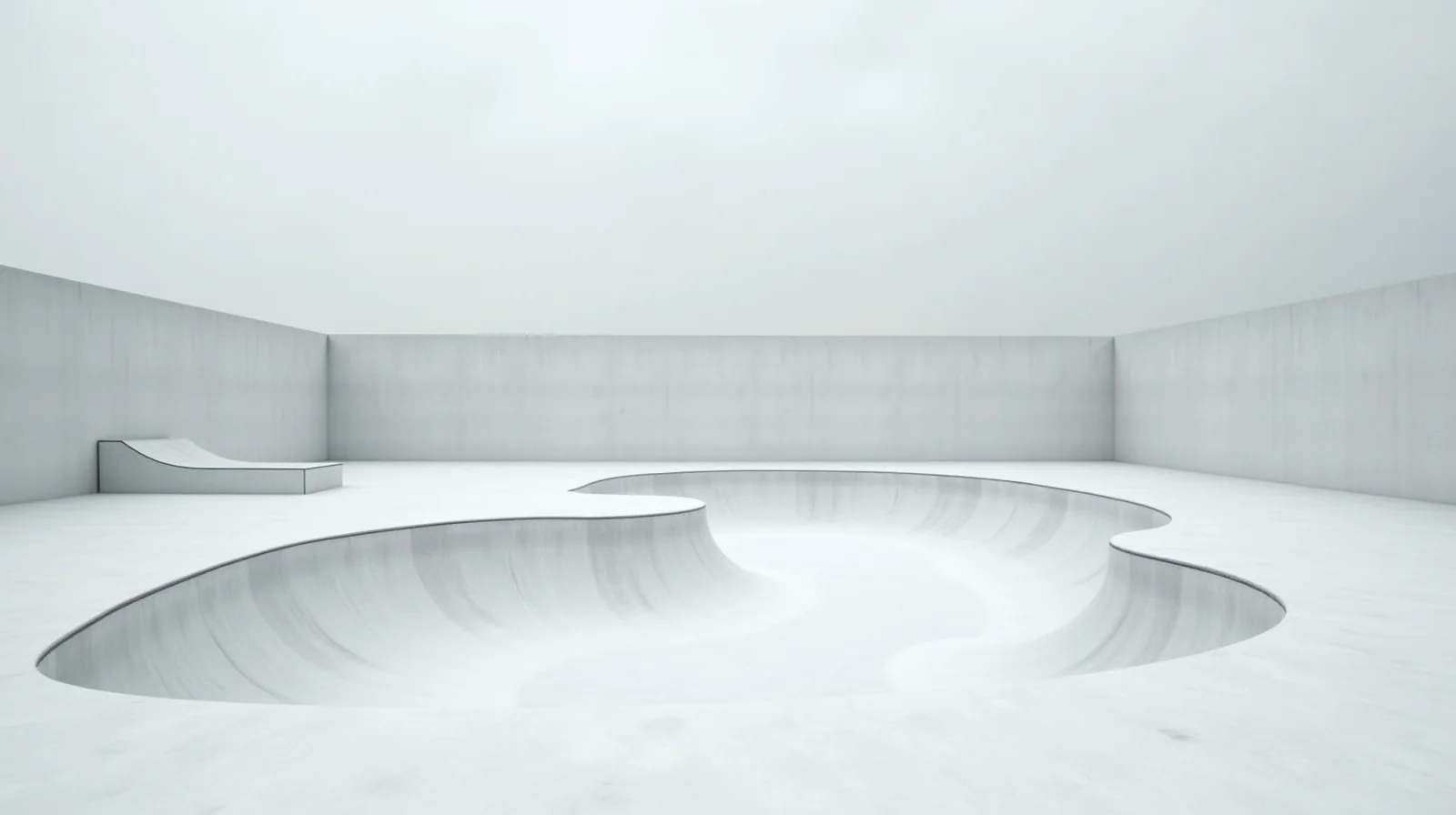
Skate park etiquette is the set of unwritten rules that keep a crowded skate park functional, safe, and worth coming back to. Get it right and a park becomes a community that teaches you faster than any video ever could. Get it wrong and you will find yourself on the wrong end of a stare-down at the top of a 4-foot ledge with a stranger’s board an inch from your shins.
Published: November 19, 2026
By Tyler Brooks, Skateboarding Coach
Tyler has coached skateboarders for 10 years and has tested trucks, wheels, and protective gear on real street and park sessions.
What Skate Park Etiquette Actually Means
In my 10 years of coaching, the single most common reason a new skater gets asked to leave a spot has nothing to do with their skill level. It is behavior. Skate park etiquette is the practical version of a simple idea: everyone in the park gets a fair chance to use every feature, and nobody’s attempt is treated as an obstacle to yours.
Etiquette in skating is not about manners in the old-fashioned sense. It is about safety and flow. A park is a shared machine with a limited number of features. When one person monopolizes a gap, the line behind them stops moving, and every skater in that line is effectively being asked to wait indefinitely for a single feature. The etiquette rules we cover in this guide exist to keep that machine moving: they decide order, spacing, and how long a feature stays with one person before it has to turn over.
There are three principles underneath every rule in this article:
- Take your turn. Lines exist for a reason.
- Read the room. A feature that is open at 7 a.m. on a Tuesday may be contested at 3 p.m. on a Saturday. The same move that is fine in an empty park is a violation in a full one.
- Respect the level gap. Advanced skaters have an implicit responsibility toward beginners, and beginners have an implicit responsibility not to put advanced skaters at risk. Neither group owes the other a lecture.
The one-rule version
If you are not sure whether something is allowed, ask. A 10-second question at the bottom of the line is cheaper than a 10-minute argument at the top of it. In every session I coach, the skaters who ask first are the skaters who end up with the best day.
Why Skate Park Etiquette Matters More Than Ever
Skate parks have never been busier. Since 2020, new concrete has gone in across every major city, the sport’s mainstream exposure from the Olympics and social media has pulled in a wave of first-time riders, and the average park now hosts dozens of skaters a day instead of the handful it saw a generation ago. More bodies on the same concrete means the old informal agreements now have to hold up under real load.
There is also a safety angle that people understate. Most serious injuries in a shared park come from collisions between skaters moving in the same feature at different speeds, not from the rider’s own fall. Etiquette rules like line spacing, drop-in order, and calling your line are direct collision controls. When we teach a new rider, the first safety lesson is not how to fall. It is how to share space, because that is where the real danger lives.
The 12 Rules of Skate Park Etiquette
Here are the twelve rules that cover roughly 95 percent of park behavior. They are listed in the order they matter most when a line is moving and a park is full. If you remember nothing else in this guide, make these twelve the habit.
- Join the line. If skaters are queuing for a feature, you go to the back or the side of the queue and take turns in order. Side-launching into a moving line is the fastest way to make a permanent enemy.
- Respect the cut-in window. Most parks operate on an informal rule: if a new skater has been waiting for a short stretch (commonly around 10 to 20 seconds of idle time at the bottom), they may join at the front or middle of the line. The moment a skater is committed to a feature, the line locks for that run.
- Keep your attempts moving. If you are not going, let the line know and move out. Stalling at the bottom while the queue passes is a violation in every culture I have ridden in, from a backyard pool to a downtown street spot.
- One run per turn, no double-dips. Ride your turn, come back to the line, and earn another turn.
- Call your line. In a bowl or on a vert wall, announce your direction (“left side,” “backside,” “going top”) before you drop in. Verbal calls cost nothing and prevent the side-swipe collision that causes most serious injuries.
- Watch for the drop-in window. In a bowl, only drop in when the line of skaters at the top has a gap that lets you in safely. Never launch into the coping while someone else is mid-run on your side.
- Beginners get a reasonable break, not a free pass. A new rider may use the small features and the mellow transitions while learning, and experienced skaters will usually give them space.
- Do not film other skaters’ runs without asking.
- No feature camping. Sitting on a ledge, a gap, or the top of the quarterpipe to “claim” it does not work. If you are not riding, you are not holding the feature.
- Respect the surface. No glass, no gum under the board, no shoes with sticky soles, no food on the concrete.
- Match the session, not your ego. If the park is mellow, ride mellow. If the session is big, the new kid does not need to be the first one to hit the 6-footer.
- When in doubt, ask or back off. The cost of asking is seconds. The cost of getting it wrong is a broken board, a bruised ego, or a broken arm. Ask first, ride second.
The rule that gets violated most
Rule 1, join the line. In every argument I have watched or mediated, the spark was almost always a skater who decided a line was moving too slowly and launched in from the side. The fix is never the argument; it is the 10-second wait.
Line Etiquette: Who Goes First
The line is where skate park etiquette gets tested most, because it is the one situation where fairness is visible to everyone. A line works when the rules below are the shared assumption.
The standard order. The queue moves front to back. The person at the front rides, returns to the back of the queue, and the cycle repeats. Some parks run a “ride-and-queue” rotation where you skip one turn after a big run as a courtesy; others run a strict one-in-one-out. Watch the local pattern for your first two visits and copy it.
The cut-in window, in detail. The cut-in rule is the most misunderstood rule in skating, so here is how it actually works. When a line is actively moving, no one cuts in. When the feature sits idle because the last skater finished and no one is immediately ready, a waiting skater may step up. The idle window is short and local — anywhere from 5 seconds in a fast-moving session to a full turn in a relaxed one.
What never justifies a cut-in.Being in a hurry, being the better skater, or having a filmer.None of these move you up the queue.
Spacing in the queue. Stand clear of the feature path. A line that crowds the launch zone forces every rider to check their speed, which slows the whole rotation and creates the very congestion people are complaining about. Give the rider in front room to make a clean takeoff, and stay behind the line of the queue.
Bowl and Transition Etiquette
Bowls and vert walls run on different logic than a street line, because there is no single “front of the line.” Instead, the bowl operates as a continuous loop with a drop-in order at the coping. The core rules from my time coaching in parks:
- Drop-in order. Skaters queue at the top of the transition, one per side, and drop in one at a time. If both sides are occupied, the next skater waits at the coping. The person already in the bowl has priority until they return to the top.
- Never launch into a running bowl. If someone is mid-run on your side of the transition, hold at the coping. The collision between a dropping skater and a rider already pumping is the single most dangerous moment in a bowl, and it is almost always preventable by waiting two seconds.
- Call your side and your height. A quick “backside, to the top” tells the bowl where you are going. On vert walls, the skater committed to the wall has priority over anyone entering it from the deck.
- Beginners stay in the small end. The shallow transition and the mellow side of the bowl are the beginner’s zone by universal agreement. A new rider who cannot yet stop or control speed belongs on flat ground and the small stuff until they can. The full-depth bowl is not a waiting room.
- Do not camp the coping. Sitting on the top edge to rest your legs blocks the drop-in line. If you need a break, step back to the deck and let the queue move.
The drop-in itself is a skill worth practicing deliberately, and a controlled drop-in is half of bowl etiquette. If you have not yet learned a safe drop-in, start with our drop-in guide for beginners before your next bowl session. A rider who can drop in smoothly, stop on cue, and read the queue is a rider every park tolerates quickly.
Street Spot Etiquette: Gaps, Ledges and Curbs
Street skating adds a layer the park does not have: the public. Every street spot is shared with pedestrians, and the etiquette rules tighten accordingly. In my experience, the skater who respects pedestrians keeps a spot open for years, and the skater who treats a crosswalk like a bowl loses it to a city complaint within a season.
The gap is the most contested feature in street skating. A gap or a ledge has one launch line and one landing zone, so it supports exactly one rider at a time. The local rules that hold up everywhere I have ridden:
- Queue on the approach side. The next skater waits behind the previous one’s launch point, not on the gap itself.
- Take your run, walk your board back, and rejoin the queue. Do not push back across the landing zone to the front — that is a double-run in disguise.
- If a skater has been waiting a full minute or more and the current rider is clearly not going to make the gap, most street crews will let the waiting skater up. Watch for the nod; if you get one, roll.
- Pedestrians always have priority. The moment someone is on the landing side, the feature is closed until they clear it. No exceptions, and no “almost” collisions.
Curbs and flat sections. A curb line is a rotation: one skater rolls the line, the next takes the next pass.
Private property is a different contract. A mall, a parking lot, a private plaza — if the property owner has asked you to leave, the etiquette is to leave. The skater who argues with a manager is the skater who closes the spot for everyone. Street safety beyond the spot, including how to ride around traffic, is covered in our street safety and traffic rules guide.
Skate Park Etiquette for Beginners
Being a good beginner is a learnable skill, and it is the single fastest way to turn a skeptical crowd into your teaching staff. The pattern I give every new skater:
- Start on flat ground. Push, balance, turn, and stop on the flat deck before you touch any feature. If you cannot stop reliably, every other rule in this guide is unsafe for you. The foundational skills live in our beginner roadmap.
- Wear the minimum protection from day one. A helmet is not optional in a shared park, and pads make you visibly a learner, which buys you patience from everyone around you. The full list, with fit notes, is in our essential safety gear guide.
- Pick off-peak hours for your first weeks. A Tuesday morning at a municipal park is the cheapest skateboarding lesson on earth: the same features, a fraction of the pressure. Save the Saturday afternoon for when you can hold your own in a line.
- Learn the small end of the park first. The quarterpipe, the small ledge, the mellow bank. These are the features every park reserves for learners by default, and mastering them is also the path to the bigger stuff — see our skate park types guide for matching a park to your level.
- When you are done, say so. A beginner who finishes a run and moves to the back of the line, or steps fully off the feature, is a beginner who gets taught tricks for free. A beginner who hovers on the quarterpipe is a beginner who gets stared at.
- Carry your board when you are not riding. Pushing across active features or dragging a board through the line is a collision hazard. Lift, or set the board down clear of the path.
If you are a beginner deciding on gear, the board choice matters less than the fit. Our first skateboard buyer’s guide covers width, truck height, and wheel size for your shoe size and your first year of riding.
Skate Park Etiquette at a Glance
The full decision set in one table. Print it, screenshot it, or just memorize the Do column — it is the same list in every park I have ridden.
| Situation | Do | Do not |
|---|---|---|
| Line is moving | Join the back, wait your turn | Side-launch into the line |
| Feature sits idle | Step up after ~10–20 seconds | Demand the cut, or never take it |
| Your turn comes and you are not ready | Say “not going” and step out | Stall at the bottom and block the queue |
| Dropping into a bowl | Wait for a clear side, call your line | Launch while someone is mid-run on your side |
| You are a beginner | Use the small end, wear pads, say done when done | Camp the quarterpipe or the gap |
| A pedestrian is on the landing | Stop, wait, let them clear | “Almost” them for a close call |
| Filming a run | Ask first, or wait until the run ends | Point a phone at a rider mid-run |
| You need a break | Step back to the deck, leave the line open | Sit on the coping or the ledge to “hold” it |
| You are unsure of a rule | Ask one person, in ten seconds | Test the limit and argue about it |
The idle-window timing varies by park and session; the 10–20 second figure is the common street-park default, not a universal standard.
Equipment and Behavior: What Does Not Belong in the Park
Etiquette is not only about lines. A chunk of it is about what you bring onto the concrete and how you behave while you are there. The items that get skaters asked to leave, in the order I have seen them enforced:
- Glass and hard containers. A broken bottle on concrete is a year of injuries in a single afternoon. Most parks post the rule; all of them enforce it.
- Food and drink on the riding surface. Sticky residue under a wheel turns a clean landing into a slide-out. Keep snacks off the features.
- Shoes with sticky or gummy soles. Some skate parks restrict non-skate footwear on the concrete because they leave marks and debris. When in doubt, carry your board and walk in.
- Loud speakers. Bluetooth speakers on the line block calls and start arguments. Headphones are the universal compromise.
- Shooting and dropping objects. Throwing boards, helmets, or water bottles at the features or at people is a one-strike ejection in every park I know.
- Trash that is not yours. Picking up someone else’s cup costs you nothing and buys you real goodwill. The parks with the best culture are the ones where the regulars clean up after the tourists.
The invisible rule
Leave the park better than you found it. A swept launch zone, a picked-up bottle, a board carried clear of the line — none of these are posted anywhere, and all of them are exactly what separates a community from a crowd.
How to Handle Conflicts at the Skate Park
Even a good park has bad moments. The difference between a moment and an incident is how the first thirty seconds are handled. From mediating more than I can count over a decade of sessions, the pattern that works:
- Lower the board first. The physical move that de-escalates every argument is the rider setting their board down and stepping back a pace. Keep your board in your hand only while you are riding; the moment an exchange starts, the board goes down.
- One question, not a paragraph. “Did you think I cut you?” beats a five-point defense. Most park conflicts are misread intent, and a single clarifying question dissolves them.
- Do not bring the line into it. A conflict with the queue behind you makes a two-person problem into a crowd problem. Step off the feature, to the side, and talk there.
- Know when it is over. If the other skater is not engaging after your first question, the conversation is done. Walk away and ride. Winning the argument is not the point; the point is the next run.
- Escalate to the park, not to fists. Municipal parks usually have a contact or a manager’s schedule. A written note about repeated behavior is faster and more effective than any confrontation, and it protects the spot for everyone.
Frequently Asked Questions About Skate Park Etiquette
Is there an official skate park etiquette rulebook?
No. There is no single governing body that issues skate park rules, and every park sets its own local norms on top of the shared customs described in this guide. The closest formal reference is the ASTM F1492 standard for skate park design, which governs construction, not rider behavior.
Can a beginner really ride in the same park as advanced skaters?
Yes, with the conditions. Beginners belong on flat ground, the small transition, and the mellow features, and they belong there at off-peak hours first. What the advanced skaters will not give is unlimited patience for a beginner who cannot control speed or who hogs the big feature. Earn the deep end by showing you can stop and read the queue.
What happens if someone keeps cutting the line at my park?
Try the ten-second question once, in a flat voice, about behavior rather than character. If the pattern continues, the effective move is a written note to the park manager or the city recreation office, naming the behavior and the dates.
Do the etiquette rules differ between street skating and park skating?
The core is the same — take your turn, keep the flow moving, respect the space — but street skating adds pedestrians and property owners to the equation, which tightens the rules.On the street the feature is shared with the public as well, so waiting for a pedestrian is absolute and a spot that loses the owner’s trust is gone for everyone. Our street safety guide covers the traffic side of that.
Why do some parks have posted rules and others do not?
Posted rules usually appear after a conflict, a liability event, or a city mandate, and they tend to codify the same behaviors this guide describes: helmets, no glass, no cutting lines, respect for pedestrians. Parks that never needed to post them are parks where the community enforced the norms informally, which is the healthier outcome. If a park posts a rule, follow it literally, even when the local custom is looser — the posted rule is the one that decides whether the park stays open.
Sources
- Wikipedia: Skate park — history of purpose-built skate parks and the transition from public-space skating to dedicated facilities.
- Rider Skateboards — manufacturer reference for board dimensions used in park versus street setups.
- The Skateboarder — skateboarding media coverage of park culture and rider behavior.
ASTM F1492, Standard Specification for Skateboard Facilities, cited by name; the full standard is paywalled through ASTM International.
See Also
Skate Parks: A Beginner’s Complete Guide (2026)
Skate Park Types 2026: Which One to Start With
How to Drop In 2026: Skateboard Guide for Beginners
#SkateParkEtiquette #Skateboarding #SkatePark #SkateCulture #SkateboardingEtiquette #RespectTheLine #SkateLife #StreetSkating #BowlSkating #SkateboardRules #LearnSkateboarding #SkateboardSafety #SkateCommunity #ParkSkating #Skateboarding2026
This guide is part of the ska8 daily series. Explore more below.