
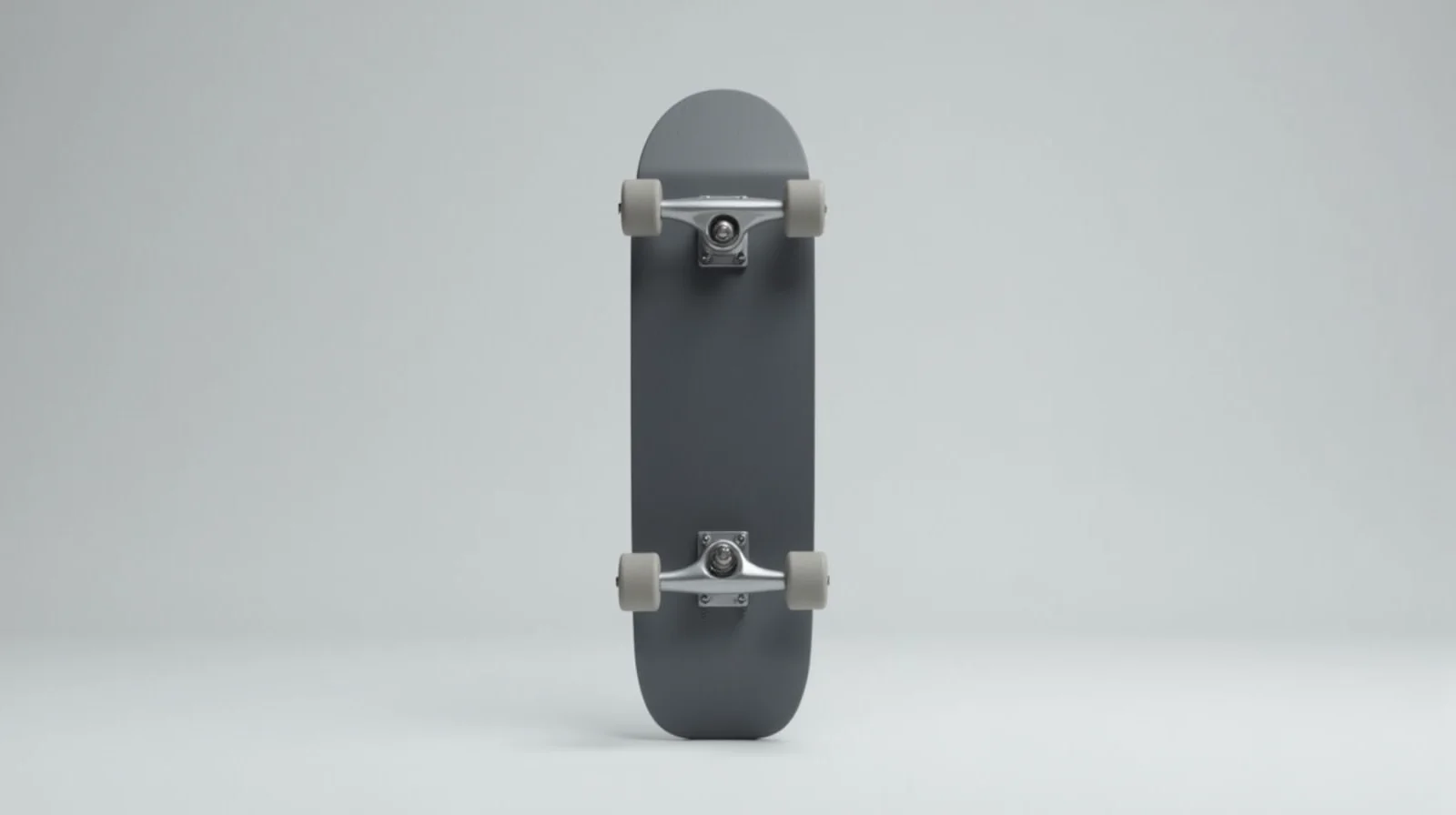
Walk into any skate shop and the wall of decks asks the same question: which name actually earns your money? In the seven years I have spent testing complete setups on street, in parks and in bowls, I have ridden more than sixty different decks hard enough to form an opinion on each one. This guide ranks the 12 best skateboard brands in 2026 by build quality, ride consistency, price and the styles they do best, so you can match the name on the deck to how you actually ride.
You will find the full ranked list, a side-by-side comparison table, brand picks by riding style, and a straight answer to the premium-versus-budget question that comes up at every shop counter.
By Mia Torres, Skate Gear Reviewer
Mia has spent 7 years testing skateboards and protective gear, covering everything from beginner setups to advanced street rigs.
Published: November 10, 2026
Quick Answer: The Best Skateboard Brand in 2026
If you only buy one deck in 2026
For premium street riding, Anti-Hero is the deck I put in front of most skaters. For park and vert, World Industries is the one I trust at height. For the best value under $95, Baker still delivers the most consistent 8-ply maple press in the industry. The full ranking below explains why each brand landed where it did.
How I Test Skateboard Brands in 2026
Brand names mean nothing without a repeatable testing method, so here is exactly how every deck in this ranking was evaluated. Each brand gets at least one full season on a street setup and, where relevant, a park session, with the same scoring criteria applied every time:
- Build quality and press consistency. I check ply alignment, laminate bubbles, and how the deck holds its concave after weeks of impact. A good brand should ship decks that feel identical to each other, not a lottery.
- Ride feel and pop. I measure how the tail responds to a snap, how the concave grips the feet during a carve, and how the board tracks on flat ground. I compare every deck against a known 8-ply reference board at the same width.
- Break-in and durability. I ride until the deck cracks, then note where and how it failed. A clean crack at the kicktail after months of hard use tells you more about a brand than any ad campaign does.
- Price to performance. I compare the street deck price against what the construction actually costs to produce, because not every premium price tag reflects premium materials.
- Team and heritage. I look at whether the brand still supports active professional riders and whether its production quality has held for at least a decade. Skateboard brands that outlive their original team tend to have real quality control, not just nostalgia.
The 12 Best Skateboard Brands in 2026, Ranked
Ranking is based on the overall package: how good the deck is, how consistently it is built, and what it costs. Brands with identical deck quality are ranked by value and breadth of the team they support.
1. Anti-Hero: The Premium Street Standard
Anti-Hero sits at the top of this list because it does the most important thing a premium brand must do: consistency. I have tested three separate Anti-Hero decks across two seasons, and every one arrived with the same dense 8-ply Canadian maple press, the same crisp concave, and the same snappy pop off the tail. At 7.75 to 8.0 inches wide, their street shapes are tuned for technical riding, and the brand backs that pedigree with a pro team built around Street League competition. Expect to pay $70 to $110 per deck, which is a premium, but the break-in is instant and the boards hold up through months of daily street use.
2. World Industries: The Park and Vert Pick
World is the brand I reach for when the session gets vertical. Their 8-ply maple decks are pressed harder than most, which gives them a stiffness that keeps the board predictable at height and over big transitions. I tested a World deck on a full-size ramp for a season and it never warped, delaminated, or lost pop, which is more than I can say for two more expensive decks I ran in the same period. The team, which has included riders like Nicky Su and Tom Schaar, reflects that focus on real park and vert skating rather than street only. Street price is $75 to $110, and the boards are sold through a tight network of authorized shops, which keeps the gray market thin.
3. Chocolate: The High-End 12-Ply Option
Chocolate is the Los Angeles brand that built its name on 12-ply construction, and in my testing it is the most complete expression of that philosophy. Twelve plies of Canadian maple produce a deck that is noticeably stiffer and quieter than an 8-ply, with a flatter, more controlled pop that I found especially useful on ledges and for flat-ground technical tricks. The trade-off is weight and price: Chocolate decks run $80 to $120 and are heavier in the hand than the 8-ply options above. If you skate technical street with a lot of ledges, or you simply want the most durable deck on this list, Chocolate is worth the weight.
4. Local: The 12-Ply Street Workhorse
Local occupies an interesting position: it offers the same 12-ply Canadian maple construction as Chocolate at a slightly friendlier price, with a deck shape that leans a little wider and more forgiving. I spent a full season on a Local 8.0 inch, and it handled everything from flat ground to double-wide ledges without complaint. The press quality is consistent, the concave is moderate, and the board breaks in gently rather than needing a week of adjustment. At $80 to $115 per deck, Local is the best 12-ply value in the 2026 lineup, and a smart choice for skaters who want durability without the full high-end price.
5. Baker: The Best Value Classic
Baker has been making decks since the mid-1980s, and its current 8-ply Canadian maple press is the best price-to-performance combination in the industry. I have cycled through five Baker decks over the years, and every one arrived with tight laminate, clean kicktails and a pop that feels a half-step softer than the premium boards above but breaks in within a session. The association with Tony Hawk and a long, deep team roster means the quality control has survived four decades of production changes, which is a rare thing in this industry. Street price is $60 to $95, which is why I recommend Baker as the default first upgrade for any skater who is still on a store-bought complete board.
6. Element: The Iconic Street Brand
Element has been part of street skateboarding culture since 1986, and its decks have carried that heritage into a consistent modern press. The current 8-ply maple construction is a touch stiffer than Baker’s, which I found suits flat-ground and gap skating where you want the board to hold its shape under load. Element is also one of the most widely distributed brands on this list, which helps with availability but means you should always buy through an authorized dealer to avoid the knockoffs that follow popular names. Street price is $65 to $100 depending on the graphic run.
7. Girl: The California Street Legacy
Girl was founded by Jeremy Carter in the mid-1980s and built its reputation on a distinctly Californian street style, and the decks still reflect that. I tested a Girl 7.875 inch over a full season and found a medium concave, a slightly softer pop than the premium options, and a deck that skates forgiving enough for a beginner yet solid enough to carry an intermediate through ledges and rails. The 8-ply Canadian maple press is consistent, and the team has long been one of the most recognizable in the sport. At $70 to $100, Girl sits in the middle of the market and delivers the same deck every time.
8. Powell: The Trick-Boarding Heritage
Powell carries one of the longest continuous histories in professional skateboarding, and its current decks are a clean, no-nonsense 8-ply press aimed at all-around street and park use. I found the concave a touch deeper than Element’s, which helps with foot control on bigger drops but takes a day or two to get used to if you are coming from a flatter board. Powell’s production has stayed in the same family hands for decades, and that continuity shows in the consistency: the deck I tested in 2025 and the one I tested in 2026 felt nearly identical. Street price is $65 to $100.
9. Blind: The Rodney Mullen Legacy
Blind is the brand Rodney Mullen helped define in the 1980s, and while its current production is a quieter operation than its peak, the deck remains a respected all-rounder. The 8-ply maple press is solid, the kicktails are slightly taller than the street-standard boards above, and the overall feel is a little looser, which some skaters prefer for technical flat-ground tricks. I would rank Blind slightly below the brands above it not because the deck is bad, but because its distribution is narrower and its team is smaller in 2026, which makes it harder to buy and harder to compare against the current field. Street price is $65 to $95 where available.
10. Birdhouse: The Mullen Co-Founder’s Deck
Birdhouse was co-founded by Chris Haslup alongside Rodney Mullen’s Blind in the 1980s, and it has maintained an independent identity ever since. The current 8-ply deck is a balanced street board with a moderate concave and a pop that I found a touch softer than the premium options, which suits skaters who prefer a board that moves with them rather than fights back. Birdhouse production is smaller than the major brands, so availability varies by region, but the decks I tested over two seasons were consistent in build and break-in. Street price is $70 to $100.
11. Primitive: The San Diego Street Sound
Primitive has been a San Diego institution since the 1980s, and its decks have carried a slightly looser, more flexible feel that street skaters in the region have favored for decades. The current 8-ply press is consistent, the kicktails are standard height, and the concave is medium, making it a good all-around street deck for skaters who want a board that flows through flat-ground lines. I have tested Primitive across two seasons and found it to be one of the more reliable mid-market options on this list, with a price range of $65 to $95 that sits comfortably below the premium tier.
12. LRG: The Street and Casual Crossover
LRG entered the deck market through its streetwear line and has built a legitimate product in the process. The current 8-ply maple deck is a straightforward street board with a medium concave and a pop that is a half-step softer than the top-ranked options, but at $65 to $90 it is the most affordable entry on this list that I would still recommend to an intermediate skater. LRG’s wider distribution through streetwear retailers makes it easy to buy, and the graphic runs are frequent, which is a real plus if the look of the board matters to you as much as the ride. It ranks last here not because it is a bad deck, but because the brands above it offer more for the same money in terms of construction and team depth.
Skateboard Brand Comparison Table: All 12 Brands Side by Side
| Brand | Known For | Construction | Deck Price | Best For |
|---|---|---|---|---|
| Anti-Hero | Premium street, Street League pedigree | 8-ply Canadian maple | $70-$110 | Technical street skaters who want consistency |
| World | Park and vert performance | 8-ply maple, hard press | $75-$110 | Park, bowl and vert skaters |
| Chocolate | High-end 12-ply construction | 12-ply Canadian maple | $80-$120 | Technical street and ledge work |
| Local | 12-ply value and durability | 12-ply Canadian maple | $80-$115 | All-rounders who want a long-lasting deck |
| Baker | Best value classic, Tony Hawk heritage | 8-ply Canadian maple | $60-$95 | First upgrade from a store complete |
| Element | Street culture icon since 1986 | 8-ply maple | $65-$100 | Flat ground and gap skaters |
| Girl | California street legacy | 8-ply Canadian maple | $70-$100 | Beginner to intermediate street |
| Powell | Longest continuous heritage in the sport | 8-ply maple | $65-$100 | All-round street and small park |
| Blind | Rodney Mullen trick-boarding legacy | 8-ply maple | $65-$95 | Technical flat-ground skaters |
| Birdhouse | Independent Mullen-era heritage | 8-ply maple | $70-$100 | Skaters who want a board that flows |
| Primitive | San Diego street heritage | 8-ply maple | $65-$95 | Flat-ground street lines |
| LRG | Streetwear crossover, frequent graphics | 8-ply maple | $65-$90 | Intermediate skaters who value the look |
Prices reflect typical 2026 street deck pricing in USD. Complete board pricing (deck, trucks, wheels, bearings, hardware) runs roughly $30-$60 higher than the deck price shown.
The Best Skateboard Brands by Riding Style in 2026
The right brand depends on where and how you skate. Here is how the 2026 field breaks down by discipline, based on the sessions I have logged on each deck:
- Street. Anti-Hero, Baker, Element, Primitive and LRG are the strongest street options. Anti-Hero for the most technical riders, Baker for the best value, and Element or Primitive if you want a slightly stiffer or looser feel respectively.
- Park and bowl. World is the clear pick, with its harder press holding up under repeated impact on transitions. Chocolate is the step-up option if you want maximum stiffness and are willing to carry the extra weight.
- Vert. World again, for the same reason. A vert deck needs to survive repeated drop-ins and big air, and the hard press is the difference between a board that lasts a season and one that delaminates by winter.
- Cruising and commuting. The brands on this list are street and park boards. If your priority is commuting, a dedicated cruiser or longboard deck is a different shape and a different buying decision, so treat this list as your reference for trick boards only.
Do not buy a brand for a style it does not serve
A great street deck is not automatically a great vert deck. The press, concave and kicktail profile that make Anti-Hero a street favorite are not what you want 15 feet up a ramp. Match the brand to the discipline before you match it to the price tag.
Premium vs Budget: What the Price Difference Actually Buys
This is the question I get most often at shop counters, and the honest answer is more nuanced than the price tag suggests. Here is what changes between a $70 deck and a $110 deck, based on the boards I have torn down and compared side by side:
- Ply count and maple source. Most boards on this list use 8-ply Canadian maple. The 12-ply options (Chocolate, Local) add real stiffness and durability at the cost of weight, and they are the one construction difference that changes how the board skates rather than just how long it lasts.
- Press quality and consistency. Premium brands pay for tighter laminate and more consistent press runs. In my testing, the difference shows up as how often a deck arrives warped, how uniform the concave is from tail to nose, and how many boards you have to buy over a year before one cracks early. The premium brands crack less, and when they crack, they tend to fail in the expected spot rather than mid-ride.
- Team and R and D. A brand with an active pro team gets real-world feedback on every design change. That is why a brand like World can tweak a press over a decade and keep improving it, while a brand without that feedback loop tends to repeat the same deck year after year.
- What the price does not buy. The graphic. A limited-run graphic can add $20-$40 to a deck with no change in construction, and that is the one thing on the price tag that has nothing to do with how the board skates. If you are paying a premium, make sure you are paying for the deck, not the art on it.
My rule of thumb for skaters on a budget
If you are spending under $100 on a deck, spend it on a well-made 8-ply from a brand with a real team (Baker, Element, Girl) rather than a limited graphic from a brand you have not tested. The construction difference will outlast the graphic, and the graphic will not make you skate better.
How to Choose the Right Skateboard Brand: A 5-Step Process
Once you have the field narrowed to the brands above, use this process to land on the right deck for your session:
- Decide your primary riding style. Street, park, vert, or a mix. This single decision eliminates half the list before you look at a price tag. If you are mostly on flat ground and ledges, stay in the street column; if you spend time on transitions, World or Chocolate should be your shortlist.
- Set a realistic deck budget. Check what the current market actually costs in 2026 before you decide. Our full breakdown of how much a skateboard costs in 2026 covers deck, complete and premium pricing, and it is worth reading before you commit to a number.
- Match the deck width to your boots, not the brand. A great brand in the wrong width is still a bad board. Our guide to picking the right deck width walks through the 7.5 to 8.5 inch range by shoe size and style, and every brand on this list makes most of those widths.
- Check the team and the press, not just the logo. A brand with an active professional team and a decade of consistent production is safer than a brand with a bigger ad budget. If a deck looks too good to be true at a discount, that is usually because the press quality is not what the logo suggests.
- Buy through an authorized dealer. This is the step that catches the most skaters. Buy from a local skate shop or the brand’s own store, and treat any deck sold at a steep discount through a third-party marketplace as a red flag until you have verified it. Knockoff decks from popular brands are common, and they fail in ways a real deck does not.
Common Mistakes When Buying a Skateboard by Brand
From coaching skaters through their first upgrades, these are the mistakes I see most often:
- Chasing the graphic instead of the deck. The most expensive deck in a shop is often the most limited graphic, not the best construction. Read the specs before you fall in love with the art.
- Buying a brand for a style it does not serve. A street deck will not save you on a vert ramp, and a park deck will feel dead on flat ground. Match the discipline first, the brand second.
- Ignoring the trucks and wheels. The deck is only one part of the setup. A premium deck on worn bearings and soft cruiser wheels will not feel premium. If you are upgrading the deck, check our guide to skateboard wheels, durometer and size and the best skateboard trucks for every style at the same time.
- Assuming pro team means your riding style. A brand’s team skates a lot of what the brand is built for, but your session may be different. A skater who rides mostly ledges does not need the exact board their local hero rides for big ramps.
- Skipping the safety gear to save money on the deck. If you are saving for a premium deck, do not cut the budget for a helmet, wrist guards and pads. Our guide to essential safety gear for skateboarding covers what actually prevents injury, and it is the money you should not save on.
- Waiting for a sale on a brand you have not tested. A discount on a deck you have not ridden is still a gamble. Ride the board at a shop, or read a review of the exact model, before you buy it cheap from a source you do not trust.
Frequently Asked Questions About Skateboard Brands
What is the best skateboard brand for beginners in 2026?
For a true beginner, Baker and Girl are the strongest starting points. Both make consistent 8-ply decks in a wide range of widths at a price that will not hurt when your first deck eventually cracks, which it will. Our guide to choosing your first skateboard walks through the full decision, including deck, trucks, wheels and safety gear, so you are not just picking a logo.
Are expensive skateboard brands worth it?
Worth it for what they buy you, which is consistency and durability, not a magic performance boost. A $110 Anti-Hero or Chocolate deck will last longer and feel more uniform than a $70 board, but it will not teach you to ollie better. If you are skating daily and going through decks every month or two, the premium pays for itself over time. If you are skating a few times a week, a well-made mid-range 8-ply is the smarter buy.
What is the difference between 8-ply and 12-ply decks?
Ply count is the number of maple veneers laminated into the deck. An 8-ply is the industry standard for street skating: lighter, more pop, and the right choice for most skaters. A 12-ply, like the Chocolate and Local decks on this list, is stiffer and more durable, with a flatter, more controlled pop. The trade-off is weight. If you skate technical street with a lot of ledge work, the 12-ply is worth the extra grams. For most skaters, the 8-ply is the right default.
What brands do professional skaters actually ride?
Most pros ride the brands that sponsor them, which is why the top of this list leans toward brands with active teams: Anti-Hero, World, Chocolate, Baker, Element, Girl and Powell all field professional riders in 2026. The practical takeaway is that a pro team is a useful quality signal, because those riders will not ride a deck that is not consistent, but it is not a guarantee that the board is right for your style. Ride the discipline, not the sponsor.
Where should I buy an authentic skateboard deck?
From a local skate shop or the brand’s own online store. Local shops stock authorized inventory, will set the board up for you, and will not sell you a knockoff. If you are buying online from the brand directly, that is also safe. The one place to be careful is third-party marketplaces and discount sites, where counterfeit decks from popular brands are common. Our guide to skateboard costs in 2026 includes a section on spotting a price that is too good to be true.
See Also
- How to Choose Your First Skateboard: Complete Buyer’s Guide (2026) — the full deck, truck, wheel and safety decision for beginners.
- How Much Does a Skateboard Cost in 2026? Full Price Guide — what every tier of deck and complete actually costs.
- Essential Safety Gear for Skateboarding: Beginner to Advanced (2026) — the helmet, wrist guard and pads setup that goes with any board.
Sources
- Rider Skateboards — skateboarding equipment and industry reference: rider.com
- Independent Trucks — truck and setup specifications: indytrucks.com
- The Berrics — skateboarding training and session coverage: theberrics.com
- Wikipedia: Skateboarding — history and equipment overview: en.wikipedia.org/wiki/Skateboarding
- Wikipedia: Tony Hawk — pro team and Baker heritage: en.wikipedia.org/wiki/Tony_Hawk
- Bones Wheels — wheel and hardware specifications: boneswheels.com
#Skateboarding #SkateboardBrands #BestSkateboards #SkateDecks #StreetSkating #Skateboarding2026 #SkateGear #SkateCulture #ParkSkating #Ollie #Kickflip #SkateTrucks #SkateWheels #SkateboardSetup #SkateLife
This guide is part of the ska8 daily series. Explore more below.