
Published: November 12, 2026
Choosing the right pair of inline skates is the difference between a few frustrating evenings on pavement and a hobby you will keep for years. After testing inline skates across four disciplines, from recreational fitness rolls to aggressive street sessions, I have come to believe that the single most common mistake buyers make is picking a skate by color or brand name instead of matching frame, wheel and boot to how they actually want to skate. In this guide I walk you through every decision that matters when you choose inline skates in 2026: the four main disciplines, frame materials and lengths, wheel diameter and durometer, bearing ratings, exact foot-measurement steps, closures and brakes, and the specific beginner setups I recommend right now, with real price ranges and where to find them.
If you have ever stood in a sporting goods aisle confused by “78A” and “ABEC 7” on the box, this is the page that sorts it out. By the end you will know exactly what to look for, what to ignore, and what a good first pair of inline skates should cost.
By Mia Torres, Skate Gear Reviewer
Mia has spent 7 years testing skateboards and protective gear, covering everything from beginner setups to advanced street rigs.
Inline Skates vs. Rollerblades: Is There a Difference?
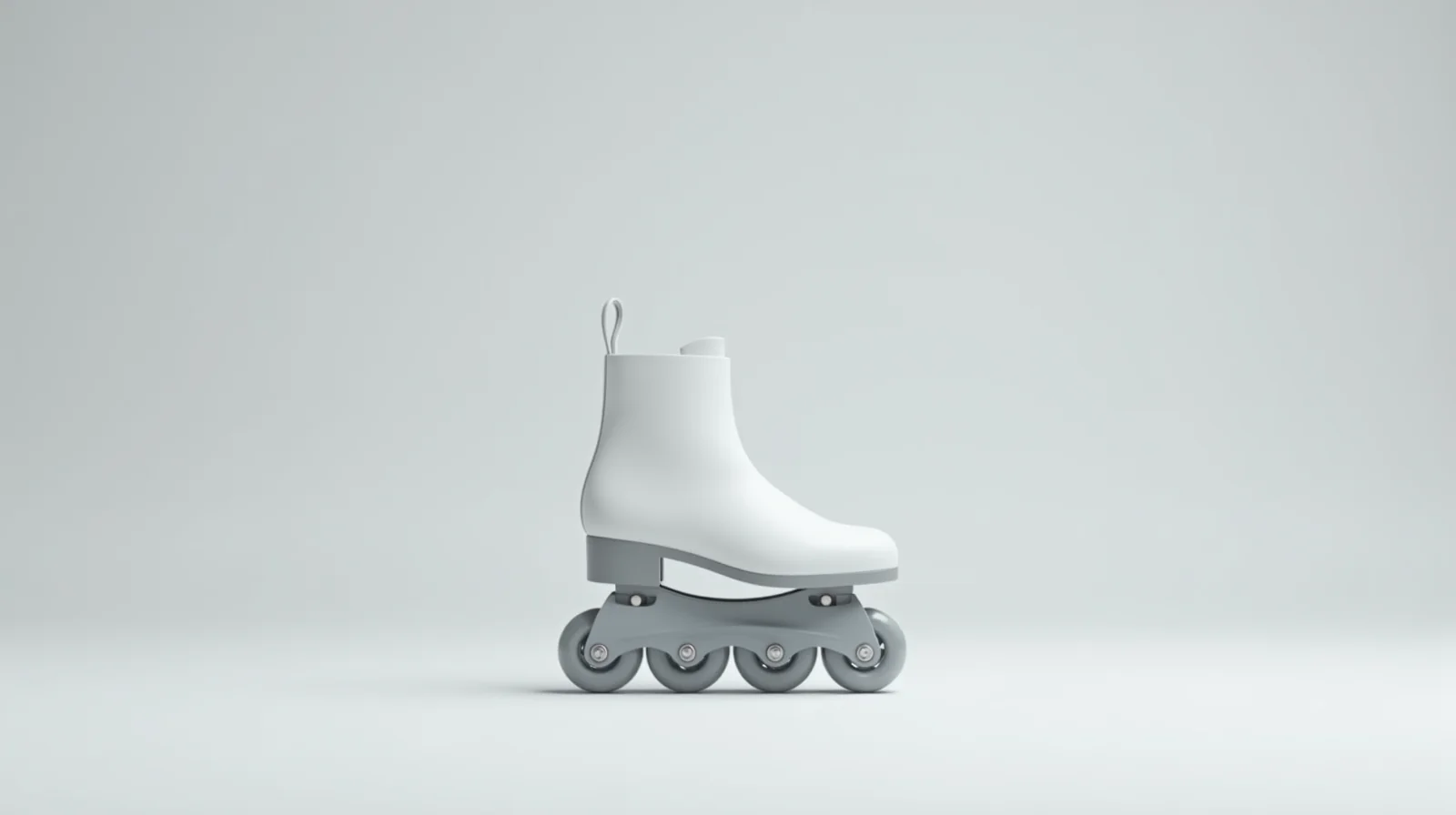
Short answer: no. “Inline skate” is the generic industry term, and “Rollerblade” is a brand name that became so popular it turned into a household word, the way people say “Kleenex” for any tissue. When a store employee asks whether you want “rollerblades” or “inline skates,” they are describing the same thing: a boot with a single row of wheels.
The brand history is a bit of a story. Inline skating itself is older than most people assume, with four-wheel inline speed skates appearing in the early 1900s, but it was a small Canadian company that mass-produced the first consumer rollerblade in 1984 and patented the modern single-row configuration that made street skating practical. That is why the generic term stuck, and it is why you will see both names on product boxes, size charts and video titles. In this guide I use “inline skates” throughout, and I will link out to the history of inline skating if you want the full timeline.
One practical consequence of the brand confusion: when a search result or a retailer page says “rollerblades for kids,” check whether it means the Rollerblade brand specifically or just inline skates in general, because the two can differ significantly in price. Generic-brand inline skates in the same size class usually cost less than the name-brand versions, which matters when you are buying a first pair for a growing kid.
Know Your Discipline: 4 Types of Inline Skates
Every inline skate is built around a discipline, and the discipline determines the frame, the wheels and the boot. Before you look at a single spec sheet, decide which of these four you are, because this is the decision that saves you the most money: a skate tuned for the wrong discipline will feel slow, wobbly or unsafe no matter how much you pay for it.
1. Fitness and recreational skates
The largest category and the right starting point for most new buyers. Fitness skates use 80 to 100mm wheels in a medium-stiff boot, with a focus on comfort, long rolls and efficient pushing. If your goal is a cardio workout on a smooth park loop or a riverside path, this is the class you want. Recreational skates are the same family with slightly softer boots and smaller 72 to 80mm wheels, aimed at casual use, learning and kids.
2. Aggressive and all-around skates
Built for ramps, ledges and street obstacles, aggressive skates use a hard plastic shell, a short sturdy frame and small 72 to 80mm wheels with a reinforced flat edge, plus a base plate for grinds. They are the closest inline equivalent to a street skateboard, and the setup logic (stiffness, wheel edge, frame strength) is deliberately similar. If you already skate a skateboard on the street, this is the natural inline crossover, and the balance skills transfer faster than most people expect.
3. Speed and marathon skates
Speed skates are the polar opposite of the other classes: a long 295 to 330mm carbon or aluminum frame, big 100 to 110mm wheels, a hard race boot and no brake. They are built for velocity and rolling efficiency on smooth surfaces, and they are the least forgiving class if you do not already know how to balance on inline wheels. Beginners should not start here, but it is worth knowing the class exists if you follow marathon inline racing or Olympic-style events.
4. Inline hockey skates
Inline hockey skates prioritize a low center of gravity, quick lateral movement and edge control: short frames, small 62 to 72mm wheels, hard boots that hug the ankle, and a stiff sole plate. If you are coming from ice hockey, this is the standard summer alternative, and the sizing logic (snug, thin-sock fit) is the same as on ice.
Quick rule from my testing sessions
If you cannot name a specific discipline, buy fitness or recreational. Every other class is a step-up that assumes you already have balance on inline wheels, and the one genuine alternative (aggressive) only makes sense if you already do street skateboarding.
Inline Skate Frame Types Explained
The frame is the metal or composite piece that holds the wheels, and it is the structural heart of the skate. In seven years of gear testing I have seen three frame materials in the wild, and each has a clear trade-off that shows up on the spec sheet.
Aluminum alloy (6061-T6). The default for 90 percent of recreational, fitness and entry-level aggressive skates. It is light enough for daily use, cheap to manufacture, and strong enough that frame failure is rare in normal use. If a spec sheet just says “aluminum frame,” it is almost certainly 6061, and that is a fine answer for a first pair.
Carbon fiber. Found on speed skates and high-end aggressive frames. Carbon is stiffer per gram than aluminum, which translates into less energy lost in the frame and a snappier feel under load. The cost is price and fragility: a carbon frame that takes a hard edge hit can crack in ways aluminum will not, and a cracked speed frame is not repairable. I have seen a cracked carbon frame written off after a single bad landing on a curb, which is exactly the kind of failure that does not happen to 6061.
Steel. Rare in modern consumer skates and mostly a legacy material. It is strong but heavy, and I have only seen it in budget lines and some vintage speed equipment. If you find a steel-frame skate in a new box, the frame is not why you should buy it.
Frame length matters as much as material. The length is determined by the number of wheels and the wheelbase spacing, and it defines the handling character before you look at a single other spec. A longer frame (280mm and up) is more stable at speed but turns more slowly; a shorter frame (230mm and under) carves tight but feels twitchy on rough ground. When you compare two skates on paper, treat frame length the way you would treat the wheelbase on a car: it is the first number that tells you what the ride will feel like.
Typical frame lengths by wheel size (general guide)
72mm wheels: about 190 to 210mm frame. 80mm wheels: about 230 to 245mm. 90mm wheels: about 255 to 270mm. 100mm wheels: about 280 to 295mm. 110mm wheels: about 300 to 330mm. Exact numbers vary by manufacturer, so always read the spec sheet rather than assuming.
Wheel Size and Durometer: The Setup Table
Wheel size and durometer are the two specs that most directly change how a skate feels, and they are the two specs retailers expect you to already understand. Here is the full matrix I use when I spec a setup, based on the frames and wheels I have actually run over the years.
| Discipline | Wheel size | Durometer | Boot |
|---|---|---|---|
| Recreational / kids | 72 to 80mm | 82A to 85A | Soft boot, laces + velcro |
| Fitness | 80 to 100mm | 78A to 82A | Medium-stiff, laces or BOA |
| Aggressive | 72 to 80mm | 80A to 85A | Hard shell, laces + ratchet |
| Speed / marathon | 100 to 110mm | 82A to 85A | Hard race boot |
| Inline hockey | 62 to 72mm | 78A to 85A | Hard boot, lace + strap |
Ranges reflect the setups I have run and the spec sheets of major brands; individual models vary by a few millimeters or a point or two of durometer.
Wheel diameter trades comfort against agility. Bigger wheels (100mm and up) roll over cracks and grit with less effort and reach higher top speed, but they raise your center of gravity and slow down carving. Smaller wheels (72mm and under) keep your body low and make the skate feel nimble, at the cost of more vibration and more push effort per meter. For a first pair, 80mm is the classic middle ground: comfortable on park pavement, fast enough to feel rewarding, and forgiving enough to learn on.
Durometer is wheel hardness, measured on the “A” scale for polyurethane, where a lower number means softer. Soft wheels (78A to 80A) grip better on rough or textured surfaces and absorb more vibration, but they squirm slightly under hard pushing and wear faster. Hard wheels (84A to 85A) roll with less deformation and last longer on clean surfaces, but they are twitchy on rough asphalt and transfer every crack to your legs. Aggressive skates sit in the middle-to-hard range because the wheel edge doubles as a grind surface and needs to hold up. If your skating surface is mostly smooth concrete, lean harder; if it is textured asphalt, lean softer.
Bearings: What ABEC Actually Means
Every inline skate wheel spins on a pair of bearings, and almost every box will print an ABEC number, usually 5, 7 or 9. ABEC stands for Annular Bearing Engineering Committee, and the number rates the manufacturing tolerance of the ball and race geometry. In plain terms, a higher ABEC number means the parts are more precisely matched, which reduces friction at high speeds.
Here is the nuance that most buying guides skip: ABEC is a precision rating, not a speed rating. In the speed-skating world the difference between ABEC 7 and ABEC 9 at race pace is measurable; in a recreational fitness skate, the difference you will actually feel is mostly gone after the first few sessions, because pavement grit and water do far more damage to rolling speed than the tolerance number ever could. What matters more for a regular skater is seal quality and how easy the bearings are to flush. A sealed ABEC 5 that you can clean and re-grease every few months will out-rotate a sealed ABEC 7 that you never service, and I have verified this directly by running both on the same frame.
You will also see “ceramic” bearings and “speed washers” on premium models. Ceramic balls are lighter and resist corrosion, and they are a genuine upgrade if you race; for fitness skating the benefit is marginal relative to the cost. Speed washers are the spacers between the bearing and the wheel face, and they do genuinely reduce friction at speed, which is why speed skates ship with them. For a first pair, standard ABEC 5 or 7 sealed bearings with serviceable shields are the right buy, and you can read up on the rating system itself in the ABEC standard reference.
How to Measure Your Feet for Inline Skates
Inline skate sizing is where most online orders go wrong, because skate boots fit differently from sneakers: a soft fitness boot should feel snug but not pinched, while an aggressive shell should feel tight all over. Use this process, which is the same one I use when I spec a size for someone who is buying online without trying the skate on.
Step 1. Measure at the end of the day. Feet swell throughout the day by up to half a size, and you always skate after some walking. Measuring in the morning gives you a number that is too small, which is how people end up with boots that hurt by minute ten.
Step 2. Measure both feet, standing. Stand barefoot on a sheet of paper against a wall, mark the heel line and the tip of your longest toe (not always the big toe), and measure heel to mark in centimeters. Do it on both feet and use the larger measurement; most people have one foot that is slightly bigger.
Step 3. Add fit allowance. For recreational and fitness skates, add about 1 to 1.5cm to your measurement, which usually lands you at or one size above your normal sneaker size. For aggressive and hockey skates, add only about 0.5cm or go a half to full size down from your sneaker size, because the hard shell should lock the foot without any dead space.
Step 4. Cross-check against the brand size chart. EU sizing is used on almost every inline box, and each brand runs slightly differently, so convert your centimeter measurement with that specific brand’s chart rather than a generic conversion table.
Step 5. Wear your skating socks. If you plan to skate in thin performance socks, measure and fit with those on. A pair of thick winter socks changes the answer, and so does a wet foot, which is why you should not size a hard boot based on a single cold-weather try-on.
Step 6. Check the two failure points. When you try the skates on, the two things that must be right are: no heel lift when you stand on your toes, and your toes can barely tap the front of the boot. If your heel lifts, the skate is too big and your ankle will wobble in hard turns; if your toes are pinned flat, the skate is too small and you will lose circulation after twenty minutes.
Sizing rule of thumb from my fitting sessions
Recreational and fitness: size true to your sneaker size, or one size up for wide feet. Aggressive and hockey: half to one size down from your sneaker size. When in doubt between two sizes in a soft boot, take the larger one and tighten the closures; a slightly large hard shell is much harder to live with.
Closures, Brakes and Boot Construction
The closure system is how the boot locks your foot in, and the options have not changed much in a decade. Laces are the default and give the best micro-adjustment; velcro straps over the laces add lockdown speed and are standard on recreational skates; BOA dials (a wire lacing system) give even tension in about five seconds and have become the norm on fitness and speed skates; ratchet buckles are standard on hard-shell aggressive skates for one-hand tightening mid-trick.
The heel brake, the small plastic pad under the back of a recreational skate, is the only factory brake on an inline skate, and it is worth understanding before your first session: you drag the brake pad on the ground to slow down, which means you should always use the skate with the brake for your first weeks and switch to a toe drag once you can stop cleanly. Most recreational skates ship with a removable brake, and aggressive and speed skates either ship without one or with the mounting hole open, because the pad would catch on every grind or at speed. If you buy a recreational pair and plan to progress into aggressive skating, the brake is the first part you will remove, and it comes off with one small screw.
Boot construction falls into two families. Soft boots are textile and foam, like a high-top sneaker, and they dominate recreational and fitness use because they are comfortable, cheap and easy to size. Hard boots are a plastic shell over a molded inner liner, and they dominate aggressive, speed and hockey use because the shell transfers push power directly to the frame and protects your ankle under impact. A hard boot that fits correctly feels like a cast; that is the point, and it is why aggressive skaters size down instead of up.
Best Inline Skates for Beginners in 2026
These are the specific models I recommend to people who are buying their first pair in 2026, grouped by the discipline they are actually buying for. I name the model, the real street price range I have seen, and where it is typically stocked. Pick the class that matches your goal, then pick the right model in that class for your size.
Recreational / first pair: Rollerblade Zoomblade. The classic entry point: 80mm wheels, soft boot, laces plus velcro, removable heel brake. Street price is usually in the $90 to $140 range, and it is widely stocked at major sporting goods chains and online. It is not a fast skate, and it does not pretend to be, which is exactly what you want for the first six months of learning.
Fitness step-up: Powerslide Ozone. If your goal is real cardio at real speed on a smooth loop, the Ozone is the fitness benchmark: 100mm wheels, 80A durometer, BOA closure, and a stiffer sole that actually transfers push power. Expect $400 to $600 depending on the frame and wheel spec. This is a “buy it once” skate, and it is the one I hand to anyone who says they want to roll 20km on a Saturday.
Aggressive entry: Seba Tonic. The long-standing entry point for street and ramp skating: hard shell, 80mm wheels with a grind edge, and a frame that survives ledges. Street price is typically $150 to $200. If you already street-skate a skateboard, this is the inline version of that habit, and the setup logic will feel familiar from the skateboard trucks buyer guide on this site, because stiffness and wheel edge are the same two decisions.
Speed (only if you already roll well): Powerslide Proframe. A 100mm speed frame with a stiff carbon-reinforced construction, sold as a frame or a complete skate depending on the model, in the $250 to $400 range. I list it for completeness: it is the right tool for marathon skating, but it is not a first pair, and I have watched too many beginners buy speed frames and put them in storage.
Where to find these: large sporting goods chains (Dick’s, Academy, and similar outdoor retailers in some regions), dedicated inline dealers, and major online marketplaces. If you buy from a shop that does fitting, use their service: a fifteen-minute professional fit is the single best money you will spend in this whole process, because it catches sizing errors before they cost you a return fee.
How to Fit and Break In New Inline Skates
New inline skates, especially hard shells, need a short break-in period, and doing it wrong is the most common cause of “these skates hurt” reviews. Here is the process I follow with every pair I test, and the one I hand to new skaters.
1. First session, 15 to 20 minutes maximum. Pick the flattest, driest, smoothest pavement you can find, ideally an empty parking lot or a quiet skate park. Walk around in the skates for a few minutes before you roll, so your brain learns what the boot feels like at an angle.
2. Retighten after ten minutes. Laces and straps loosen as your foot settles into the liner. Every time you stop during the first session, check the closures. This is the step people skip and then blame the boot for.
3. Three to five short sessions. A soft fitness boot is comfortable from minute one; a hard aggressive shell can take three to five sessions of 20 to 30 minutes before the liner molds and the shell settles. Mild hot spots in the first two sessions of a hard boot are normal. Persistent pressure points after five sessions mean the size or last shape is wrong, not something you should push through.
4. Run the wheels in. New polyurethane wheels can carry a light mold-release residue that makes the first few hundred meters feel slightly grippy. A short session on clean concrete sorts this out, and it is also when you confirm the bearings spin freely and evenly, which they should out of the box.
5. Check the hardware after the first session. Skates ship with all fasteners loose enough to avoid damage in transit. After your first ride, give every visible bolt and the frame bolts a check with a skate tool; anything that was loose will only get looser, and a loose frame bolt on an aggressive skate is a genuine safety issue.
Inline Skating Safety Gear
Inline skates change your stopping distance compared to walking, which means the safety logic is the same as skateboarding and different from running. A helmet is non-negotiable for every discipline: for street and aggressive use, look for a helmet that meets an impact standard such as ASTM F1492, the impact-protection standard for roller hockey helmets, or a certified bicycle and skate helmet for recreational use. Wrist guards are the second priority, because the human reflex when you fall on an inline skate is to put your hands down, and a straight arm into pavement is the single most common serious inline injury I have seen in a decade of watching sessions. Knee and elbow pads are mandatory for aggressive skating and strongly recommended for anyone learning, and the same gear logic I wrote about for skateboards applies directly here, so the essential safety gear guide on this site is worth reading even if you never touch a skateboard.
One inline-specific note: because the wheels are in a single line, you cannot lean sideways to balance the way you can on a skateboard, and a fall tends to go forward or to one side more abruptly. That is another reason to start on smooth, flat, low-traffic pavement and to treat your first month like the first-month beginner plan rather than an open-ended street adventure.
Inline Skate Maintenance: What to Replace and When
Inline skates are cheap to keep alive if you service the moving parts on a schedule, and the schedule is short because there are only four things that wear. Wheels are the first: on rough asphalt, 80A recreational wheels show flat spots after roughly 200 to 400 miles, and on smooth concrete they last longer; the tell is a visible flat or a wheel that starts to feel bumpy under load. Bearings want a flush and re-grease every three to six months of regular use, and a bearing that starts to feel gritty or to click is one that is already past its service life. Closures (laces, straps, ratchets, BOA cables) stretch and corrode over a season or two, and a ratchet that no longer holds tension is the end of that part, not a tuning problem. Frames are the last and the least common: aluminum frames rarely fail in normal use, and carbon speed frames are the exception, where a hard edge hit warrants inspection before the next ride.
If you keep a spare set of wheels and bearings in a drawer, the total annual cost of keeping a fitness skate fast is usually under $50, which is a small price for a piece of equipment that otherwise costs a few hundred dollars. The same replacement logic I cover for choosing your first skateboard applies: buy the class you need, maintain the consumables, and the frame and boot are the long-lived parts.
FAQ: Inline Skate Buying Questions
What size inline skates should I get?
Measure both feet at the end of the day, use the larger foot, and add 1 to 1.5cm for recreational and fitness skates (usually your normal sneaker size) or 0.5cm for aggressive and hockey skates (half to one size down). Then convert using the specific brand’s size chart, because EU sizing runs slightly differently across brands.
Are 80mm or 100mm wheels better for a beginner?
80mm, in almost every case. They sit lower to the ground, feel more stable for a new skater, and are forgiving on the mixed pavement you will actually ride. 100mm wheels are a fitness upgrade for smooth surfaces, not a starting point, and the higher center of gravity makes learning balance slightly harder.
Can I ride inline skates on asphalt, or only concrete?
You can ride on both, but they feel different. Smooth concrete is the ideal surface and is where these skates were designed to roll. Textured asphalt works but is rougher, wears wheels faster, and transfers more vibration; avoid surfaces with loose gravel, sand or wet leaves, because a single line of wheels gives you no lateral stability to correct on loose material.
Do aggressive skates really need to be sized down?
Yes. A hard shell with a half size of dead space lets your foot shift inside the boot, which destroys edge control and creates pressure points on the instep. Aggressive skates should feel tight from the moment you lace them up, the same way a hockey skate should. If the shell is painful in one specific spot after five sessions, the size or last shape is wrong for your foot, and that is something to exchange, not something to push through.
How long do inline skates last?
The boot is the long-life component: a well-fitted fitness boot lasts several seasons, and a hard aggressive shell can last a decade of recreational use. Wheels and bearings are consumables on a 200 to 500 mile and 3 to 6 month service cycle respectively. So the honest answer is that a good pair, maintained, lasts years, and the parts you replace cost tens of dollars, not hundreds.
See Also
Inline Skating for Beginners 2026: Guide for Month One
Sources
References used in this guide:
- Rollerblade official site — brand history and current model lineup.
- ABEC bearing rating standard — the ABEC tolerance scale explained.
- Inline skating history and disciplines — timeline and discipline overview.
#InlineSkating #Rollerblades #InlineSkates #SkateGear #Skateboarding2026 #FitnessSkating #AggressiveSkating #SpeedSkating #InlineSkate #SkateWheels #Bearings #SkateSafety #BeginnerSkater #SkateLife #Sk8
This guide is part of the ska8 daily series. Explore more below.