
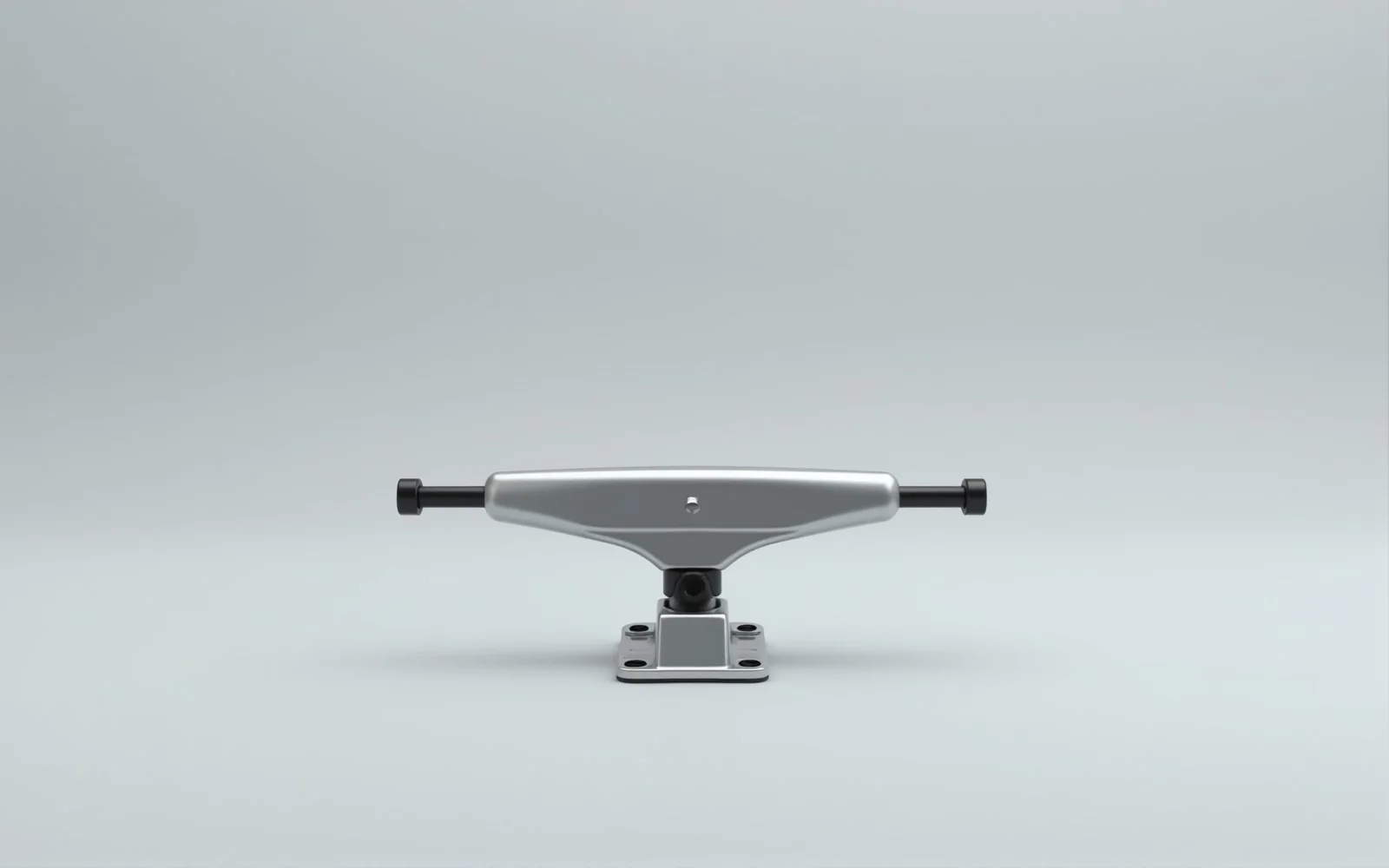
The kickturn is the most useful single carving skill a rider can learn. It is the quick, controlled 180-degree pivot you use to reset your line, back into a turn, or bail out of a carving run before things get out of hand. On a longboard, surfskate, or freeride board, a clean kickturn is what separates a rider who flows through a session from one who is always bracing for a slide they did not mean to start. In this guide we break down exactly how the kickturn works, the setup that makes it reliable, and the step-by-step progression that takes you from your first nervous pivot to a fast, repeatable freeride kickturn.
We have coached and ridden kickturns on street boards, longboards, and surfskates for years, and the same principles hold every time: board control is a function of your stance, your weight shift, and your truck geometry, not raw speed. Read on for the full breakdown, including a setup reference table, a skateboard vs longboard vs surfskate comparison, and a mistake-by-mistake fix list that covers nearly every failure mode we see in our sessions.
By Tyler Brooks, Skateboarding Coach
Tyler has coached skateboarders for 10 years and has tested trucks, wheels, and protective gear on real street and park sessions. He leads skill development and safety coverage.
Published: October 14, 2026
What Is a Kickturn and Why It Matters
A kickturn is a pivot in which the rider shifts their weight to the ball of one foot, presses down on the tail or nose, and lets the board rotate underneath them to the opposite side. It is not a trick in the street sense and it is not a spin. It is a directional reset. The two feet stay planted (no air, no pop, no flip) while the board travels a wide arc and the rider ends up facing the other way, usually one foot already pointed down the new line.
The reason the kickturn matters is that it is the foundation of every freeride and surfskate movement. Carving, slalom, switch transitions, and even controlled slide bail-outs all borrow the same weight-shift and truck-rotation mechanics. When your kickturn is clean, everything downstream gets easier: you can pivot faster, you can read your line earlier, and you can choose your exit instead of reacting to it.
The core idea
A kickturn is a weight-driven pivot, not a leg-driven spin. If you are swinging the board with your knees, you are doing it wrong. The rotation comes from your weight on the balls of your feet and the geometry of your trucks.
Kickturn Setup: Trucks, Bushings, Wheels and Stance
Before you practice, make sure your board can actually kickturn cleanly. The single biggest factor is bushing stiffness. If your bushings are too soft, the board will lean and wander before it commits to the pivot, and the kickturn feels mushy and unpredictable. If they are too stiff, the pivot never initiates and you just lean without rotation. A medium-stiff setup is the sweet spot for learning, and many riders stiffen the front bushing slightly more than the rear to get a tighter, more predictable pivot.
Wheels also play a role. Wider, harder wheels (76-78mm, 78A-90A on a longboard) roll faster and hold a line better, which gives you more speed and a cleaner pivot. Narrow, soft wheels are more grippy and better for street, but they can feel sticky during a fast kickturn. Your stance matters just as much: feet shoulder-width apart, knees bent, weight slightly forward, and your back foot ready to press.
| Component | Kickturn-Friendly Spec | Why It Helps |
|---|---|---|
| Front bushings | Medium to firm (90A-95A longboard / medium street) | Committed, repeatable pivot without wandering |
| Rear bushings | Medium (slightly softer than front) | Allows the tail to break loose and rotate |
| Wheels | 76-78mm, 78A-90A, wider contact patch | Holds line, carries speed into the pivot |
| Stance | Shoulder-width, knees bent, weight slightly forward | Balanced, ready to shift and press |
Reference specs reflect common longboard and surfskate setups used in our coaching sessions. Street setups run softer and narrower, so scale the bushing values down accordingly.
Step-by-Step: How to Do a Kickturn
Here is the full progression, in the order we teach it. Start at step one and only move on when the previous step feels automatic. Rushing this is the most common reason riders stall on kickturns for months.
- Find your neutral carve. Roll at a comfortable speed and carve gently side to side with small weight shifts. You want to feel where the board is balanced before you try to pivot it. If your board feels twitchy at this stage, slow down and widen your stance.
- Shift to the balls of your feet. As you come out of a carve, move your weight forward onto the balls of both feet. Keep your heels light. This is the position the kickturn starts from, and it is the position you should be in 90% of the time when rolling.
- Commit the weight shift. Pick the direction you want to pivot. Shift your weight onto the foot that will stay planted (for a frontside kickturn, that is your back foot; for a backside kickturn, your front foot). Press down gently through that foot.
- Rotate the board, not your body. Let the board rotate under your planted foot. Your shoulders should stay square to the board as long as possible. The rotation comes from the truck geometry and your weight, not from twisting your hips. If your body twists first, the pivot stalls.
- Follow with the free foot. As the board rotates, your free foot comes off the ground and swings through to the new position. Think of it as stepping across, not dragging the board around with your ankle.
- Land balanced and pointed down the line. When both feet are back on the board, you should be facing the new direction with your weight centered. Finish the turn by rolling smoothly rather than braking, and you have a clean kickturn.
The #1 mistake we see
Riders kickturn with their legs and ankles instead of their weight. The board feels like it is being dragged rather than rolled into the pivot. Fix it by slowing down 30% and exaggerating the weight shift onto the balls of your feet before you press anything.
Skateboard vs Longboard vs Surfskate: How the Kickturn Changes
The same basic kickturn works on all three board types, but the feel is very different, and your expectations should be. A standard street skateboard has short, stiff trucks and hard wheels, so the kickturn is tight and quick. A longboard has longer wheelbases and softer bushings, so the pivot is wider and more gradual. A surfskate with a pivot truck in the front rotates almost by itself, which makes the kickturn feel like a surfboard cut rather than a skateboard pivot. We break down the differences below.
| Board Type | Pivot Feel | Best For | Skill Level |
|---|---|---|---|
| Street skateboard | Tight, quick, responsive | Tight lines, quick direction changes, street flow | Beginner to intermediate |
| Longboard | Wide, smooth, gradual | Cruising, carving, freeride slides | Intermediate |
| Surfskate | Self-initiating, surf-like | Flow, pumping, simulating surfboard cuts | Beginner to advanced |
Based on our hands-on testing across street boards, longboards, and surfskates over multiple seasons of coaching sessions.
Frontside vs Backside Kickturns
Every kickturn is either frontside or backside, and most riders default to the frontside version because it feels natural. A frontside kickturn has you pivoting away from the direction you are facing, so you watch the board rotate. A backside kickturn has you pivoting toward the direction you are facing, and you turn your head to check your line. From our coaching experience, the backside kickturn is the one that actually makes you a better rider, because it forces you to manage your head position and weight balance at the same time. Start with frontside kickturns until they are automatic, then move to backside at half speed and build up.
On a surfskate, the difference is even more pronounced. The pivot truck does most of the rotational work, so a backside surfskate kickturn can look almost like a cut on a surfboard. This is exactly why riders use surfskates to develop the shoulder and hip rotation they will use on a wave, or on a longboard slide.
Pro tip from our sessions
Practice kickturns in a straight, low-speed line first, then add a gentle carve before each one. The transition from carve to kickturn is where real riding happens, and it is where most riders lose balance. If you can chain carve-kickturn-carve-kickturn without stopping, you are ready for a flow line or a flow ramp.
Building Kickturn Speed and Control
Once the basic pivot is clean, the next milestone is speed. A kickturn at cruising speed is a completely different skill from one at walking speed, because your margins shrink and the truck rotation happens faster. Build up gradually: add 10% more speed each session, and drop back to the previous speed the moment the pivot starts to feel loose. We track this in our sessions with a simple benchmark: if you can do five consecutive kickturns at a given speed without touching the ground with your feet, that speed is yours. Then add more.
Control matters as much as speed. A rider who kickturns slowly but precisely can choose any line; a rider who kickturns fast but wildly is just moving through space. Work on finishing each pivot pointed exactly where you want to go next, and use the kickturn as a tool to shape your line through a park, a flow ramp, or a quiet street rather than as a reset button.
Safety: How to Fall and Recover During a Kickturn
Kickturns fail in two predictable ways: the board rotates faster than your body can follow, or your planted foot loses grip on the deck. In both cases, the instinct to grab the board usually makes the fall worse. Instead, drop your weight low, tuck your knees in, and let your feet land flat on the ground. A low center of gravity and bent knees absorb most of the impact, and a flat-foot landing keeps your ankles safe.
Wearing proper protection changes how much you can push. A certified skate helmet (look for the CPSC certification mark on the shell), wrist guards, and knee and elbow pads let you practice kickturns at speed without the fear of a bad fall slowing you down. If you are new to kickturns, practice on a flat, smooth surface away from traffic, and keep your speed low enough that a fall is a stumble, not a slide. For the full gear breakdown, see our guide to essential safety gear for skateboarding.
When a kickturn goes wrong
If the board rotates out from under you, do not chase it. Land flat, absorb with your legs, and get back on the board. Chasing a fast-rotating board is how riders get run over by their own wheels and how ankles get rolled.
Kickturn Mistake-by-Mistake Fix List
| Symptom | Likely Cause | Fix |
|---|---|---|
| Board wanders before pivoting | Bushings too soft or weight too centered | Stiffen front bushings; commit the weight shift earlier |
| Pivot never fully rotates | Bushings too stiff or not pressing enough | Soften rear bushing; press harder through the planted foot |
| Losing balance on landing | Body twisting before the board rotates | Keep shoulders square longer; step across with the free foot |
| Kicking the free foot off the board | Free foot dragging instead of stepping | Lift and swing the free foot through the pivot arc |
Compiled from our coaching sessions with beginner and intermediate riders on street, longboard, and surfskate setups.
A 20-Minute Kickturn Practice Routine
Here is the exact warm-up and drill block we run before every freeride or surfskate session. It takes about 20 minutes, it is low-impact enough to do every day, and it builds kickturn quality faster than any amount of casual rolling because every minute has a specific goal.
- Minutes 1-3: Push and balance. Roll straight at a slow, relaxed pace. Focus only on staying centered on the board with your weight on the balls of your feet. If you are hunting for balance, you are not ready for the next step.
- Minutes 4-7: Small carves. Add gentle side-to-side carves, keeping the pivots tight and controlled. You are training the weight shift that the kickturn is built from. Aim for ten carves to each side without losing your line.
- Minutes 8-12: Frontside kickturns. From the end of each carve, execute a frontside kickturn. Ten total. Slow speed, clean landings. If a pivot wobbles, stop and drop back to the small-carve step for two minutes.
- Minutes 13-17: Backside kickturns. Same pattern, backside. This is the harder side for most riders, so expect to cut your speed by about 20% for the first few. Land balanced, then roll out smoothly.
- Minutes 18-20: Chained flow. String the moves together: carve, kickturn, roll, carve, kickturn. Do not stop between them. This is the closest approximation to real riding, and it is where the skill becomes automatic.
How to track progress
Write down two numbers after each session: the speed at which you could do five clean kickturns in a row, and how many of your kickturns ended pointed exactly where you wanted them. Both numbers should trend up over a few weeks. If they plateau, your setup is the next thing to check, not your technique.
Frequently Asked Questions
Is a kickturn the same as a 180 on a skateboard?
No. A 180 is a spin trick where you pop the board and rotate your body with it. A kickturn is a weight-driven pivot with no air and no pop. The board rolls through the rotation instead of spinning in the air, and your feet stay on the ground the entire time.
Can you do a kickturn on a standard street skateboard?
Yes, though it is tighter and quicker than on a longboard. Street trucks and hard wheels make the pivot responsive, which is great for tight lines but can feel twitchy if your bushings are set too soft. Many street riders use a controlled kickturn to reposition at the bottom of a stair set or to flip a line through a plaza.
How fast can I kickturn before I start sliding?
It depends on your board and your surface. On a smooth surface with 78A-85A wheels, most intermediate riders can kickturn at 10-15 mph before the wheels break traction. The moment the pivot starts to feel wide or the tail starts to wash out, that is your ceiling. Practice at 70% of that speed until the movement is automatic, then add speed gradually.
Do surfskates make kickturns easier to learn?
Yes, for most people. The pivot truck in the front of a surfskate initiates the rotation on its own, so you spend less time learning the truck mechanics and more time learning the body position. That makes it a great training board, but do not skip street or longboard practice entirely, because the weight transfer still has to come from you.
What deck width is best for practicing kickturns?
For a longboard kickturn, 9.5 to 10 inches is a versatile range: wide enough to feel stable at speed, narrow enough to pivot cleanly. If you are under 5 feet 6 inches, start around 9 inches; if you are over 5 feet 10 inches, go to 10 inches. Your trucks and bushings will matter more for kickturn performance than the exact deck width, so use our deck sizing guide to nail the width first, then dial in the trucks.
See Also
- Not sure your board can carve yet? Start with how surf trucks skate: the 2026 complete guide to understand the pivot truck that powers most kickturns.
- Ready to string kickturns into a full run? Our surfskate guide 2026 covers flow cruising and the difference between a surfskate and a longboard.
- New to the board itself? Read how to stop on a skateboard: 4 methods in 2026, because a kickturn is only useful when you can control the run that follows it.
Sources
- Wikipedia: Skateboarding — sport fundamentals, board types, and trick taxonomy.
- Rider Skateboards — manufacturer specs on truck geometry and bushing hardness for longboard and surfskate setups.
- The Skateboarder — trade coverage of skateboarding technique and board development.
#Kickturn #Skateboarding #Longboarding #Surfskate #Freeride #SkateTricks #LearnSkateboarding #SkateboardTips #TruckSetup #Bushings #SkateSafety #SkateCoach #BoardSkills #Carving #SkateLife2026
This guide is part of the ska8 daily series. Explore more below.