
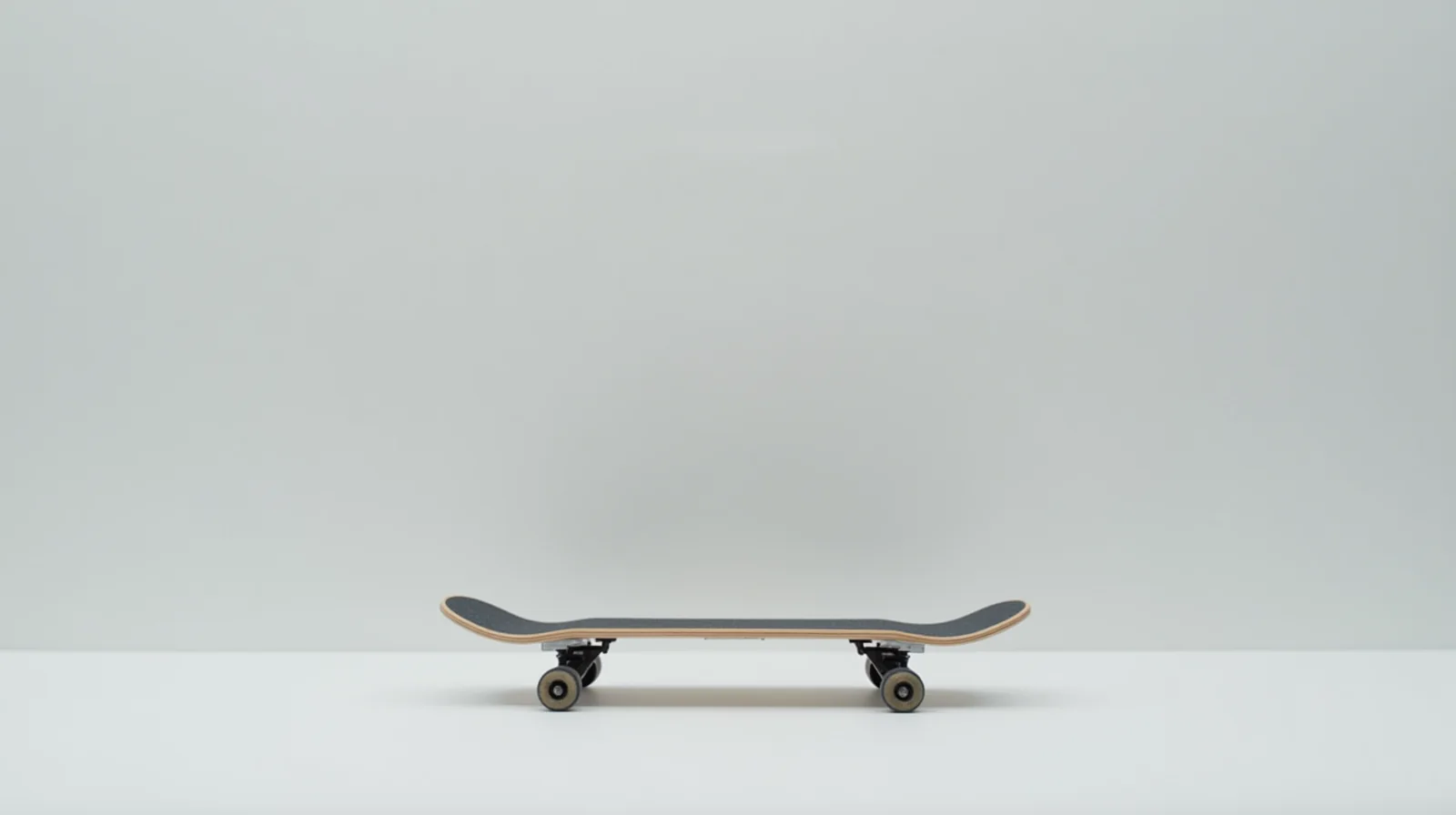
Every few months, a new student walks into my skate session and asks the same question: is it too late to start skateboarding at 30? They are usually standing at the edge of a concrete bowl, holding a brand-new deck, genuinely worried they have missed their window. After coaching skateboarders for 10 years — including well over a hundred adults who started in their 30s, 40s, and even 50s — I can give you a straight answer: no, it is not too late. Not even close.
What changes at 30 is not your ability to learn. It is how you should learn, what you should protect, and what realistic milestones to aim for. A 16-year-old and a 35-year-old can both be rolling ollies down a sidewalk within a few months; the difference is in the preparation, the patience, and the protection. This guide breaks down the honest timeline for an adult beginner, the real injury picture, the gear that actually matters at your age, and the week-by-week plan I use with adult students who want to skate for decades without ending up in the emergency room.
By Tyler Brooks, Skateboarding Coach
Tyler has coached skateboarders for 10 years and has tested trucks, wheels, and protective gear on real street and park sessions.
Published: October 25, 2026 · Updated for the 2026 season
Is It Too Late to Start Skateboarding at 30? The Honest Answer
Here is the answer up front, because you deserve it: starting skateboarding at 30 is not only possible, it is one of the most rewarding things an adult can do with their time. Skateboarding has no upper age limit, no license, and no cutoff. Some of the strongest skaters I have coached in a decade were 40 or older when they picked up their first deck, and today they are landing tricks their former teenage peers never managed.
The idea that there is a “window” that closes in your teens is a myth that has no basis in how skill learning actually works. Motor skills — balance, coordination, timing — can be acquired at any age. What slows down with age is not the brain’s capacity, but two things: recovery time after a hard fall, and the willingness to keep falling. Both of those are manageable. In fact, once you accept that falling is part of the process rather than a failure, the “too late” anxiety tends to disappear on its own.
Key takeaway
There is no age at which you are “too old” to start skateboarding. Adults who begin at 30, 40, or 50 routinely go from never riding to consistent street skating within 6–12 months. The real variables are consistency, protection, and realistic expectations — not your birth year.
Why Adults 30+ Often Learn Faster Than You Think
Counterintuitively, adults have several genuine advantages over the teenagers they are learning alongside at the local spot, and I see them every session. Understanding these advantages reframes the whole “am I too old” question from a deficit into a strength.
Discipline and focus. A 16-year-old wants to skate, then gets distracted, then wants to skate again. A 32-year-old can show up, set a 45-minute goal, and actually work toward it. That focused repetition is exactly how motor skills are built. From coaching, the adults who progress fastest are not the most athletic — they are the most consistent and the most intentional about what they practice.
Transferable balance. Most people over 30 already have a decade of balance experience from driving, cycling, gym work, or other sports. You are not building balance from scratch the way a child is; you are redirecting balance you already have. This is why many adults pick up pushing, stopping, and turning within a single first session.
Money for the right gear. A teenager skates on a $60 complete that is quietly holding them back. An adult can buy a proper deck, good trucks, and — crucially — real protective gear on day one. Skipping the bad-gear years accelerates everything, because you are not fighting a warped deck or an unprotected wrist.
Fear management. Adults understand risk in a way teens often do not. You know that a helmet is not “uncool” and that a wrist guard saves a season. That maturity is the single biggest injury-prevention tool you own, and it is something a 15-year-old rarely has.
Pro tip
Treat your first 30 days like a skill program, not a hobby. Short, frequent, focused sessions (three 30-minute days beat one 3-hour day) build adult muscle memory faster than any amount of casual rolling around. Consistency is the whole game at the start.
The Real Timeline: What to Expect Learning at 30
The single most common mistake adult beginners make is comparing their week one to a 16-year-old’s year three. To keep your expectations honest, here is the realistic timeline I have observed across hundreds of adult students who practice three times per week. It assumes you are learning in a skate park or a smooth, traffic-free area and wearing at least a helmet and wrist guards.
| Timeframe | What You Will Be Doing | What It Feels Like |
|---|---|---|
| Week 1 | Pushing, foot-brake stopping, basic turning, getting comfortable standing on a moving board. | Wobbly and tiring. You will fall a few times, mostly from trying to stop. This is normal. |
| Weeks 2–4 | First ollie attempts, learning to fall safely, small weight shifts, rolling in a straight line with confidence. | Frustrating. The ollie will feel impossible for a while. Your shins and wrists start to complain. |
| Month 2 | Consistent pushing and riding, popping small ollies onto flat ground, linking two or three moves together. | The “click” moment. Things start to feel less like a fight and more like a skill. You want to keep going. |
| Months 3–6 | Ollie over small obstacles, frontside and backside 180s, riding real (small) street features, first grinds if you are at a park. | Genuinely fun now. You are “skating” in a way a stranger would recognize. Plateaus start to appear. |
| Months 6–12 | Kickflip attempts, real trick combinations, riding lines, skating with other people, choosing your style. | You are a real skater now. Progress slows but deepens. This is where the long-term habit forms. |
Timeline is an average across adult students practicing about 3x per week. Athletic baseline, prior balance experience, and consistency will shift these dates by a few weeks either way.
What “good” looks like at 12 months
A consistent adult beginner at the one-year mark typically ollies cleanly over curbs and small gaps, lands 180s in both directions, attempts kickflips regularly, and skates a short line without falling more than once or twice. That is a genuine, respectable level of skateboarding — well beyond “beginner.”
The Injury Question: What Actually Hurts, and How to Prevent It
This is the part of starting at 30 that deserves honesty, because it is the real cost of the “window” myth. Adults do not heal like teenagers do. A wrist sprain that a 15-year-old shrugs off in three days can keep a 35-year-old out for three weeks if it is not protected and managed. From coaching, the pattern is consistent: the adults who get hurt are almost never the ones who were “too old” — they are the ones who skated unprotected, pushed too hard too soon, or ignored the first signs of a problem.
Here is what actually goes wrong most often, in rough order of frequency among the adult beginners I have worked with:
- Wrist sprains and fractures — the number one adult injury, almost always from falling forward and putting a hand out without a wrist guard.
- Knee and elbow abrasions — common in the first month; preventable with pads and by learning to fall to your side.
- Ankle rolls — usually from landing off-center on a trick or on uneven ground.
- Concussion and head injury — rare but the most serious; the single best reason an adult should wear a helmet every session, no exceptions.
The honest warning
If you are starting at 30+, treat a helmet and wrist guards as non-negotiable for the first 6–12 months — not as “gear for kids.” A $30 wrist guard has saved more adult skaters’ seasons than any trick they will ever land. If you feel a sharp pain, swelling, or a joint that “feels off,” stop and get it checked. Chasing a setback is how a two-week injury becomes a two-month one.
The good news is that most of these injuries are preventable with the two habits an adult beginner can control completely: protective gear and a structured way of falling. Before you learn a single trick, learn to fall. I cover that in detail in my guide to how to fall safely on a skateboard, and the injury-prevention fundamentals are in how to prevent skateboard injuries. Those two reads will do more for your first year than any trick tutorial.
Adult Beginner Gear: What to Buy (and What to Skip)
As an adult with a paycheck, the best thing you can do for your learning is buy the right gear on day one and skip the cheap-completes trap. You do not need to spend a fortune, but you do need to spend it in the right places. Here is the setup I recommend to adult beginners, with what to look for and a realistic budget range for each piece. These are the components, not brand-specific picks — any reputable manufacturer in these specs will serve you well.
| Component | What to Look For | Budget Range |
|---|---|---|
| Deck | 7.75″ to 8.25″ wide for most adults; 7-ply Canadian maple. Wider (8.0″ and up) is more stable for learning. | $65–$110 |
| Trucks | Match the deck width (for example, an 8.0″ deck with 149mm trucks). Mid-street or street base for learning. | $40–$60 each |
| Wheels | 52–54mm, 99a–101a durometer. Slightly softer and larger is smoother over rough ground. | $30–$45 per set |
| Bearings | Standard 608 bearings; ABEC 5 is plenty for learning. Do not overspend here as a beginner. | $15–$30 per set |
| Grip tape | Standard 80/100 grit; comes with most decks. Fine to start, replace as it wears. | $5–$10 |
| Protective gear | Helmet (CPSC/ASTM certified) plus wrist guards. Add knee and elbow pads if you are at a park. | $40–$80 total |
Budgets reflect 2026 street prices for reputable non-pro models. A complete beginner setup lands around $200–$350 all in, which is the most cost-effective money you will spend on this hobby.
What to skip
Skip the $60 “complete” board from the big-box store — the trucks and wheels on those are the parts that hold you back. Skip pro-model decks until you have a style. Skip expensive bearings and riser pads; neither helps a beginner learn. Put your budget into a proper deck, decent trucks, and real protective gear, in that order.
The First 30 Days: A Week-by-Week Plan
If you only remember one thing from this guide, make it this: the first 30 days are about building the foundation, not landing tricks. Here is the exact week-by-week plan I give adult beginners. Each week has one primary focus, and you only move on when that focus feels mostly automatic. This is the difference between “I tried skateboarding” and “I am learning to skateboard.”
- Week 1 — Pushing and stopping. Get comfortable pushing, rolling in a straight line, and stopping with your back foot (the foot-brake). Practice in an open, smooth, traffic-free area. Goal: roll 50 meters and stop cleanly on command, 10 times in a row.
- Week 2 — Turning and falling. Add basic turning (turn with your shoulders and weight, not your arms). Then, and this is the important part, practice falling on purpose: how to tuck, how to roll with a fall, and how to put a hand down with a wrist guard on. Goal: fall safely five times in a row without pain.
- Week 3 — The first ollie. Start the ollie. This is the most important trick in skateboarding and the one that will take the longest. Break it down: the pop, the slide, the level. Do not worry about landing it cleanly yet; worry about the board coming up with you. Goal: get the board to lift off the ground 20 times.
- Week 4 — Consistency and a short line. Link the basics: push, roll, turn, stop, and attempt the ollie a few times. End the month by doing a short “line” of a few moves in a row without falling. Goal: one clean 10-second run that includes a turn and a stop.
Session structure that works for adults
Aim for three 30-minute sessions per week rather than one long session. Warm up for 5 minutes (pushing slowly, no tricks), then work on one focus for 20 minutes, then cool down. As a 30+ body, the warm-up is not optional — it is what keeps your ankles and wrists from paying for a cold start.
Common Plateaus for Adult Skaters (and How to Break Them)
Every adult beginner hits a plateau, and hitting one does not mean you are “too old” or “not cut out for this.” It means you have outgrown your current level of practice. Here are the three plateaus I see most often in skaters over 30, and the specific fix for each.
The fear plateau. You can technically do the trick but you freeze right before you commit. This is the most common adult plateau and it is mental, not physical. The fix is deliberate, low-stakes repetition: do the trick 50 times at half speed where a fall costs nothing, so your brain files it under “safe.” Fear of a trick shrinks with repetitions, not with willpower.
The consistency plateau. You have a streak of good days, then life gets busy and you go two weeks without skating, and it all feels gone again. The fix is to lower the bar: commit to a minimum “do not break the chain” session, even if it is 15 minutes of just pushing around the block. Momentum, not intensity, is what keeps an adult program alive.
The fitness plateau. Your legs are getting tired, your core is weak, and tricks that felt easy last month now feel heavy. Skateboarding is a real sport, and at 30 your body wants to be trained like one. Adding a simple skateboard fitness workout two days a week — core, ankle stability, and balance work — will unlock tricks you thought you had maxed out on. Your board does not get harder; your body just needs to keep up.
The adult mindset shift
A teen skater thinks in tricks. An adult skater should think in systems: a schedule, a warm-up, a protection routine, a recovery plan. The trick list is the same at every age. The system is what an adult brings that a teenager does not, and it is what carries you for decades.
Skateboarding at 30 vs. Starting Young: An Honest Comparison
Let’s put the “too late” question in perspective with a side-by-side. This is not about saying one is better — it is about knowing exactly what you are signing up for so you can set the right expectations.
| Factor | Starting as a Teen (10–15) | Starting at 30+ |
|---|---|---|
| Learning speed | Fast raw acquisition; less focus, more wasted reps. | Slightly slower to start; much faster per focused session. |
| Injury risk | Higher (no respect for risk, no gear), but faster recovery. | Lower with gear, but slower recovery — protection is critical. |
| Consistency | Erratic; tied to mood and friends. | Strong; self-motivated and scheduled. |
| Gear budget | Limited; often rides sub-par gear for years. | Can buy the right setup and protection on day one. |
| Social | Skates with peers; easy to get pulled along. | Often skates alone or finds adult sessions; more self-directed. |
| Long-term horizon | May quit in early 20s; a few go pro. | More likely to skate for life as a sustainable habit. |
Observations from a decade of coaching across age groups. Individual results vary widely with baseline fitness, motivation, and access to a skate spot.
The bottom line
Teens have a head start; adults have a system. If you start at 30 with the right gear, a real protection routine, and a consistent weekly plan, you will be skating comfortably within a few months and still skating at 50 — something a surprising number of teen starters never manage.
Frequently Asked Questions
Is it too late to start skateboarding at 30?
No. There is no upper age limit for learning to skateboard. Adults who start at 30, 40, or 50 regularly go from never riding to consistent street skating within 6–12 months of regular practice. The real factors are consistency, protection, and realistic expectations, not age.
Can you learn to skateboard in your 30s?
Yes, and many people do. Most adult beginners can push, stop, and turn within the first session or two, land their first ollie within a few months, and be skating real (small) features by around the six-month mark if they practice about three times a week.
What is the most common injury for adult skateboarders?
Wrist sprains and fractures, almost always from falling forward and putting an unprotected hand down. A wrist guard is the single most effective piece of injury-prevention gear for an adult beginner, followed closely by a helmet for head protection.
How long does it take to get good at skateboarding as an adult?
“Good” is relative, but a consistent adult beginner who practices about three times a week will typically be ollieing over obstacles, landing 180s, and attempting kickflips within 6–12 months. Progress slows after the first year but continues for as long as you keep skating.
Do I need special gear to skate as an adult?
You need the same components as anyone else — deck, trucks, wheels, bearings, grip — plus protective gear that matters more at 30 than at 15: a certified helmet and wrist guards at minimum. Buying a proper setup (not a $60 complete) on day one is the single best accelerator for an adult beginner.
See Also
Keep reading:
How to Learn Skateboarding: the 2026 Beginner Roadmap — the full first-year progression, from first push to first real tricks.
Essential Safety Gear for Skateboarding — every piece of protection an adult beginner should own before the first session.
Skateboard Fitness: the Complete Workout Plan — the off-board training that keeps your 30+ body keeping up with your board.
Sources
- World Health Organization — Physical Activity (adult activity and injury-prevention guidance): who.int/health-topics/physical-activity
- American College of Emergency Physicians — sports and recreation injury resources: acep.org
- Indy Trucks — manufacturer specifications for street truck geometry and bushing setup: indytrucks.com
- Skateboarder Magazine — trade coverage of skateboarding culture and gear: skateboarder.com
#Skateboarding #SkateboardingAt30 #AdultSkater #LearnToSkateboard #IsItTooLate #SkateboardBeginner #SkateForLife #Skateboarding2026 #BeginnerSkater #SkateboardingForAdults #StartSkating #SkateboardTricks #SkateboardSafety #WristGuards #SkateLife
This guide is part of the ska8 daily series. Explore more below.