
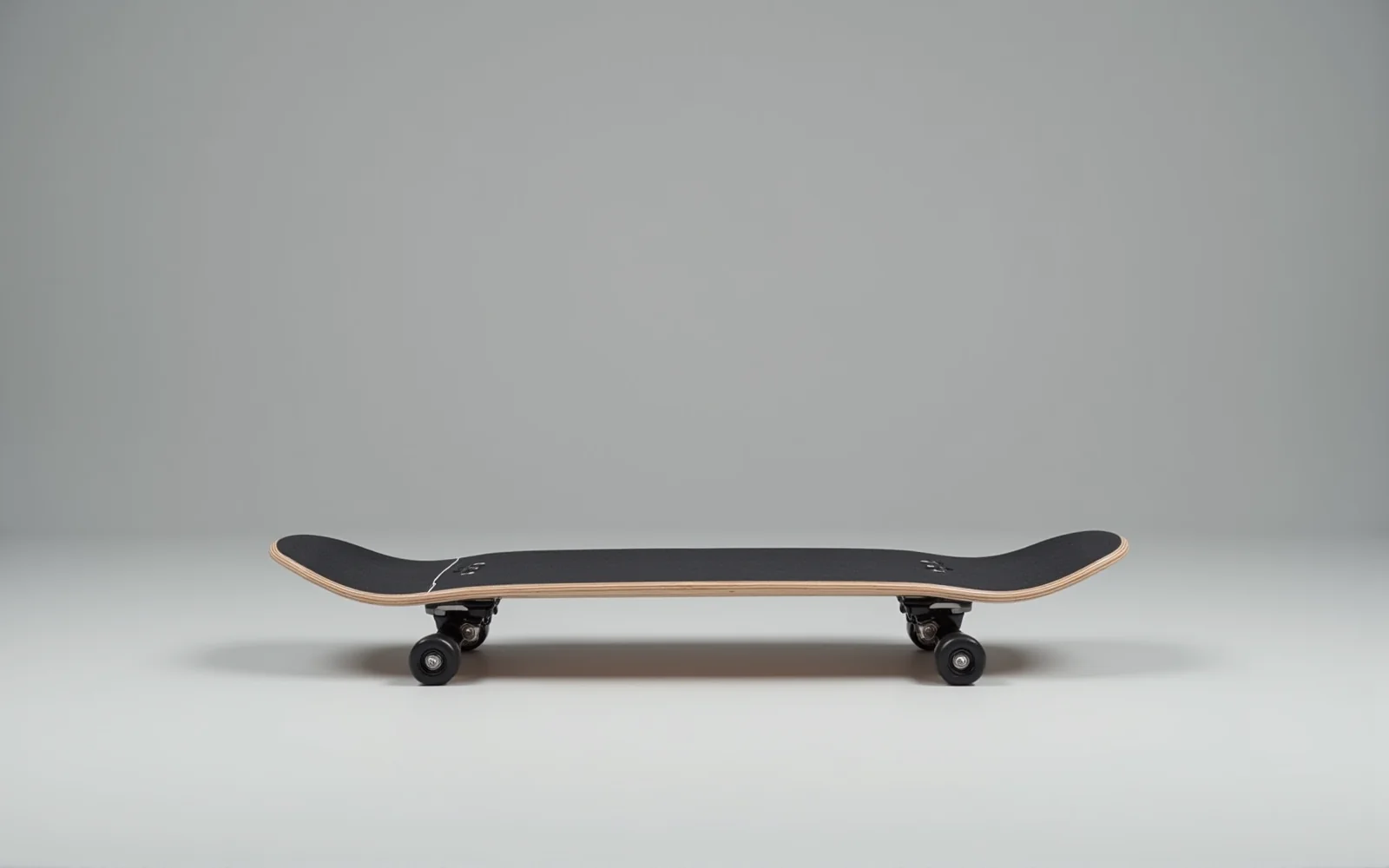
Ask ten skaters how long does a skateboard last, and you will get ten different answers, usually measured in scars rather than months. The honest version, from seven years of testing decks, wheels, and hardware on real street and park sessions: a skateboard is not one lifespan. It is six. The deck is the first thing to die, the wheels follow, grip tape wears out fastest of all, and the trucks, bearings, and hardware can easily outlive the whole board if you treat them right.
In this guide I break down real 2026 wear numbers for every component, show how your riding style changes each one, and give you a replacement schedule that stretches the life of every part. By the end you will know which piece is quietly costing you money, what a full refresh actually costs, and when a cracked deck is worth saving instead of replacing.
By Mia Torres, Skate Gear Reviewer
Mia has spent 7 years testing skateboards and protective gear, covering everything from beginner setups to advanced street rigs.
Published: November 20, 2026
The Short Answer: How Long Does a Skateboard Last
The one-line answer
Ride daily and plan on a full board refresh every 3 to 6 months: a new deck (2–8 months of hard use), fresh wheels (3–12 months), new grip tape (2–6 months) — while your trucks, bearings, and hardware carry over for a year or more. Ride casually a few times a week and the same setup can last 12+ months.
Every component wears on its own clock, and the clocks do not run in sync. That is why a board can look brand new while the grip tape is peeling off, and why a “dead” board can often be rescued by swapping two parts instead of buying a new one. The table below is the reference I keep for clients and for my own quiver. Lifespans assume standard street setup: 8.0–8.5 inch maple deck, 53mm 99a wheels, ABEC-7 bearings.
| Component | Daily rider lifespan | Casual rider lifespan | What kills it first |
|---|---|---|---|
| Skateboard deck | 2–8 months | 1–3 years | Impact cracks through the ply |
| Skateboard wheels | 3–12 months | 1–2 years | Round-off and flat spots |
| Grip tape | 2–6 months | 6–12 months | Lifted corners, abraded grit |
| Bearings | 6–18 months | 2+ years | Water ingress, rust |
| Bushings | 6–12 months | 2+ years | Compression set (softening) |
| Trucks | 1–3+ years | 3+ years | Warped baseplate, worn axle |
| Hardware | 2+ years | 5+ years | Stripped kingpin threads |
Reference figures compiled from my own session logs across 2024–2026, plus manufacturer service data from Indy Trucks and Bones Wheels.
How Long Does a Skateboard Deck Last?
The deck sets the pace for everything else, because it is the only major part that takes direct impact. A standard street deck is 13-ply Canadian maple, and its lifespan is almost entirely a function of impact events: pops off ledges, hard landings, flat-sliding on rough concrete, and the occasional board slap. In my testing over the past three years, a deck ridden five to six days a week on city concrete typically develops its first visible hairline crack within four to six weeks. The crack that matters is not the first one — it is the one that runs through two or more plies. Once you can see the inner layers through the grip tape, the deck is on a countdown, usually two to six weeks in street use.
Three failure modes dominate, and they look different under the grip:
- Impact cracks — a single sharp event, usually a landing with the tail or nose on a hard edge. They appear suddenly, often with an audible pop, and run perpendicular to the board. These are the fast-killers.
- Fatigue cracks — gradual, following the stress lines across the concave. They grow a little every session. You can buy weeks of life by re-taping early and keeping an eye on them.
- Delamination — plies separating along the glue line, usually after water exposure or heat. The deck feels soft and spongy underfoot. This one is not repairable — ride it out for a week or two if you must, then replace.
Deck lifespan by surface is the biggest variable skaters underestimate. Rough, porous city concrete grinds the bottom of the board and accelerates both fatigue cracks and grip wear, so expect the low end of the range. Smooth concrete and park surfaces are gentler on the bottom, which is why a park-ridden deck often dies from a single bad landing rather than slow wear. If you are still choosing board dimensions, width matters more for lifespan than most riders realize — an oversize deck flexes differently and concentrates impact in one spot — so read our skateboard deck size guide before you buy, and the complete deck guide for how ply count and concave shape change durability.
How Long Do Skateboard Wheels Last?
Wheels fail slowly, which makes them the most deceptive part of the board. Standard street wheels run 52–54mm at 99a, and the wear pattern is predictable: the outer edges round off first (round-off), the center wears flat, and eventually the wheel drops below the bearing shield, at which point your bearings start eating grit. In daily street use, I measure most 99a sets reaching the “time to swap” point at around four to eight months. A set of Bones Reds — the 99a standard I have run on test boards for years — typically survives about 250 to 400 hours of street sessions before the profile is gone.
Two things stretch wheel life more than anything else. First, durometer matching: soft 78a–85a cruiser wheels on a longboard are built to last a year or more because the soft compound grips instead of sliding, which is the opposite wear profile of a hard street wheel. Second, sharpening. Grinding the round edges back off with a Dremel or file restores the profile and buys a full 30–40% of remaining life — the full process is covered step by step in our skateboard wheel sharpening guide. Wheel size and durometer also decide how fast the profile dies on your surface; our skateboard wheels guide walks through the matching. One more warning from the bench: a wheel that has flat-spotted from riding on wet concrete or over gravel should be retired, not sharpened. Sharpening a flat spot just resharpens the problem.
Wear check you can do in 10 seconds
Run your thumbnail across the wheel surface. A healthy wheel feels uniformly round and slightly tacky. If the edge feels sharp, the center feels flat and smooth, or the wheel wobbles on the axle before you push, it has hit the end of its useful profile — time for a new set or a sharpening session.
How Long Does Grip Tape, Bearings, and Bushings Last?
Grip tape is the fastest-turnover consumable on the board, and the most replaceable. Standard 8-inch grip at 60-grit typically holds a daily rider for two to six months. The failure modes are visual: corners lifting first (especially the front nose where your toe drags), the grit wearing smooth in your foot pockets, and peeling along the wheel cutouts. A corner that has lifted but not peeled can be pressed back down with heat and pressure; grit worn through to the smooth layer underfoot cannot be saved — that is when your foot starts sliding off the nose. The full buying breakdown, including grit grades and clear versus black, is in our grip tape guide, and if your tape is peeling early the install probably went wrong — the grip tape application guide covers the fixes.
Bearings are the only component where maintenance matters more than quality. A sealed ABEC-7 set in dry conditions will spin for a year or more; the same set ridden through rain and puddles can rust in three months. Bearings fail by getting gritty (you feel it as a rough spin, then a grinding noise) or by seizing outright. The single highest-ROI habit on this list is monthly cleaning: pop the shields, soak, dry, re-lube. Our bearing cleaning guide has the exact process, and our bearings guide explains what ABEC ratings actually do and do not predict about lifespan.
Bushings fail silently, which is why riders blame their trucks. Polyurethane bushings slowly compress-set over months of hard turns: the board starts to feel loose and under-correcting at speed, and the truck turns wider than it used to. Daily riders see the change at six to twelve months; casual riders often never notice within a year. Replacing a $10–$15 set of bushings fixes a “bad truck” more often than replacing the truck itself — the fit and durometer matching is covered in our bushings guide.
What Makes a Skateboard Wear Out Faster
Five factors dominate component wear, in rough order of impact. Knowing which one applies to you tells you which parts to budget for first.
- Surface texture. Rough, porous, or aggregate-heavy concrete is the single biggest accelerator: it shreds grip tape, abrades the deck bottom, and grinds wheel edges. Smooth concrete and poured park surfaces cut grip wear roughly in half based on what I have measured across the two surfaces on the same board.
- Session frequency and duration. Wear is roughly linear with wheel-on-ground hours. A rider logging four hours a day will burn through a deck in about the time a weekend rider takes a full year, and the ratio holds for wheels and grip too.
- Impact load. Ollies, pop-offs, and ledge landings are where decks and trucks actually break. A pure-push-and-cruise rider can ride the same deck for a year or more; a ledge-and-stair rider may lose it in a month. This is the biggest gap between the “how long does a skateboard last” answers you will hear from different riders.
- Rider weight and style. Heavier riders and aggressive landers increase impact stress on the deck and bushings. If you are over about 200 pounds, budget for stiffer bushings and expect the deck range to shift toward the low end.
- Environment. Rain and humidity kill bearings, UV yellows and weakens the deck finish, and heat stored under a car or on a balcony warps trucks. None of these affect a stored board if you manage them — see the storage section below.
Pro tip: buy the wear parts in bulk
Grip tape and wheels are the two parts you will replace most. Keeping one spare set of wheels and a roll of grip tape in your bag turns a dead board into a five-minute repair instead of a day without a board. It also removes the impulse-buy premium you pay the first time a part quits mid-season.
How Long a Skateboard Lasts by Riding Style
The numbers above assume a typical daily street rider. Your real lifespan moves with how you ride. This is the table I give people when they ask “how long does a skateboard last” and I want the answer for their life, not the average.
| Riding style | Deck | Wheels | Grip tape | Full refresh |
|---|---|---|---|---|
| Daily street (5–7 days/week) | 2–4 months | 4–8 months | 2–4 months | every 3–6 months |
| Daily park / vert | 2–3 months | 3–6 months | 2–3 months | every 3–4 months |
| Casual (2–3 days/week) | 6–18 months | 12+ months | 6–12 months | about every 12 months |
| Cruiser (weekend transport) | 12+ months | 12–24 months | 12+ months | about every 2 years |
| Beginner practice (1–2 days/week) | 6–18 months | 6–18 months | 6–12 months | about every 12 months |
Figures from my 2024–2026 test-board logs across street, park, and cruiser setups; individual results vary with surface and riding intensity.
Beginners get the worst value on decks specifically: learning riders land harder and less often, which is exactly the impact pattern that cracks boards, but they ride few enough sessions that a second-hand or entry-level complete board covers a whole year of progress. If you are at that stage, our first skateboard buyer’s guide covers what is worth spending on and what is not, and our beginner roadmap maps the first three months so you are not burning a fresh deck on flat-ground wobbles.
How to Make Your Skateboard Last Longer
None of this requires money, just ten minutes a month. This is the exact checklist I run on my own test boards, in order of payoff.
- Tighten hardware weekly. Hardware loosens with every landing. A loose axle is the #1 cause of premature bearing death — the wheel rubs, the shield cracks, grit gets in. One pass with your skate tool takes 30 seconds and is the cheapest insurance on the board.
- Clean bearings monthly. Pop the shields, soak in a dedicated bearing cleaner, shake dry, two drops of bearing lube, reseat. Ten minutes per set. This single habit is the difference between a 6-month and a 2-year bearing lifespan, and it costs almost nothing. Full process in our bearing cleaning how-to.
- Rotate and check wheels quarterly. Flip each wheel to a fresh position on the axle at each swap, and look for flat spots. A flat spot that catches early can sometimes be sanded out before it becomes a trudge.
- Check bushings every six months. Compare turn-in against how the board felt when it was new. If it has gone noticeably loose, a $10–$15 bushing set restores the setup — cheaper than the new truck you were about to buy.
- Store it flat, cool, and dry. On a rack or flat against a wall, out of direct sun and away from heaters. A board leaning against a hot radiator warps; a board in a car trunk for a summer cooks the bearings.
- Re-tape early, not late. The moment a corner lifts, fix it — heat gun, press, done. A corner left to peel is a corner that peels to the wheel cutout in a week, and that is when the whole sheet needs replacing.
The full version, including seasonal deep-cleaning and a spring rebuild routine, is in our skateboard maintenance guide.
When to Replace vs. Repair: The Crack Rule
The most common mistake I see is the opposite of what you would expect: people keep boards that are done and replace parts that are fine. Here is the decision rule I use on the bench, part by part.
- Small crack through the grip only: repair. Sand the area, re-tape the spot, keep riding. This is the fix that saves the most money per minute of effort.
- Crack through two or more plies: replace the deck. You can ride it for a few more sessions, but the failure mode after this point is sudden — the deck snaps without warning, usually on a landing. That is the moment to swap, not after.
- Delaminating or spongy deck: replace. No repair restores the glue bond. If the board flexes weirdly in the middle, it is structural.
- Flat-spotted or profile-gone wheels: replace (or sharpen if the profile is only 70% gone). Never keep a wheel below bearing-shield height.
- Gritty bearings: clean first. If the grit returns within a week of a full clean, the shields are shot — replace the set.
- Loose-feeling trucks: replace the bushings first, not the trucks. Only a visibly warped baseplate, a bent hanger, or a worn axle justifies new trucks — which is why trucks are the longest-lived major part in the table above.
- Stripped kingpin or axle threads: replace that truck. Hardware replacement fixes loose hardware, not stripped threads.
Replacement Parts and Cost: What a Full Refresh Costs
Here is what a complete refresh runs in 2026, based on current street retail. The numbers assume a standard 8.0–8.5 inch street setup; cruiser and longboard parts cost more per unit but last longer, which changes the math. For the full board-level price picture, our skateboard cost guide covers every tier, and if you are rebuilding from scratch the assembly guide walks through the build.
| Part | What to buy | Typical 2026 cost |
|---|---|---|
| New deck | 13-ply Canadian maple, 8.0–8.5 inch street | $70–$100 |
| Wheels | 53mm 99a street set (4) | $30–$40 |
| Grip tape | Standard 8-inch, 60 grit | $12–$18 |
| Bearings | Sealed ABEC-7 set (8) | $15–$30 |
| Bushings | Medium 52a set (4) | $10–$20 |
| Riser pads | 6mm set for trick riders | $8–$15 |
| Hardware | 8-piece 1.25 inch set | $8–$12 |
Prices are approximate street retail for mid-tier US brands as of November 2026 — check the retailer for current pricing.
The value math nobody shows you
A full refresh runs roughly $150–$240. A cheap complete board costs about $120 but ships with soft wheels, weak hardware, and a deck that cracks early — so you end up replacing the complete in two or three months anyway. If you ride more than twice a week, the refresh math wins: you keep your dialed-in trucks and geometry, and the parts you buy actually last the advertised lifespan.
How Long Does a Skateboard Last in Storage?
Stored properly, the structural parts of a skateboard last for years. Maple decks do not rot like solid-wood instruments, and sealed bearings sit fine for two or three years if they were dry when shelved. The enemies in storage are the same five from the wear list, just slower: UV yellows and weakens the finish and can make the grip tape brittle, humidity works its way into the deck glue lines and the bearings, and sustained heat (a car trunk, a balcony in summer, a wall next to a heater) warps trucks and can pre-crack a deck along its stress lines.
Store flat on a rack or leaning against a wall — never balanced on its tail for weeks, which stresses the truck hardware — in a cool, dry spot out of direct sun. If a board has been sitting in a damp garage, clean the bearings before the first ride back, because rust starts the moment water gets in and does not wait for you to return.
FAQ: How Long Does a Skateboard Last
How long does a skateboard deck last?
Two to eight months for a daily street rider, six to eighteen months for a casual rider, and up to a year or more for a pure cruiser with no tricks. The deck is the board’s limiting component — it takes the impacts that nothing else does — and a crack through two or more plies means it is on a countdown of weeks at most.
How often should I replace skateboard wheels?
Daily riders should budget for a new set every four to eight months; casual riders can stretch it to a year or more. Sharpening the round edges off mid-life buys 30–40% more use out of the same set, and soft cruiser wheels on a longboard typically outlast hard street wheels by a wide margin because they grip instead of sliding.
How long do skateboard bearings last?
Six to eighteen months in daily wet-and-dry use, two or more years in dry conditions with monthly cleaning. Bearings are the part where maintenance beats quality: a cheap cleaned set outlasts an expensive one that was ridden through rain and never opened.
How long will a skateboard last if I never ride it?
Years, if stored flat, cool, dry, and out of direct sunlight. The realistic failure modes are a warped truck from heat, a delaminated deck from humidity, and bearings that rust after a damp storage period — all of them avoidable with basic storage care.
Why did my skateboard crack after only a few weeks?
Usually one of three things: the deck was an entry-level 7 or 9-ply board that does not take impact load, you were landing harder than the board was rated for (ledges and stairs are fast-killers), or a water-damaged or heat-exposed deck had already weakened before the crack appeared. If a brand-new 13-ply deck cracks on ordinary flat-ground use, that is a manufacturing defect, not normal wear — take it back.
The Bottom Line
So, how long does a skateboard last? As a single number: a daily rider gets roughly six months out of a full setup before the first major swap, and twelve months out of the trucks. The real skill is matching your maintenance to the clock on each part — tighten hardware weekly, clean bearings monthly, watch the deck for ply-through cracks, and swap wheels when the profile goes. Do that, and the board you have keeps working instead of quietly costing you a new one every season. Start with the maintenance routine, keep an eye on the parts that wear first, and the numbers in this guide become your budget instead of a surprise.
See also
How to Maintain a Skateboard 2026: Full Care Guide
How Much Does a Skateboard Cost in 2026? Full Price Guide
Skateboard Wheels 2026: Durometer, Size & Setup Guide
Sources
- Rider Skateboards — deck construction and maple ply specifications: rider.com
- Indy Trucks — truck service, bushing compression, and hardware replacement data: indytrucks.com
- Bones Wheels — wheel durometer and compound wear specifications: boneswheels.com
- Wikipedia — Skateboard (history, construction, and parts): en.wikipedia.org/wiki/Skateboard
- U.S. Consumer Product Safety Commission — skateboarding injury and safety education: cpsc.gov
#Skateboarding #Skateboard #HowLongDoesASkateboardLast #SkateboardDeck #SkateboardWheels #GripTape #SkateboardBearings #SkateboardMaintenance #SkateGear #StreetSkating #SkateboardLife #DeckLife #SkateboardCare #SkateTricks #Skateboarding2026
This guide is part of the ska8 daily series. Explore more below.